
Self-priming controls · corrosive transfer · multi-inlet sump drainage
Jiangsu Chuangjin Pump & Valve Manufacturing Co., Ltd.
Chuangjin’s distinctive selection problem is how to lift and control a process stream, rather than simply which centrifugal size to buy. Its CJB documentation combines self-priming arrangements, liquid-level control and different sealing/cooling constructions. Its IHF family addresses fluoroplastic chemical transfer, while its multi-inlet immersed pumps address sediment and fibrous debris in a pit. These three directions need different installation information and should be compared as complete pumping arrangements.
- Chinese legal name
- 江苏创进泵阀制造有限公司
- Published location
- Shengci, Jingjiang, Jiangsu
- Selection directions
- CJB · IHF · multi-inlet immersion
- Existing selection
- IHF50-32-160 at 2,900 r/min
Start with suction, solids and where the pump will stand
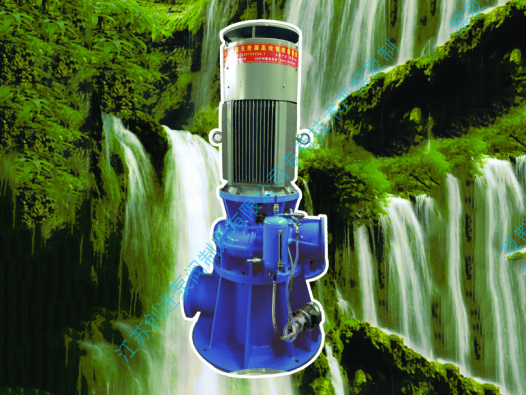
A quotation saying only “CJB intelligent self-priming pump” leaves major construction decisions open. Chuangjin publishes more than one CJB sealing arrangement, including a slurry brochure describing dynamic sealing and a synchronous-pump brochure describing mechanical seals. Establish which drawing and manual govern the offered unit before comparing price, utilities or maintenance.
| Installation problem | Chuangjin direction | What decides the offer |
|---|---|---|
| Above-liquid pumping with automatic level operation | CJB self-priming and control arrangements | Suction lift/air ingress, actual slurry properties, sealing construction and available cooling services. |
| Corrosive transfer through a horizontal centrifugal | IHF fluoroplastic chemical pump | Selected material/lining, suction conditions, speed and the complete hydraulic curve. |
| A pit where sediment and fibres collect in several areas | PWDL / PWXL / PWCL multi-inlet immersed direction | Pit geometry, inlet positions, immersion length, solids and access for cutters/agitators. |
CJB: specify the seal service and the control sequence together
The synchronous CJB brochure describes single-face, double-face and cartridge mechanical-seal arrangements with oil, water or pumped-liquid cooling alternatives. Its selection discussion distinguishes dirty or hot-water service, clean-liquid self-cooling and slurry/easily crystallising service. A family name does not establish that auxiliary water is unnecessary, nor that every unit is mechanically seal-less.
For a dirty stream, state what clean service water is actually available. For a liquid where fresh-water ingress is unacceptable, make that restriction explicit and ask which cooling/isolation arrangement is proposed. For crystallising slurry, include solids, temperature changes and shutdown deposits, then request the seal drawing and the startup, flushing and shutdown instructions for that exact construction.
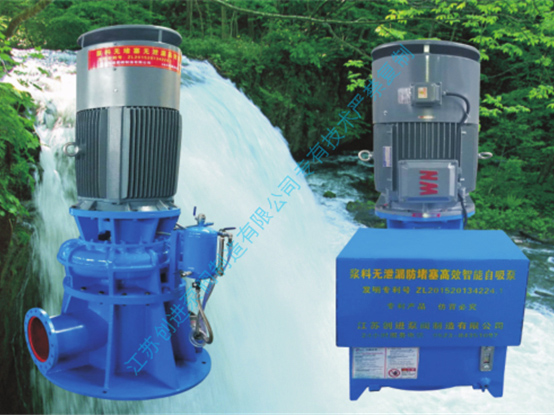
The control description includes local/remote operation and high-level start with low-level stop. Write an operating sequence with the required level thresholds, restart conditions, alarms and response to failed priming. Agree which sensors, control cabinet, interlocks and cables are included. A catalogue picture of a cabinet does not define the project’s electrical scope.
Read the head basis before selecting a row
The synchronous brochure explains its listed head using inlet suction lift and outlet head together. Provide separate suction levels/losses and discharge duty, and agree the supplier’s total-head calculation. Do not add the lift twice or treat the family’s broad flow/head coverage as one operating point.
The slurry brochure is a construction discussion, not a universal performance guarantee
The currently linked CJB slurry introduction discusses dense slurry, particles, flooded/high-pressure inlet conditions and blockage or wear in conventional arrangements. It describes a dynamic sealing combination with alternative cooling arrangements. That is distinct from the mechanical-seal configurations in the synchronous brochure; the selected construction needs its own parts schedule and service requirements.
Supply density and solids concentration with their measurement basis, particle size distribution/hardness, fibres, settling behaviour, chemical composition and normal/maximum temperature. Explain whether suction is flooded or under lift, including minimum and maximum levels. Ask for the offered impeller, passage dimensions, wetted materials, seal construction and operating limits against those conditions.
Claims of percentage efficiency improvements, longer life, no leakage and broad replacement of other pump types are not used here as order guarantees. Request a selected curve and an agreed test basis, and distinguish catalogue design features from measured results for the supplied pump. For essential service, identify the expected wear components and a maintenance access plan before ordering.
IHF50-32-160: keep shaft power separate from the motor rating
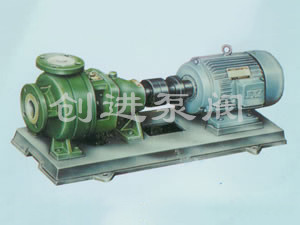
The existing product page retains the 2,900 r/min row of Chuangjin’s IHF table. This provides a specific centrifugal reference alongside the more installation-dependent CJB directions.
The IHF description offers fluoroplastic alternatives involving FEP and PVDF. Confirm the actual lining/wetted-part schedule, seal and chemical compatibility for the concentration and temperature of the process stream. A broad acid/alkali label is not sufficient for mixed chemicals or cleaning duty. Include the coupling/base, installation dimensions and motor supply in the quotation.
| Field | Published value | Use in the purchase brief |
|---|---|---|
| Flow / head | 12.5 m³/h / 32 m | One catalogue duty; request the curve for the selected liquid and impeller. |
| Speed | 2,900 r/min | Do not borrow the lower-speed row under the same size designation. |
| Motor / shaft power | 4 kW / 2.83 kW | Motor rating and catalogue shaft demand are different quantities. |
| Efficiency / required NPSH | 38% / 2 m | Duty-specific catalogue figures; assess actual suction conditions. |
View the reviewed product family →
Multi-inlet immersion: draw the collection points and the lifting route
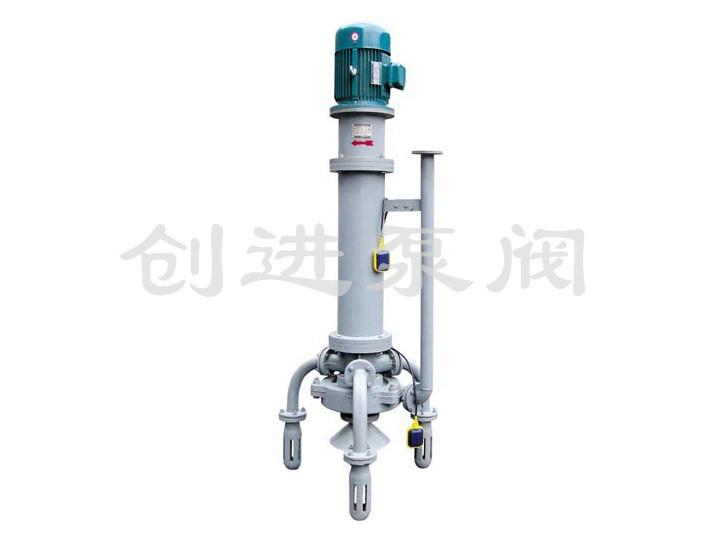
The immersed-pump documentation describes four suction heads arranged across a pit, with agitators below the heads and cutting mechanisms for fibrous material. The heads can also provide support, with a bracket arrangement described as another option. This is a layout decision: show the intended collection points, floor shape, deposits and structural supports rather than selecting only by discharge diameter.
The brochure describes service up to 60°C with concentration around 30%, but its particle-size statement is incomplete because the unit is missing. No particle-diameter limit is inferred here. Give the actual particle sizes, hardness and fibres and request confirmation for the supplied passages and cutting arrangement.
The documented immersion ranges distinguish PWDL at 1.5–1.8 m, PWXL at 1.5–2.0 m and PWCL at 2.5–2.8 m. Another company description transposes letters in the first designation. Use the selected assembly drawing and confirmed code when ordering; do not attach the longest immersion length to every version. Include liquid levels, inlet positions, bottom clearance, discharge pipe loads and safe lifting space above the pit.
Use manufacturing records to define what will be delivered
The company describes its predecessor as a Jingjiang metallurgical/chemical equipment factory established in 1985 and a reorganisation in 2010. Its profile lists machining, casting, assembly and inspection/test operations. These are company-reported history and facilities; they do not establish the inspection results, material traceability or test capacity allocated to your order.
A Jingjiang government notice dated 17 July 2026 names 江苏创进泵阀制造有限公司 for a proposed pump-valve production-line technical retrofit in Shengci. It describes equipment and production changes planned after construction. This supports the named entity and proposed local manufacturing activity. The notice is a proposed-approval publication, not evidence that the retrofit is completed or that its planned output is already available.
Approve the exact construction
Agree the selected code/speed, impeller and wetted materials, seal/cooling system, control scope and installation drawing.
Agree a traceable test package
State the duty and liquid/test basis, required material records, dimensional checks and identification of the supplied assembly.
Set the service boundary
Confirm the manual, seal and wear spares, installation/commissioning responsibilities, quantities and destination-specific delivery requirements.
Send the information that changes this pump selection
Suction and control
- Minimum/normal/maximum liquid levels, lift or flooded inlet pressure, pipe geometry and air ingress.
- Separate discharge duty and suction conditions, plus normal and variable flow requirements.
- Level start/stop sequence, remote/local control, alarms, motor voltage/frequency and cabinet scope.
Liquid and seal services
- Chemical mixture, concentration, density, temperature and cleaning conditions.
- Solids fraction/measurement basis, particle sizes, hardness, fibres and settling/crystallisation.
- Clean-water availability, restrictions on water ingress and the offered cooling/sealing drawing.
Installation and delivery
- For four-inlet immersion: pit plan, inlet/support locations, insertion length and lifting access.
- Selected curve, approved material/parts schedule, test basis and maintenance/spares package.
- Quantity, destination, required date and project-specific approval or certification requirements.
Submit through KanBeng’s enquiry form with this factory named in your request.