
Polymer melt · rubber extrusion · vacuum-reactor discharge · pump-drive integration
Jiaozuo Junhua Melt Pump Co., Ltd.
Jiaozuo Junhua publishes melt gear pumps, reactor-bottom and pipeline arrangements, shaft seals and drive/control equipment. Match the process location, polymer rheology, heating service and inlet conditions before selecting the pump package.
- Chinese company name
- 焦作市骏华熔体泵有限公司
- Published locality
- Jiaozuo, Henan
- Process directions
- Extrusion · rubber · reactor extraction · pipeline boosting
- Package options
- Pump, seals, drive and controls
Separate extrusion, reactor extraction and pipeline boosting
Jiaozuo Junhua Melt Pump Co., Ltd. presents its work around high-temperature melt pumps for plastics and rubber extrusion. Its catalogue also distinguishes JH-M and JH-L reactor-bottom pumps, JH-S pipeline pumps, shaft seals and separate drives and controllers. Decide where the pump belongs in the process before comparing pressure limits or motor sizes.
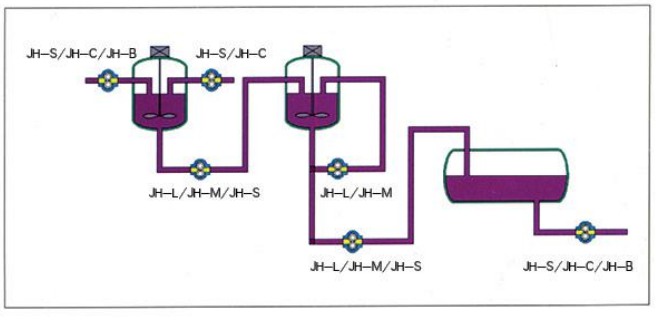
An extrusion pump receives material from an extruder and supplies downstream resistance. A reactor-bottom pump must admit viscous material under the actual vessel pressure and lowest liquid level. A pipeline booster is part of a heated transfer line. These inlet conditions are different even when the same polymer name appears in several product descriptions.
| Process position | Junhua direction | Selection question |
|---|---|---|
| Extruder to screen/die | Standard melt pump; rubber-specific JH-W where applicable | Material rheology, inlet-pressure stability, downstream resistance and heating |
| Vacuum vessel discharge | JH-M or JH-L reactor-bottom arrangement | Available inlet conditions, flange geometry, feeding and heating service |
| Heated polymer transfer line | JH-S pipeline pump | Pressure/viscosity at operating temperature, pipe loads and thermal-oil circuit |
| Integrated production package | Pump plus drive and PLC/PID control | Which sensors, loops, protections and commissioning are actually included |
Specify the polymer and the complete extrusion duty
The standard-pump description identifies pressure boosting and steadier delivery from extruders or medium/high-viscosity polymer processes, with electric heating. It names PS, PP, PET, PVC, PC, PMMA, PA, ABS and PE-LLD applications. This list is a starting point for identifying a process; it does not establish that one construction or temperature suits every grade, filler and additive package.
Include polymer grade, operating melt temperature, viscosity at that temperature, required mass throughput, density used for conversion and the inlet/outlet pressure cycle. State whether the screen changer is before or after the pump and the highest resistance seen during a filter change. Request a proposed speed range and the pressure/temperature limits of the selected size, with startup and shutdown conditions.
Junhua’s catalogue uses generic “standard pump” labels on several pages. One such page actually describes the JH-W rubber family and contains Mooney-viscosity data. Use the series and the accompanying technical sheet to resolve an offer; a category title alone is not a dependable model specification.
Keep Mooney viscosity and cleaning temperature distinct
The JH-W description concerns rubber, including EPDM, SBR, NBR and natural rubber. Its technical image specifies a Mooney-viscosity limit of 120, operating temperature no higher than 130°C and cleaning temperature no higher than 350°C. Mooney viscosity is not a value in Pa·s, and the cleaning figure is not a continuous process-temperature rating.
The same sheet lists outlet pressure up to 70 MPa and maximum differential pressure up to 50 MPa. These are separate catalogue limits; they do not demonstrate that maximum throughput, viscosity, pressure and speed can be reached together. Ask for the proposed inlet/outlet pressures and torque at the actual compound, temperature and production rate.
Its construction table describes thermal-medium heating, shaft-end cooling and a spiral outward-discharge sealing arrangement. Record the rubber compound, cure sensitivity, residence-time requirements, pressure transients, heating/cooling services and cleaning procedure. A marketing claim of self-cleaning does not define an acceptable changeover or prove freedom from residual compound.
| JH-W field | Published value | Use in the enquiry |
|---|---|---|
| Mooney viscosity | ≤120 | Specify the compound and test conditions; do not substitute Pa·s |
| Operating / cleaning temperature | ≤130°C / ≤350°C | Separate normal processing from the approved cleaning procedure |
| Outlet / maximum differential pressure | ≤70 MPa / up to 50 MPa | Request the paired inlet/outlet pressures and torque for the selected size |
| Listed size field | 50CC–2500CC | Confirm displacement units, pump speed and usable throughput |
The reactor-bottom choice changes the heating service
Junhua describes both JH-M and JH-L as large-inlet-flange arrangements for drawing medium/high-viscosity material from vacuum reactors. Their published tables give viscosity up to 40,000 Pa·s, operating temperature up to 400°C, cleaning temperature up to 450°C, an inlet field from vacuum to 1.5 MPa and outlet pressure up to 40 MPa. “Vacuum” is not a numerical minimum inlet-pressure guarantee.
The material lists overlap: stainless/carbon steel and nickel-alloy body options, tool/nitrided steel or special/coated gears, several bearing materials, and mechanical or combined packing/spiral seal arrangements. Request the actual bill of wetted materials and seal build for the polymer, corrosion, abrasion and thermal cycle. A family-wide option list is not the construction of every delivered pump.
The important published difference is heating: JH-M lists thermal oil or biphenyl-vapour heating; JH-L lists electric heating. State the service you have and the required warm-up sequence. Provide the vessel vacuum cycle, lowest level, outlet flange and adapter geometry, polymer feed behaviour and pump/drive support arrangement. Confirm inlet filling and removal access rather than choosing the pump from the 40 MPa figure alone.
Treat JH-S as a heated transfer-line component
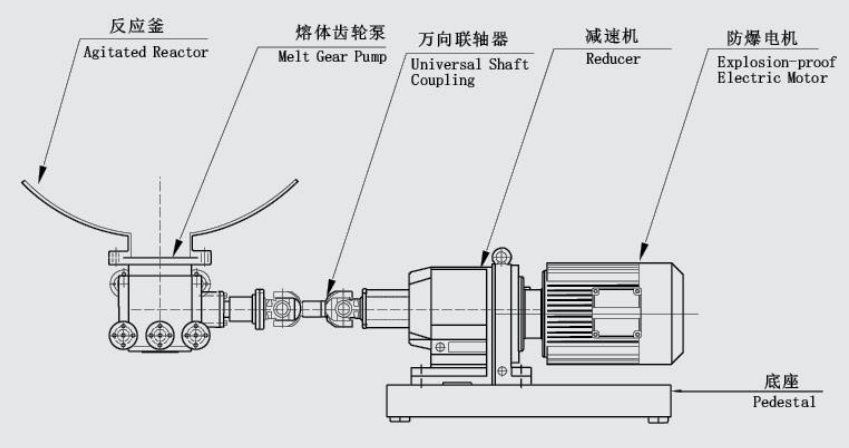
The JH-S page describes stable pressure boosting of medium/high-viscosity polymer in a process line, with thermal-oil heating. Its table lists viscosity up to 40,000 Pa·s, operating temperature up to 400°C, cleaning temperature up to 450°C and outlet pressure up to 40 MPa. These are selection envelopes; obtain a configuration-specific rating and throughput/speed relationship for the actual liquid.
The sheet lists straight, helical or herringbone gear possibilities, material and coating options, and spiral, packing or combined shaft seals. Select these against the melt and operating conditions. Include viscosity versus temperature, pressure losses and changing line resistance, heat tracing/jacket connections, expansion and supports, and how the pump is emptied for a grade change.
The table’s 0.5CC–12000CC field is labelled as a size/flow range without a speed basis. It is insufficient to quote litres per minute or kilograms per hour. Ask for displacement units, recommended rotational speed, volumetric delivery under the specified pressure, and the power/torque requirement.
Check seal suitability during both running and standstill
Junhua’s spiral-seal description calls it a dynamic seal for high-viscosity material, requiring positive inlet pressure and viscosity above 50 Pa·s. It mentions heating/cooling jackets. This is not automatically the right seal for a vacuum-reactor inlet, low-viscosity cleaning liquid or a stationary pump.
The separate packing page states PTFE as its standard packing material and says a buffer-liquid system can be incorporated when required. Resolve running and stopped-state containment, temperature at the sealing parts, flush/buffer compatibility, allowable leakage and maintenance access in the offered build. Ask how a hot pump is held, cleaned and restarted, rather than assuming a dynamic seal covers every condition.
A drive, a controller and an integrated line are different deliverables
The drive pages distinguish a servo mode from an inverter mode; the latter mentions vector control and an optional encoder closed loop. These options do not supply a quantified accuracy or response-time guarantee. Agree speed/torque range, reduction ratio, coupling/shaft arrangement, signal interfaces and performance tests for the proposed system.
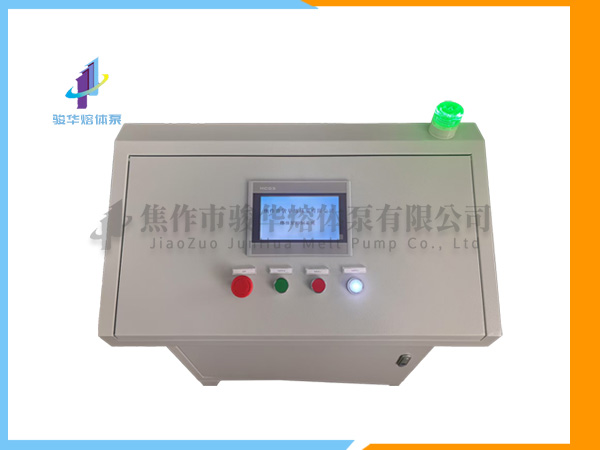
The PLC description names Siemens PLC control and an operator interface for pressure, temperature, flow and speed, with manual/automatic operation. The PID description lists digital instruments plus inverter control and inlet/outlet pressure sensors. Define which variable is directly measured, which is controlled, and what signal changes the pump or extruder speed. A displayed flow value should not be assumed to come from an included flowmeter.
For an existing extrusion line, provide the screen-changer and extruder control architecture. Specify sensor positions, temperature-ready permissives, pressure alarms/trips, manual/automatic transfer, trend records and the startup/shutdown sequence. Test agreed limits and transitions during commissioning; the presence of a PLC or servo alone is not proof of stable product output.
Send a process-specific brief and agree acceptance evidence
Use Jiaozuo Junhua’s exact company name in KanBeng’s enquiry. The useful quotation is a selected pump and documented package for your process, with material, heating, inlet, drive and control conditions resolved. Request the matching outline/interface drawing, supplied manual, spare-parts list and performance basis.
Extrusion or JH-W rubber
- Polymer/compound grade, rheology or Mooney test basis, processing and cleaning temperatures, throughput and pressure cycle.
- Extruder, screen changer and die arrangement; heating/cooling, proposed speed and torque, changeover and residence-time requirements.
- Drive/control scope, sensor locations, agreed output stability and startup/shutdown acceptance tests.
JH-M / JH-L vessel discharge
- Vacuum and liquid-level cycle, inlet filling, polymer viscosity/temperature, outlet resistance and required delivery.
- Vessel flange, adapter, support/coupling geometry, electric or thermal-fluid service and pump withdrawal space.
- Selected materials and shaft sealing, stationary containment, flush/buffer services and inspection/test documentation.
JH-S line or control retrofit
- Liquid grade, viscosity-temperature relationship, changing line pressure loss and actual throughput/speed units.
- Heating circuits, piping/expansion supports, seal arrangement, existing motor/gearbox and line interfaces.
- Included instruments and control loops, protections, spare parts, quantity, destination and commissioning responsibilities.
Submit through KanBeng’s enquiry form with this factory named in your request.