Water-source selection · boreholes, boosting, drainage and heating · Wenling
Shimge Pump Industry Group Co., Ltd.
A Shimge enquiry may concern a narrow borehole, a building booster, a drainage sump or a heating circuit. Those jobs need different pumps and different installation information. Use the source-water and service conditions below to narrow the catalogue, then request the curve and configuration for the actual operating point.
- Current company identity
- 新界泵业(浙江)有限公司
- Published headquarters
- Wenling, Zhejiang, China
- Brand history
- Origins in 1984; distinct from the current contracting entity
- Product directions reviewed
- BL(T) · 4SP(m)-K1 · QDX-K3 · WQ(D)AS-CB · APM-A
- Selection starting point
- Water source, duty point, liquid and installation
Where is the water, and what must the pump do?
| Water source or circuit | Catalogue direction | Information to send first |
|---|---|---|
| Clean-water tank or supplied pipe; pressure boosting | BL(T) vertical multistage | Available inlet pressure, flow and outlet pressure; liquid temperature, pipe losses and materials. |
| A drilled well | 4SP(m)-K1 four-inch deep-well pump | Clear bore diameter, dynamic water level, well yield, water analysis, delivery elevation and power supply. |
| A drainage sump with fine suspended matter | QDX-K3 submersible drainage | Particle size, sump levels, immersion, discharge route and required flow/head. |
| Wastewater with fibres or soft solids | WQ(D)AS-CB cutter direction | Liquid composition, solids/fibres, sump layout, duty and the removal/control arrangement. |
| A clean-water heating or air-conditioning circuit | APM-A controlled circulator | Design flow and circuit resistance, temperature, control mode, voltage and connection dimensions. |
BL(T): a vertical multistage pump needs a defined inlet
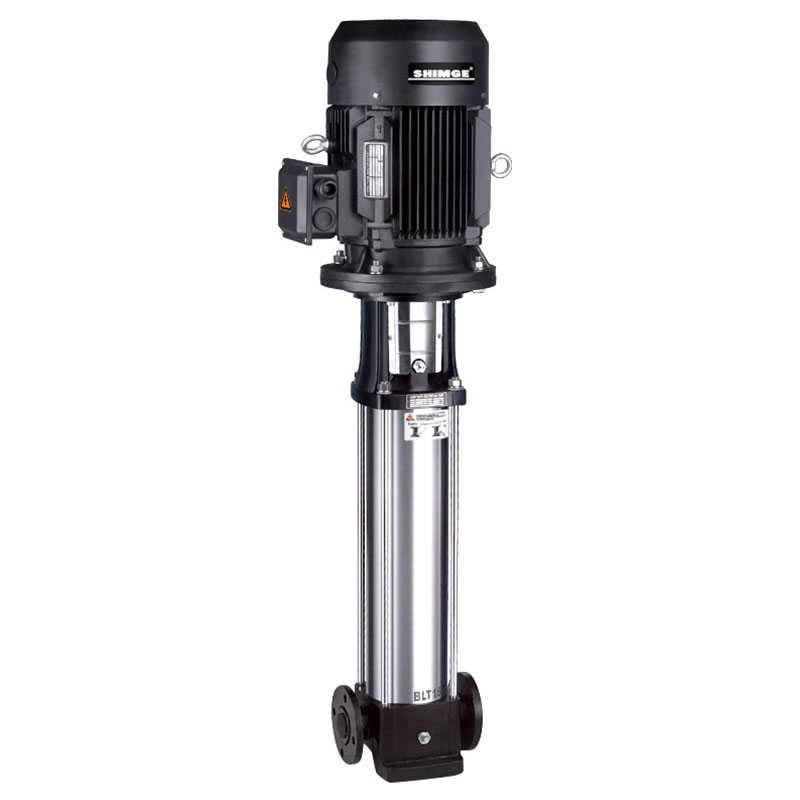
The official BL(T) description identifies a non-self-priming vertical multistage construction, with water-supply, pressure-boosting and process-water applications. A compact pump does not remove the need to check suction conditions. Give the supplier the lowest available inlet pressure and the highest liquid temperature, and request the selected curve and NPSH data for the proposed size and speed.
The catalogue distinguishes a normal-temperature direction of 0–68 °C and a hot-water direction of 0–120 °C. These are configuration directions rather than permission to run every BL(T) unit at 120 °C. Confirm the exact mechanical seal, elastomers, liquid compatibility, connection and allowable pressure for the offered pump. For a replacement, include the old nameplate and dimensional drawing rather than relying on the family name.
Selection should cover the expected operating range as well as the design point. Ask for hydraulic duty, motor power, electrical supply and control arrangement on one quotation. Where a variable-frequency controller or packaged booster is required, identify the pressure sensor, dry-run protection, tank and duty/standby sequence as included equipment or site responsibilities.
4SP(m)-K1: start with the well, not the maximum head
Provide diameter, yield and pumping water level
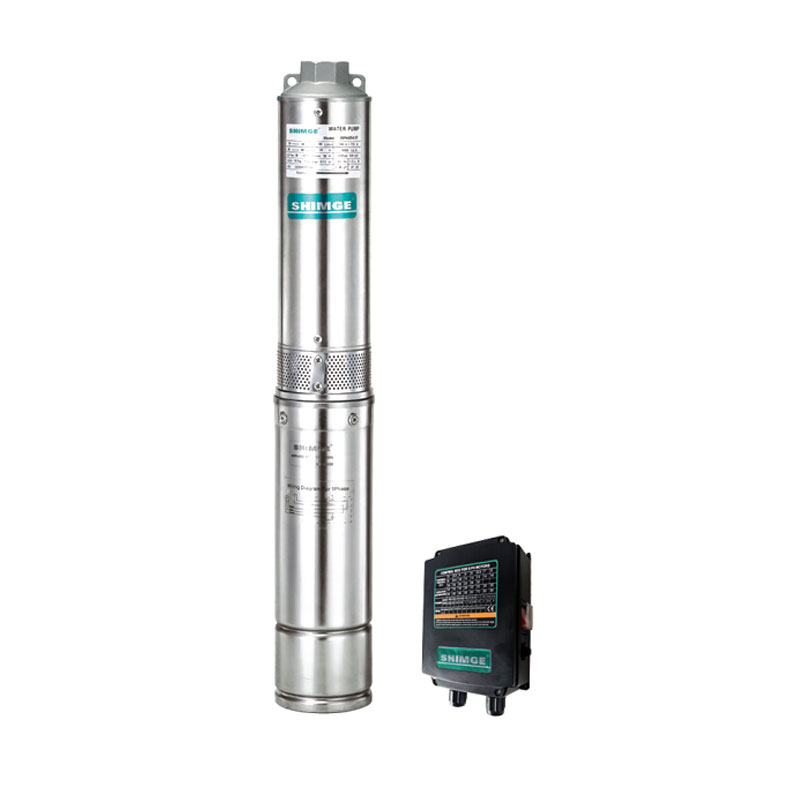
The four-inch catalogue direction must be checked against the well’s actual clear diameter, casing condition and installation clearances. Send static and dynamic water levels, measured sustainable well yield, delivery elevation and pipe route. Required pumping head includes the operating water level and discharge losses; it is not the same as the pump’s depth below the water surface.
Treat water analysis as selection data
The operating-condition block lists pH 6.5–8.5, hydrogen sulphide up to 1.5 mg/L and chloride up to 400 mg/L. It also lists a 70 m maximum depth below the static water table. Ask for the conditions applicable to the exact offered model and its materials. For sandy wells, provide measured sand concentration and particle size and obtain written suitability for continuous service; a short-duration test claim is not a service guarantee.
Agree materials and starting equipment
The product page distinguishes inlet/outlet options and 201 or 304 stainless-steel shell/sleeve configurations. Identify the offered wetted parts in a material schedule. Include cable length and sizing, joints, starting/control equipment, water-level protection and the site voltage range. A control box shown in a product photograph does not establish the complete delivery scope.
QDX-K3 and WQ(D)AS-CB solve different wastewater problems
Begin with the actual particles and fibres. A pump labelled for drainage should not be treated as a grinder, and a cutter does not turn metal, stone or abrasive grit into a suitable liquid.
The QDX-K3 application prose is broader than its numerical particle limit. For an enquiry, give measured solids size and concentration and ask for written confirmation against the specific pump’s technical sheet. If the sump contains rags or long fibres, describe them explicitly instead of selecting a drainage pump only from a flow figure.
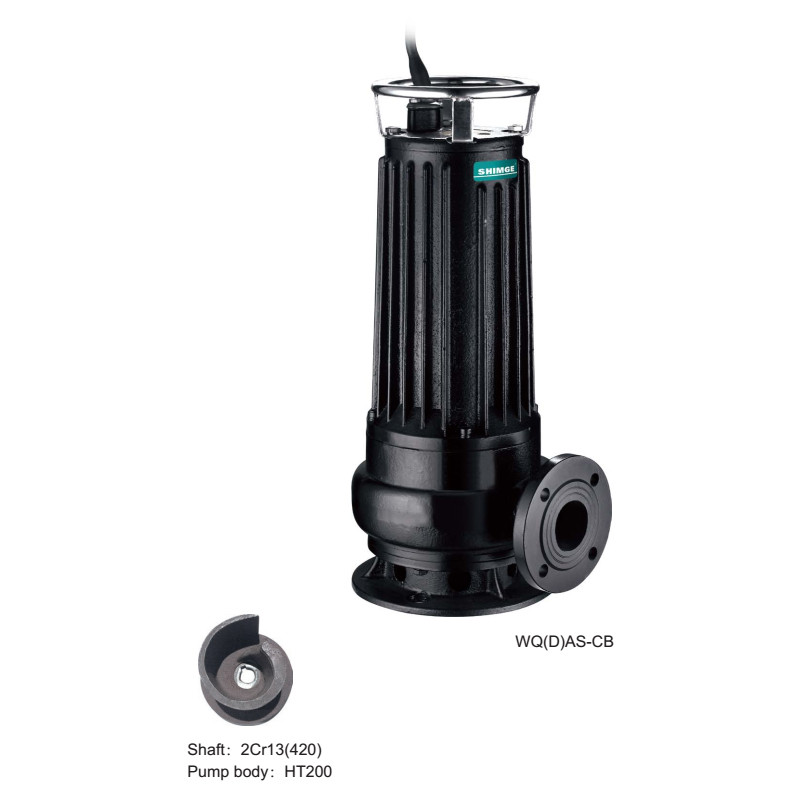
The WQ(D)AS-CB description identifies a cutting impeller, cast-iron construction, stainless-steel shaft extension and double-sided mechanical sealing. The single-phase direction includes a control box and built-in thermal protection. Confirm the precise variant, cutter and wear-parts identification, allowable liquid, voltage and controls on the offer.
For either direction, specify minimum/maximum liquid levels, discharge-pipe layout, cable length, stopping level and access for removal. Obtain the selected curve at the required duty. Family maximum flow and maximum head describe different ends of a range and should not be combined as one operating point.
| Condition | QDX-K3 drainage | WQ(D)AS-CB cutting |
|---|---|---|
| Liquid temperature | Maximum 40 °C | Maximum 40 °C |
| Published pH range | 6.5–8.5 | 4–10 |
| Published immersion range | 0.5–5 m | 0.5–5 m |
| Solids and liquid description | Working-condition block limits suspended particles to 0.2 mm; confirm the selected configuration. | Cutter direction for fibres and soft solids; maximum liquid density listed as 1,200 kg/m³. |
| Hazardous location | Catalogue excludes locations requiring explosion protection. | Catalogue excludes locations requiring explosion protection. |
APM-A: match the control mode to the circuit
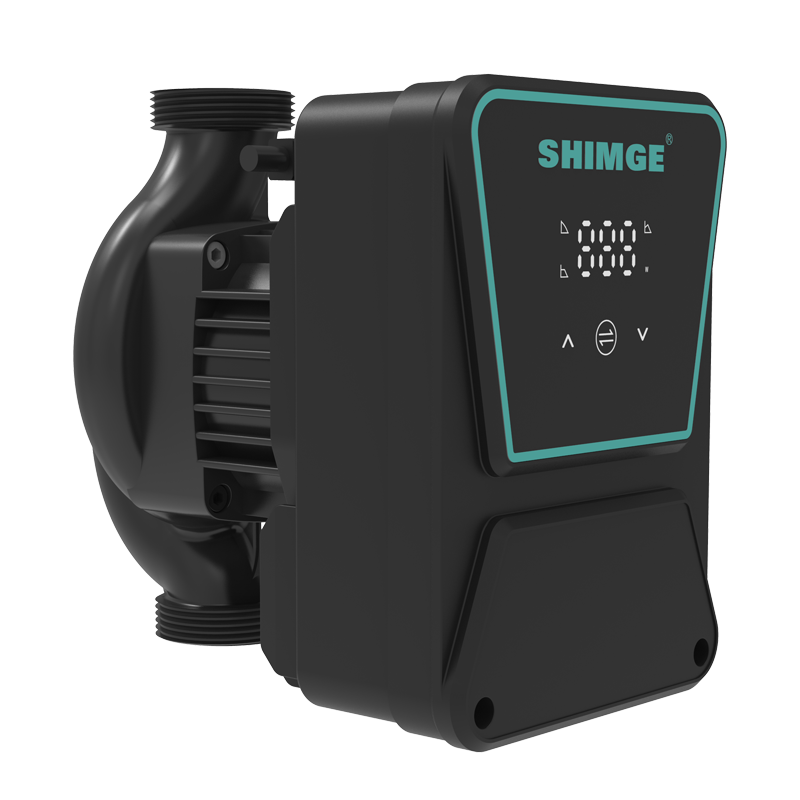
APM-A is presented for hot-water heating, air-conditioning and industrial circulation with proportional-pressure, constant-pressure, constant-speed and AUTO modes. Choose the mode against the circuit’s design and control strategy; the word AUTO alone does not establish how the unit will behave in an existing system.
Its published limits are liquid temperature 2–110 °C, ambient temperature 0–55 °C and system pressure 10 bar. The page lists 230 V, 50/60 Hz, IP44 and insulation class F, and calls for a horizontal motor shaft. Specify clean liquid without particles and confirm additives and wetted-material compatibility before using a treated heating fluid.
For a retrofit, send design flow, circuit resistance, pipe/union size and face-to-face dimensions, available electrical supply and any external control needs. Request the curve and operating power for the selected size. A family-level efficiency statement or real-time power display should not replace a model-specific performance document.
Use the current supply entity on contract and approval documents
Shimge’s current Chinese company profile identifies 新界泵业(浙江)有限公司 and traces the brand’s origins to 1984. The official Chinese site links to its current export catalogue, whose company footer names Shimge Pump Industry (Zhejiang) Co., Ltd. KanBeng preserves this existing factory record and address; for an order, establish the contracting seller, manufacturer and payment beneficiary from the actual commercial documents.
Historical group disclosures and older English pages refer to the former listed group. Those historical references should not be used to describe the present supplier as a currently listed company. The brand’s early history and the legal identity shown on today’s offer answer different questions.
CQC’s June 2024 bulletin independently names 新界泵业(浙江)有限公司 for clean-water centrifugal pumps and refers model coverage to certificate annexes. The printed validity dates for those entries have passed by this review date, so this historical record is not presented as a current approval. Ask for the current certificate, model annex and issuer status of the exact offered product and the approvals required by the destination.
Turn a catalogue direction into an identifiable order
Describe the water and installation
Provide water analysis or solids/fibre information, temperature, source levels or inlet pressure and the pipe route. Include drawings or the existing nameplate for replacement work.
Approve the exact selection
Obtain model, stage/impeller configuration, curve at the site frequency, duty point, motor/control details and installation dimensions. Define materials, seal or cutter parts and operating limits on the same selection.
Agree supply and acceptance
State pump-only versus complete set, cables/controllers/accessories, inspection or test requirements, destination, quantity and delivery schedule. Obtain installation instructions, parts identification and agreed warranty/service terms with the order.
Send the details that make a Shimge quotation comparable
Well or water supply
- Well diameter, sustainable yield and dynamic water level, or measured inlet-pressure range.
- Flow and required outlet pressure/head, delivery elevation and piping.
- Water temperature/analysis and the exact materials required.
Drainage or wastewater
- Solids, fibres and their dimensions; concentration basis and liquid density.
- Sump drawing, operating levels, removal route and discharge arrangement.
- Control/protection needs, electrical supply and cable length.
Heating circuit or procurement
- Circulation flow/resistance, temperature, connection dimensions and chosen control mode.
- Quantity, destination, offered model and complete equipment boundary.
- Model-specific approvals, test/inspection documents and identifiable spare parts.
Submit through KanBeng’s enquiry form with this factory named in your request.
Review date and practical scope
Reviewed on 8 October 2026 against the current company-linked export catalogue, Chinese company history, historical group disclosure and CQC issuer publication. The selection steps are KanBeng’s enquiry guidance. Final suitability follows the supplier’s exact model selection, current technical documents and agreed order conditions.
Report an outdated detail · Return to the enquiry checklist ↑