
Pulp-stock transfer · chest mixing · paper-machine vacuum
Hangzhou Sixin Industrial Pump Manufacturing Co., Ltd.
Hangzhou Sixin Industrial Pump Manufacturing Co., Ltd., legally 杭州四鑫工业泵制造有限公司, supplies industrial pumps, mixers and high-speed centrifugal equipment from Hangzhou’s Qiantang area. Its paper-industry catalogue covers three separate tasks: moving fibre stock, keeping a chest or tower mixed, and extracting gas for the paper machine. Selecting each task separately helps a buyer define stock conditions, wear and seal requirements, civil interfaces and vacuum-system controls instead of ordering from a pump name alone.
- Chinese legal name
- 杭州四鑫工业泵制造有限公司
- Published location
- Qiantang area, Hangzhou, Zhejiang
- Stock directions
- KJ · S1J · SJ
- Other process equipment
- LCJ mixing · GLF vacuum direction
Stock transfer, mixing and vacuum are different equipment duties
Sixin’s corporate page identifies pulp, vacuum, centrifugal and chemical pumps, mixers and high-speed centrifugal fans. The useful procurement distinction is between a liquid/solid stock duty and a gas duty. A paper-machine vacuum enquiry therefore needs gas flow and vacuum conditions; it should not reuse a pulp pump’s liquid flow and head.
For stock transfer, describe the fibre furnish, consistency, temperature, entrained air and contaminants, with the tank level and inlet arrangement. For mixing, provide the chest geometry and operating level range. For vacuum, identify each suction point, gas and water carry-over, inlet conditions and the control range. The relevant equipment and auxiliary services follow from those inputs.
| Process task | Catalogue direction | Main interface to resolve |
|---|---|---|
| Transfer fibre stock | KJ, S1J and SJ pulp pumps | Stock consistency, air, simultaneous flow/head, wear and shaft seal. |
| Circulate and mix chest contents | LCJ chest/tower agitator | Chest geometry, operating levels, mounting flange and support. |
| Supply paper-machine vacuum | GLF high-speed centrifugal equipment | Gas-flow basis, vacuum at the suction points, separation and controls. |
KJ: open impeller, adjustable wear plates and withdrawal space
The KJ page describes a single-stage, single-suction cantilever centrifugal pulp pump with a fully open, three-to-six-blade impeller. It lists stock consistency below 6% and some entrained air. Specify the actual stock and inlet conditions; that description does not provide an unrestricted air-handling percentage or a curve corrected for every furnish.
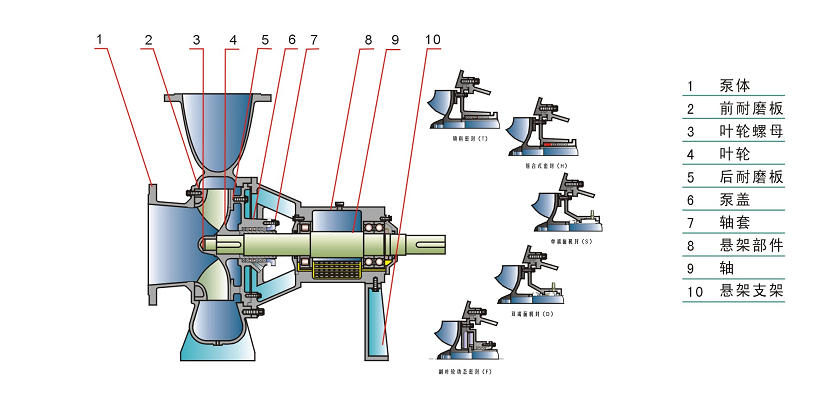
Front and rear wear-plate clearances are adjustable. Ask for the selected pump’s clearance-setting instructions, wear limits and spare impeller/plate package, particularly with abrasive contaminants. Clearance and worn parts affect the actual operating performance, so the acceptance curve should identify the supplied construction and impeller.
The manufacturer describes an intermediate coupling that allows the impeller, rear wear plate, shaft-seal parts and bearing frame to be removed as a pull-out assembly without removing inlet/outlet pipework. Include the coupling, withdrawal distance and lifting access in the layout. A workshop plan that leaves no space behind the pump loses the intended maintenance advantage.
The KJ coding drawing separates outlet diameter, maximum impeller diameter, blade count, material, seal and coupling choices. The seal codes shown are S for mechanical sealing and T for packing; L identifies an intermediate coupling. Use the full drawing and selected bill of materials in an order, rather than treating KJ as one fixed construction.
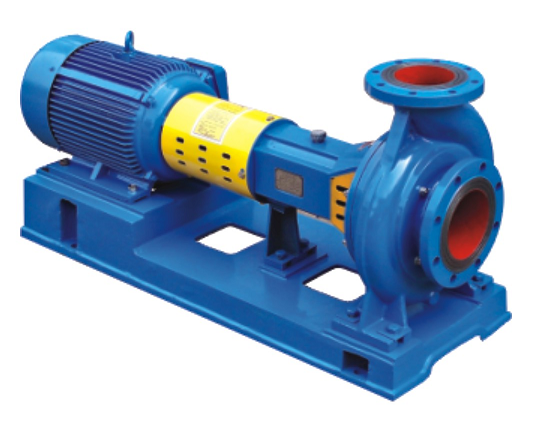
CD and DD identify component combinations, not a single material
Sixin’s KJ material table distinguishes the casing and cover from the impeller and wear plates. CD and DD therefore do not both mean “all stainless”. The table uses the general term duplex stainless steel for certain parts; it gives no duplex grade number. Specify the exact grades and documentation needed for the process.
For chemically treated stock or abrasive contaminants, agree materials for each wetted part and the seal faces/elastomers. Neither a stainless impeller nor a broad family material designation establishes compatibility for the complete pump. Keep the selected material and seal code attached to the agreed curve and order drawings.
| Component | CD construction | DD construction |
|---|---|---|
| Casing and pump cover | Ductile iron | Duplex stainless steel |
| Impeller and front/rear wear plates | Duplex stainless steel | Duplex stainless steel |
| Shaft | 2Cr13 | 2Cr13 |
Compare bearing, seal and three-phase stock requirements
The S1J page describes an integrated intermediate support/bearing-frame design, an enlarged oil chamber, front/rear wear plates, a fully open impeller and an intermediate-shaft coupling. Its coding example 150 S1J 200-32A-QFL identifies a 150 mm inlet, 200 m³/h flow, 32 m head, one impeller trim, a Q material choice, an F auxiliary-impeller dynamic seal and an L intermediate coupling. This is a code explanation, not a complete tested duty sheet: request the speed, motor, curve and actual stock basis for the offered unit.
The S1J Q/M/S material matrix differs from the KJ CD/DD matrix. In S1J’s Q column, the casing/cover are ductile iron and the impeller is 304; the M column uses wear-resistant alloy steel for casing/cover and duplex stainless steel for the impeller; the S column uses wear-resistant stainless steel for those parts. Confirm the complete matrix and exact grades rather than transferring a KJ code to S1J.
SJ is described for liquid, solid and gas stock transport, with a fully open wide-passage impeller and adjustable impeller/side-plate clearance. Larger casing sizes use a double-volute arrangement. The page describes mechanical-seal options, including single, double and tandem arrangements, or an alternative packing arrangement. Match the offered seal to stock abrasiveness, temperature and the available flushing/cooling services.
SJ’s intermediate coupling and rear-opening construction are described as allowing maintenance without dismantling pipework and motor. Obtain the selected general arrangement and replacement access dimensions. The SJ page provides no numeric stock-consistency or entrained-gas limit, so the KJ below-6% description should not be copied as an SJ rating.
LCJ selection starts with the chest and its operating levels
The LCJ catalogue page describes stock-chest, stock-tower, mixing-chest and dry-broke applications, as well as white-water circulation and mixing. It lists stock consistency below 5%. The stated purpose is circulation and uniform mixing to limit separation and settling; this is a mixing duty rather than a transfer-pump flow/head duty.
The described construction uses an axial-flow impeller and a gearbox drive. The installation description mounts the complete agitator to an embedded chest/tower flange through two split flange halves, with a ground support provided to suit the installation. Supply chest drawings, liquid-level range, flange details and support responsibilities with the enquiry.
Blade angle is adjustable, with five pin holes shown in the manufacturer’s description. Ask for the selected impeller setting and adjustment procedure suitable for the chest geometry and stock. Define the power and mixing acceptance basis in the offer; the catalogue’s relative efficiency percentages do not establish the result in a different chest.
The shaft-seal description uses a combined rubber seal, grease lubrication and a ceramic-coated shaft sleeve. Confirm the exact seal materials, lubrication/maintenance instructions, replacement sleeve and access route. The appropriate service interval depends on the supplied assembly and operating stock, rather than a general advertised seal-life figure.
GLF: specify gas flow, vacuum and auxiliary systems together
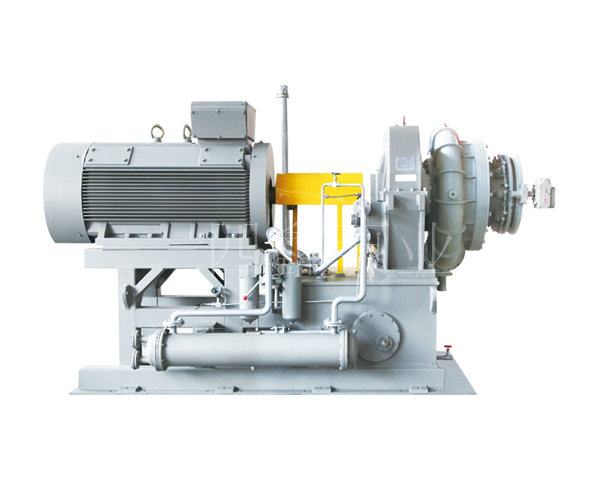
The high-speed centrifugal equipment sheet gives separate paper-industry and wastewater parameter tables. For papermaking, the GLF-1 row lists a gas-flow range of 100–250 m³/min, a vacuum range of 30–65 kPa and a motor-power range of 180–250 kW. GLF-2 lists 180–400 m³/min and 280–400 kW; GLF-3 lists 380–650 m³/min and 400–700 kW, with the same listed vacuum range. These are family selection ranges, not simultaneous guarantees at every endpoint.
Before selecting from these ranges, establish whether the required gas volume is at actual suction conditions or a stated reference condition, and how vacuum is measured. Identify the suction points, operating combinations, temperature, gas moisture and liquid carry-over, pressure losses and separator/drainage duties. Obtain the selected operating curve and motor basis for that combination.
Sixin describes multiple vacuum levels and a single machine serving multiple process points, with possible recovery of heat from the discharge gas. A dated original patent application, CN111425424A published on 17 July 2020, names this exact company and describes multiple turbo heads and their control for papermaking. It establishes that documented design direction; it does not show that every current GLF quotation contains that patent arrangement.
The equipment sheet describes PLC supervision of inlet liquid level, machine shaft vibration, temperature, vacuum, anti-surge and start-up interlocks, with alarms and lubrication-system pressure/temperature monitoring. Agree the supplied sensors, trip and alarm limits, separator interfaces, lubrication/cooling package and site communications. Any heat recovery needs a defined exchanger and process integration scope in the offer.
Build three separate duty briefs for a paper-industry order
Request a quotation with the selected curve or mixing basis, equipment and auxiliary schedule, general arrangement, operating/maintenance instructions and spare-parts list. Agree material, performance and control demonstrations for the actual supply, including what the buyer provides on site. Keep pump, mixer and vacuum equipment as separate line items so that alternatives can be compared on the same process requirements.
Pulp transfer
- Furnish, consistency, air, contaminants, temperature and stock inlet/level conditions.
- Simultaneous flow/head, selected speed and impeller, exact component materials and seal services.
- KJ/S1J/SJ full code, curve basis, wear parts, coupling and withdrawal space.
Chest mixing
- Chest/tower drawings, volume, operating levels, stock consistency and mixing objective.
- Embedded flange, impeller/angle, gearbox, support and site installation responsibilities.
- Seal/sleeve package, lubrication, service access and agreed mixing acceptance.
Paper-machine vacuum
- Each suction point, gas-volume reference conditions, vacuum basis and simultaneous operating cases.
- Separation/drainage, gas temperature/moisture, selected curve and drive/control range.
- PLC sensors and interlocks, lubrication/cooling, optional heat recovery and system acceptance.
Submit through KanBeng’s enquiry form with this factory named in your request.