
Abrasive slurry · LP/LPR sumps · filter-press feed · replacement wet ends
Tianmen Shanyou Pump Co., Ltd.
Tianmen Shanyou’s catalogue covers horizontal and rubber-lined slurry pumps, vertical sump pumps, filter-press feed pumps and submersible sand/slurry equipment. Start with the installation and slurry properties, then specify the wet end, speed, seal and maintenance scope.
- Chinese company name
- 天门山友泵业有限公司
- Published locality
- Tianmen, Hubei
- Catalogue directions
- Horizontal · vertical sump · filter press · rubber lined · submersible
- Order focus
- Slurry, installation, drive, seal and interchangeable parts
Choose the installation before comparing pump sizes
Tianmen Shanyou Pump Co., Ltd. presents itself as a manufacturer of abrasion- and corrosion-resistant slurry equipment. Its company profile describes casting, heat treatment, machining, assembly and testing, with mineral-processing slurry, coal and heavy-medium transport, ash handling and dredging among the stated application directions. These are product uses, rather than evidence of a particular customer installation.
For a mine, wash plant or industrial sump, the first distinction is where the pump and motor sit. A horizontal pump beside a tank, a vertical pump suspended into a pit, and a fully submerged pump/motor need different installation drawings, inlet arrangements and maintenance access. Filter-press feeding adds a changing resistance over the batch. Decide which task the quotation must cover before selecting a frame or copying a headline head range.
| Procurement task | Shanyou direction | Information that changes the choice |
|---|---|---|
| Transfer from a tank or pipeline | Horizontal slurry pump | Inlet level/pressure, pipe losses, particle distribution, drive and shaft seal |
| Collect slurry in a pit | LP metal / LPR rubber-lined vertical sump | Pit depth, mounting plate, wet-end length, minimum level and lifting space |
| Feed a filter press | YZBYL catalogue feed-pump sheet | Press filling and final-pressure stages, selected speed, control and allowable pressure |
| Lift settled sand or slurry underwater | Submersible pump with submerged motor | Submergence, solids, cable/power, motor protection and retrieval |
| Replace a worn wet end | Casing, impeller, liners and matching parts | Original model/revision, dimensions, material and mating interfaces |
Select a wet end for both abrasion and liquid chemistry
Shanyou’s horizontal-pump page lists a catalogue-wide bore range of 32–350 mm and head range of 7–108 m, spanning more than one hundred products. It lists high-chromium and other alloy constituents for liners. This is a range of products, not the operating point of the ZJ record or a guarantee that a particular size delivers both extremes. Its flow text says “9–2000 cubic” without a time unit, so it cannot support a rated flow in m³/h.
The separate rubber-lined description identifies front and rear liners made with rubber and steel backing, and an impeller with a cast-steel core and rubber covering. It names acidic/alkaline slurry and quartz-bearing gold-processing applications. Its flow text is malformed; use a model-issued curve instead of correcting the digits by assumption. Rubber grade, liquid chemistry, temperature and particle shape must be resolved for the selected build, rather than treating “acid resistant” as compatibility with every concentration.
For either route, send solids density, weight or volume concentration with its basis, particle-size distribution including the largest expected particles, liquid chemistry and temperature, and the required duty. Specify settling or entrained air where relevant. Compare the proposed wet-end material and seal against these inputs. Request the pump curve, speed, impeller diameter, absorbed power and inlet requirements for the actual slurry. Keep the existing ZJ catalogue record as a starting point for a horizontal-pump enquiry; it does not turn the whole catalogue envelope into a ZJ model guarantee.
Existing Shanyou ZJ horizontal-slurry record →
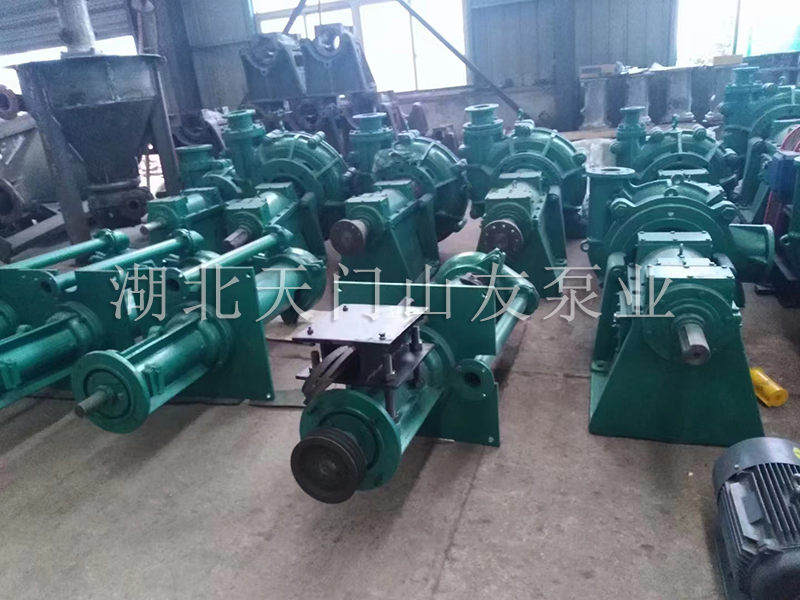
Separate the submerged wet end from the motor arrangement
The vertical sump description distinguishes LP metal wetted parts and shaft options from LPR rubber-lined wetted parts. It places the pump in a pit or pool for abrasive or corrosive slurry and describes uses such as collection and emergency pits. Its listed family envelope is 60–500 m³/h and 4–45 m head, with 3-, 4-, 6- and 8-inch sizes. The listed 430–940 kg weight range is also family-wide; request the mass and lifting arrangement of the selected assembly.
A pit drawing matters as much as the duty. Provide mounting elevation, pit depth, lowest and highest liquid level, required wet-end length, inlet clearance and the route of the discharge pipe. Ask where the motor and bearings sit, what is included in the support arrangement, and how the pump is withdrawn without dismantling unrelated equipment. LP/LPR names do not establish that a specific spindle length or immersion arrangement fits your pit.
The catalogue’s “maintenance-free” wording should not replace an agreed service plan. Confirm bearing lubrication, wear-part inspection, shaft/impeller clearances, allowable low-level operation and the spare parts needed for the slurry. A vertical sump pump and the separately listed fully submersible pump are different quotation routes; do not specify one simply because both operate in a pool.
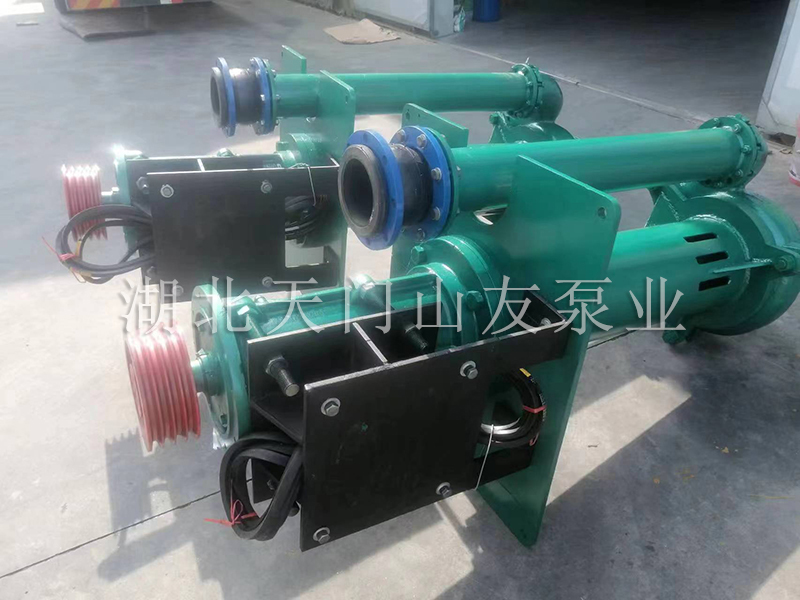
Specify the filter-press cycle and the pump speed together
The filter-press page contains an original YZBYL-series performance sheet, although its surrounding text is generic. The sheet gives different rows at different speeds for the same code. For example, 40YZBYL-250 is listed at 2930 r/min with 65–75 m head and 22 kW matching power, and at 1430 r/min with 15.6–16.9 m head and 3 kW. These are catalogue row ranges and matching-power figures, not two guaranteed working points or permission to select any motor in between.
Give the press type, chamber/filtration duty, feed-slurry properties, required filling rate, final feed pressure, batch time and control sequence. Request curves at the proposed speed, allowable casing pressure, motor margin and agreed response as the resistance changes. Ask how the pump is stopped or controlled at the end of filling and what protection or recirculation is included. A head in metres is not a universal pressure in bar: the pressure/head relationship depends on the pumped slurry density.
The photographed order notes also ask for vertical lift or head, outlet pressure, pipe length, slurry corrosivity, weight concentration, mineral density, median particle size, bends and temperature. They list packing, expeller-plus-packing and mechanical shaft-seal choices. Use those particulars to define the offer, including discharge orientation, drive arrangement, motor voltage/insulation/protection and spare parts.
| 40YZBYL-250 row | Listed head range | Matching power | Quote requirement |
|---|---|---|---|
| 2930 r/min | 65–75 m | 22 kW | Confirm operating point, casing pressure and selected drive |
| 1430 r/min | 15.6–16.9 m | 3 kW | Confirm whether the reduced-speed row meets the press cycle |
A submerged motor needs its own operating limits
The submersible page describes a coaxial motor/pump working underwater, an oil chamber and mechanical sealing to protect the motor, and a separate agitator impeller to disturb settled solids. It specifies a vertical operating position and continuous operation, with 50 Hz / 380 V three-phase supply, liquid temperature no higher than 60°C, and no flammable or explosive gas in the medium.
Its published submergence range is 1–20 m. The text lists solids concentration by weight as 45% for ash slurry and 60% for mineral slag. These are stated application limits, not particle-passage sizes, a general rating for every slurry, or proof that all upper limits can be combined. Send actual concentration and density, particle distribution, temperature, depth and required delivery so the chosen configuration can be confirmed.
Specify the cable length and routing, starting/control equipment, motor thermal and leakage protection, lifting points and the route for retrieval. Confirm whether the quoted pump includes the agitator, its required clearance and permitted operating conditions. Request the selected pump’s curve and manual; the product page does not establish an explosion-proof rating or an alternative voltage/frequency configuration.
Order replacement parts by interfaces and material, not appearance
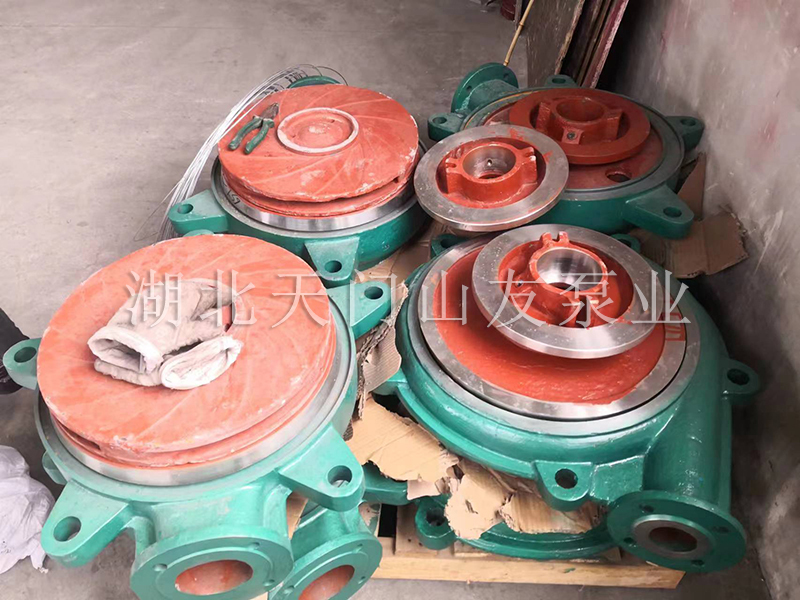
Shanyou publishes photographs of horizontal wet ends, vertical sump assemblies and casing/impeller components. Its company description states temperature-monitored casting, heat treatment, ceramic-tool machining and final assembly/testing. It also describes CFD and CAD/CAE design tools. For procurement, turn those process statements into the documentation needed for your actual order: agreed drawing revision, material specification, inspection plan and acceptance test.
For an existing pump, send the full nameplate, original code, serial number where available, and photographs and measured dimensions of the failed part. Include bore/flange pattern, shaft and impeller mating details, liner/cover dimensions, seal arrangement and rotation. Ask for explicit interchangeability confirmation. A similar green casing or familiar series abbreviation is insufficient to establish that an impeller or liner fits.
Request the material grade and any agreed casting/heat-treatment or dimensional inspection records for critical replacements. Define the test basis of a complete pump separately from the inspection of loose wear parts. Published workshop photographs do not establish available stock, annual capacity, shipment time, or a witnessed performance result.
Send a task-specific brief and agree service responsibilities
Use Tianmen Shanyou’s exact name in KanBeng’s enquiry and identify whether you need a complete driven pump, a bare pump, a sump assembly, or replacement parts. Its service page describes a four-hour response and domestic on-site attendance within 48 hours. Those domestic statements are not an overseas service commitment: agree remote support, local intervention, transport, warranty conditions and the responsible supplier in the quotation.
Before placing an order, request the selected curve, outline/foundation drawing, bill of materials, seal/auxiliary-service requirements, supplied motor/control scope, spare-parts list and acceptance documents. For a repeat replacement, reconcile the proposed drawing with the old assembly before approving manufacture.
Horizontal transfer or wear-part replacement
- Actual slurry chemistry, density and concentration basis, particle distribution, temperature, gas and required flow/head.
- Tank/inlet conditions, pipe layout and losses, drive/speed, seal water or other services and motor supply.
- For spares: nameplate, original drawing/revision, mating dimensions, material, quantity and interchangeability confirmation.
LP/LPR pit or submerged-motor service
- Pit drawing, levels, installation depth, discharge route, solids and intended duty.
- Metal or rubber wet end, shaft/wet-end length or submergence, motor position, cable and protection.
- Lifting/retrieval plan, maintenance clearances, included support/agitator equipment and selected assembly mass.
Filter-press feed package
- Press filling rate, final feed pressure, slurry density/rheology, batch time and end-of-cycle sequence.
- Exact YZBYL code, proposed speed/curve, casing pressure, motor and variable-speed/control scope.
- Seals/flush, discharge orientation, protection and recirculation where required, tests, spares and destination.
Submit through KanBeng’s enquiry form with this factory named in your request.