Sewage handling · building-water packages · prefabricated stations
Guangxi Nanning Pacific Pump Co., Ltd.
Choose the drainage mechanism and installation first. Define the pump, controls, tank or station and site-work boundaries together when enquiring through the Nanning supplier.
- Chinese company name
- 广西南宁太平洋泵业有限公司
- Published base
- Nanning, Guangxi
- Drainage families
- QW/WQ · JYWQ · AS/AV · ZW
- Equipment scope
- Water supply · tanks · prefabricated stations
Buy a defined pump or package through the Nanning supplier
Guangxi Nanning Pacific Pump Co., Ltd. identifies its Chinese company name as 广西南宁太平洋泵业有限公司. Its catalogue covers sewage and clean-water pumps, building water supply, fire-water equipment, tanks, treatment equipment and prefabricated pumping stations. For a building or drainage project, this breadth makes the boundary between a pump order and an equipment-package order especially important.
The company introduction describes a relationship with Shanghai Pacific Pump Manufacture Group. The Shanghai establishment year and site area in that introduction concern the group, rather than establishing a Nanning production site. Use the Nanning legal supplier on the enquiry and require the quotation to identify the actual manufacturer and assembly location of the equipment being supplied.
Start with the job the installation must perform: lift sewage from a wet well, remove settled deposits, handle fibrous waste, pump from an accessible surface position, maintain building-water pressure, or supply a complete buried station. Those are different purchase briefs even when they share a similar required flow and head.
Choose the solids-handling method before choosing the pump size
The sewage catalogue separates QW/WQ, JYWQ, AS/AV and ZW. QW/WQ is described with single- or double-channel impellers and submersible installation. JYWQ adds an agitation device to suspend settled material. AS/AV uses a tearing mechanism for fibrous material. ZW places a self-priming pump above the liquid rather than making the motor operate inside the wet well.
Use the published family ranges below as a first screen. Each series contains different sizes; the highest head, largest connection and greatest throughput are not one operating point. For selection, request the exact size’s curve, motor power and permitted operating region at the intended speed.
| Catalogue route | What the description addresses | Published head / connection range | Site information to send |
|---|---|---|---|
| QW / WQ | Submersible sewage; single/double-channel impeller; coupled or movable installation | 5–60 m; 25–500 mm | Solids and fibres; wet-well levels; guide-rail and discharge arrangement |
| JYWQ | Agitation of settled deposits before removal | 5–60 m; 25–200 mm | Deposit distribution, tank geometry and minimum running level |
| AS / AV | Tearing mechanism for fibrous material | 4–25 m; 76–152 mm | Actual waste composition, passage requirement and wear access |
| ZW | Self-priming sewage pump with surface access | 12–60 m; 25–300 mm | Suction-line drawing, lowest liquid level and priming procedure |
For WQ and JYWQ, specify removal access and protection as part of the order
The QW/WQ description offers fixed automatic-coupling and movable installations. It also discusses oil-water sensing, float-level control and a protection cabinet for leakage, overload and temperature monitoring. Define which of these are supplied with the selected pump. A bare pump quotation does not automatically include guide rails, discharge coupling, lifting equipment or the control cabinet.
Its designation example is 100WQ100-15-7.5: the page associates the first 100 with the discharge connection, 15 with head and 7.5 with motor power. The middle number carries a flow unit even though the accompanying Chinese label contains a typo. For an actual order, use an issued data sheet to settle the full designation and duty, rather than treating this explanation as a test certificate.
JYWQ’s stated distinction is the shaft-driven agitation device that stirs material from the pool bottom into suspension. The practical question is whether the sump layout lets that action reach the troublesome deposits. Send inlet positions, corners, the floor profile and normal/low water levels. Do not use the catalogue’s broad cleaning language as a guarantee that any pit will never need cleaning.
For both routes, agree cable length, sensor connections, lifting points, minimum operating level and the removal path. Ask the selected motor’s cooling arrangement to be named explicitly; a general discussion of water-jacket cooling does not authorise dry running of every WQ configuration.
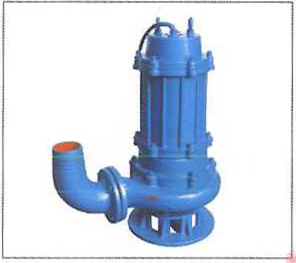
Separate tearing duty from self-priming duty
AS/AV is the catalogue’s route for waste containing fibres, strips and similar material that a tearing mechanism is intended to break up. Supply a realistic waste description and any abrasive grit. Request the selected mechanism drawing, passage size, wear parts and service access. “No blockage” and long continuous-life statements in a general brochure are not substitutes for a suitability review of that waste stream.
ZW uses an axial-return external-mixing description and gives a designation example ZW 50-15-30 P B. In that example, 50 is the inlet diameter, 15 the flow, 30 the head, P a stainless-material option and B an explosion-protected motor option. Keep those options on the selected quotation; they are not standard features of every ZW pump.
A surface pump is useful when maintenance access outside the pit matters, but its suction arrangement needs engineering review. Send the lowest liquid level, elevation of the pump centre, pipe length and diameter, fittings, fluid temperature and air-leak risks. Ask for the available suction performance and priming time under those conditions.
Self-priming does not mean running an empty casing. Original pump-engineering guidance explains that the self-priming device needs liquid before starting. Obtain the selected ZW commissioning and liquid-retention instructions. Do not make a project design depend on an unqualified maximum suction-lift claim.
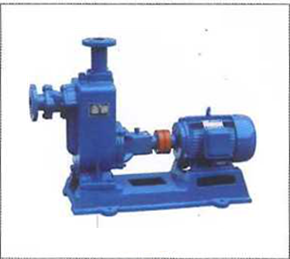
Compare the controls, storage and installation scope alongside the pumps
The F0QL supply-equipment description explains pressure-sensor feedback, variable-speed control and adding another pump as demand increases. It lists residential supply, commercial buildings, central-air-conditioning circulation and hot-water applications. For a building order, provide the demand profile and pressure required at the critical outlet, together with the available inlet condition.
Request an agreed pump sequence and control schedule: duty/standby arrangement, low-demand operation, pressure-sensor location, low-water protection, alarms and behaviour after a power interruption. The actual pump count, control method and tank arrangement must be shown on the offered package drawing. The family name alone does not determine them.
The catalogue’s F0QL numerical text includes corrupted symbols and a contradictory line in its pump-staging explanation. Use a project-specific issued schedule for flow, pressure, temperature and control logic. Separate a domestic-water booster from a fire-water duty and specify the applicable project acceptance requirements for each.
For tanks, the product list distinguishes 304 stainless combination tanks and buried BDF tanks. State usable volume, water service, materials, connections, inspection access and delivery/assembly conditions. The cost comparison should identify the tank, valves, pipework, cabinet, installation and commissioning responsibilities, not only a pump price.
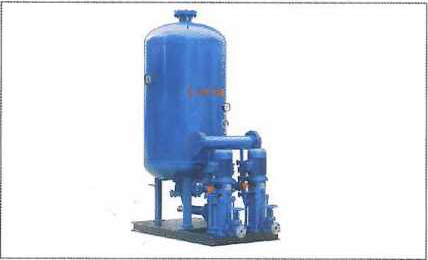
A prefabricated station needs a civil and electrical interface brief
The station description presents a buried sewage or rainwater collection-and-lifting system with a fibre-wound GRP barrel, pumps, accessories and controls. It describes customised supply. Treat the station as an integrated installation: the cylinder and pump must be selected around the same incoming flow, discharge duty and site dimensions.
Send inlet and outlet elevations, peak inflow, ground level, burial depth, groundwater conditions and available lifting/access space. Ask for the civil interface, foundation and anchoring requirements, connection drawings and electrical load schedule. Agree which party supplies excavation, backfill, external piping, power and commissioning.
The company photographs show station cylinders and equipment examples. They do not establish a particular customer’s project, witnessed acceptance or an unconditional service life. Use the order’s dimensional drawing, material specification and agreed inspection records to check what will be delivered.
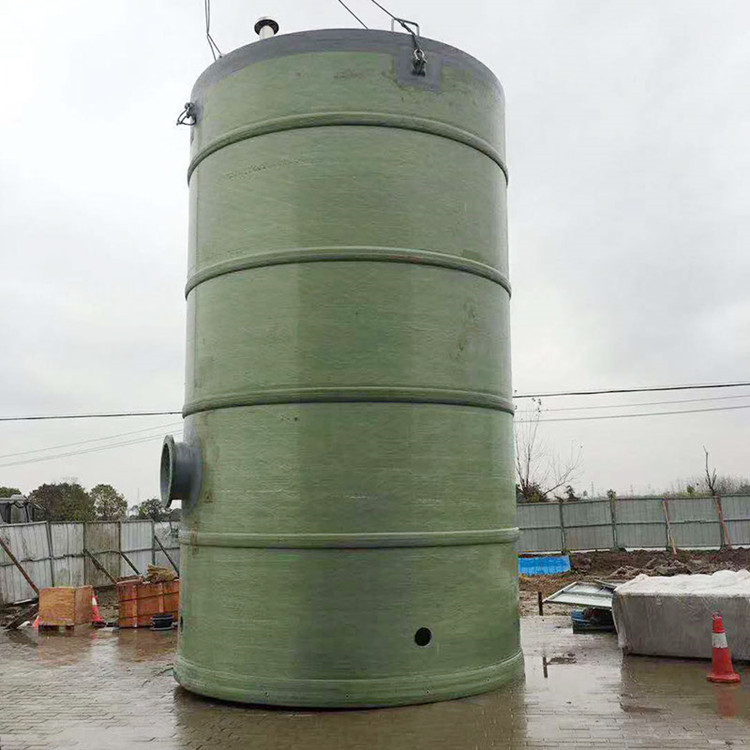
Put the pump choice and package boundary into one enquiry
Name Guangxi Nanning Pacific Pump Co., Ltd. in the platform enquiry and attach the project drawing or existing equipment information. Ask the proposal to distinguish the selected pump, ancillary equipment and site work. State the requested quantity, destination and schedule as project requirements, without assuming stock or a delivery commitment.
For acceptance, request the selected pump’s curve and data sheet, approved connection drawings, materials list, electrical/control schedule and agreed test records. Where a project requires fire-product or mine-use certification, require the exact model, certificate holder, scope and current validity; a catalogue heading or a group-level description is not enough.
Review the existing WQ series record →
Prepare the technical purchase enquiry →
Sewage or drainage purchase
- Flow/head duty and speed; medium, fibres, grit and solids information.
- Pit drawing and water levels; fixed coupling or movable installation; lifting/removal route.
- Cable and control/protection scope; exact pump and motor designation.
Water-supply or station package
- Demand/inflow profile and pressure or lift duty; inlet/discharge elevations and site drawing.
- Pump count, standby strategy, controls and alarms; usable tank/station volume.
- Mechanical, civil, electrical and commissioning supply boundaries; approved drawings.
Order and acceptance
- Actual equipment manufacturer, assembly location and legal supplier; quotation bill of materials.
- Required performance documentation and model-specific certification where applicable.
- Quantity, destination, requested programme, spares and agreed inspections.
Submit through KanBeng’s enquiry form with this factory named in your request.