
Reciprocating pumps and integrated systems for oilfield and mine duties
Baoji Aerospace Power Pump Co., Ltd.
Start a Baoji Aerospace Power enquiry with the liquid and pressure task: produced-water injection, polymer injection, abrasive slurry and underground coal-mine operations need different hydraulic ends, auxiliaries and controls. A complete pump-station order also needs an agreed boundary between mechanical equipment, piping and automation.
- Chinese identity
- 宝鸡航天动力泵业有限公司
- Location
- Baoji, Shaanxi
- Main directions
- Oilfield injection · mine slurry · coal-mine systems
- Package scope
- Pump · drive · auxiliaries · control integration
Order from the Baoji pump business with its own technical scope
Baoji Aerospace Power Pump Co., Ltd. was established in January 2004 according to its company introduction. It describes industrial-pump development, production and sales, with reciprocating-pump engineering, quality, procurement and manufacturing functions. The catalogue covers pumps as well as pump stations and control systems; decide whether the quotation is for a bare pump, driven skid or functioning station.
The parent company’s 2025 annual report identifies this exact Chinese entity as Baoji Pump and lists it as a wholly owned manufacturing subsidiary. It separately lists a large water-pump and turbine business in Jiangsu. Keep the Baoji reciprocating-pump offer distinct from equipment made by those other subsidiaries; group affiliation does not transfer a sibling’s product ratings or approval to this order.
The company introduction claims ISO 9001:2015, but the accessible honour page does not supply a current certificate for inspection. Where required, put certificate holder, validity and scope into the document schedule. Parent disclosure helps identify the business; it is not witnessed pump testing or a product certification.
Use the liquid and operating task to narrow the pump family
The water and polymer injection pages describe horizontal plunger pumps. The mining pages distinguish water-spray plunger slurry pumps from piston pumps and smaller high-pressure grouting pumps. The coal-mine range adds remotely controlled fracturing packages and emulsion supply for hydraulic supports. These are different duties even where the construction is reciprocating.
Family flow ranges and maximum discharge pressures describe a catalogue envelope. They do not establish that the largest flow and highest pressure can be obtained together. Ask for a schedule tying the required duty to cylinder/plunger size, speed, motor load and the actual liquid.
| Operating task | Catalogue route | Specify before selection |
|---|---|---|
| Oilfield high-pressure water injection | 3ZB / 5ZB | Water analysis, required flow and pressure, speed and drive |
| Polymer or chemical flooding solution | 3ZJ | Composition, concentration, viscosity and solution-quality acceptance |
| Abrasive mine slurry or tailings | PZNB / piston slurry pumps | Particle distribution, solids loading and auxiliary-water supply |
| Drilling or high-pressure grouting | 3NB / 3DS grouting variants | Selected row, actual grout and matched flow/pressure duty |
| Underground fracturing or hydraulic-support supply | BYW / BRW | Exact application, mine approvals, controls and installation boundary |
Match the injection duty to the liquid, not just the motor size
The 3ZB/5ZB description names clean and produced water up to 80°C. Examples in its table are 3ZB55 at 2–27 m³/h with a maximum discharge pressure of 40 MPa, and 5ZB500 at 20–180 m³/h with a maximum of 50 MPa. These are row envelopes, not guaranteed simultaneous duty points. Include inlet conditions, water chemistry and solids, pressure fluctuations and the required turndown in the enquiry.
For polymer flooding, 3ZJ is described for polymer solutions and also alkaline, surfactant, binary and ternary fluids up to 80°C. Its 3ZJ90A row lists 3–8.5 m³/h and 16–25 MPa; 3ZJ120 lists 8–15 m³/h and the same pressure range. Obtain the chosen speed/plunger schedule, wetted-material compatibility and a test method for solution properties after pumping. The page gives no numerical polymer degradation or dosing-accuracy guarantee.
The two injection pages reference API 674 and GB/T 9234 without identifying editions or exceptions. If either is contractual, request a configuration-specific compliance schedule with the applicable edition, inspection points and test records. A design-reference line alone does not settle those requirements.
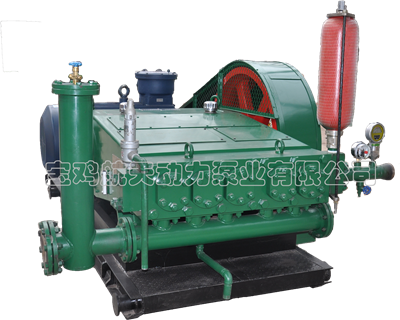
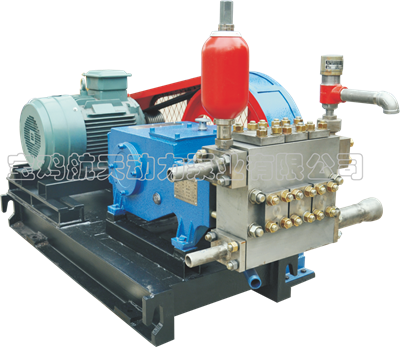
PZNB selection includes the high-pressure auxiliary-water system
The PZNB page describes three- or five-cylinder single-acting plunger pumps for abrasive slurry, mineral slurry and ash slurry at up to 40°C. It identifies combined plunger seals, abrasion-resistant combined valves and an independent high-pressure water system for cleaning, balancing and cooling. Specify the available water quality, pressure, flow, connections and control interlocks; this auxiliary service is part of the operating arrangement, not a small optional detail.
The 3NB200 table row gives 20–60 m³/h and 0–12 MPa, while 3NB600 gives 120–200 m³/h and 0–12 MPa. The headline starts at 20 m³/h, but the 3NB100 row starts at 10 m³/h. Use a selected row and issued performance schedule rather than turning the conflicting overview into one universal range.
The piston-pump page instead describes three-cylinder construction, selectable piston diameters and a separate lubrication/discharge system. Its 3NB400(HS) and 3NB600(HS) rows cover 60–120 and 120–200 m³/h respectively, with a listed pressure range up to 12 MPa. Compare wear parts, piston/plunger maintenance access, valves, lubrication and slurry preparation for the actual abrasiveness and settling behaviour; similar capacity does not make the two arrangements interchangeable.
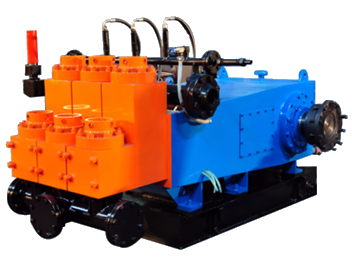
Request one verified grouting row before quoting pressure
The grouting description covers drilling and high-pressure jet grouting, with three-cylinder single-acting plunger construction and a stepped hydraulic end. Its table lists 3NB22 at 9.6 m³/h and 12 MPa, 3NB90 at 7.6 m³/h and 60 MPa, and 3DS160 at 9 m³/h and 45 MPa. The overview states a maximum flow of 9.6 m³/h while another row, 3DS200, states 15 m³/h. This conflict needs a current, selected-model schedule.
Describe grout composition, particle size and concentration, mixing consistency, hose length, fittings, required injection pressure and operating cycle. Request matched flow, pressure, drive power, hydraulic-end materials and the approved flushing procedure. Do not combine the highest pressure from one row with the largest flow from another.
BYW fracturing and BRW support-fluid supply need different specifications
BYW is described as a remotely controlled underground coal/rock fracturing system, including an interconnected three-cart arrangement, monitoring and a wellhead device. The BYW-1100/50 row lists 1,100 L/min and 50 MPa; BYW-1458/40 lists 1,458 L/min and 40 MPa. The page’s BYW-65/400 designation diagram and that row’s 1,458 L/min/70 MPa table data do not align clearly. Obtain the issued package drawing and performance schedule instead of guessing what the designation means.
BRW is for emulsion supply to longwall hydraulic supports. Its page lists five-cylinder construction, a crankshaft with six support points, conical valves, 500 L/min nominal flow and 37.5 MPa nominal pressure, with liquid temperature up to 40°C. Specify emulsion concentration/compatibility, cleanliness, line losses, support-system interfaces and standby arrangement.
Both descriptions reference an older coal-mine standard edition. Require applicable current mine-safety documents for the exact pump, motor and electrical equipment, together with the site operating method, permissible environment and protection schedule. Product names and old catalogue references are insufficient to confirm approval for an underground installation.
Choose the control behaviour and who commissions the complete package
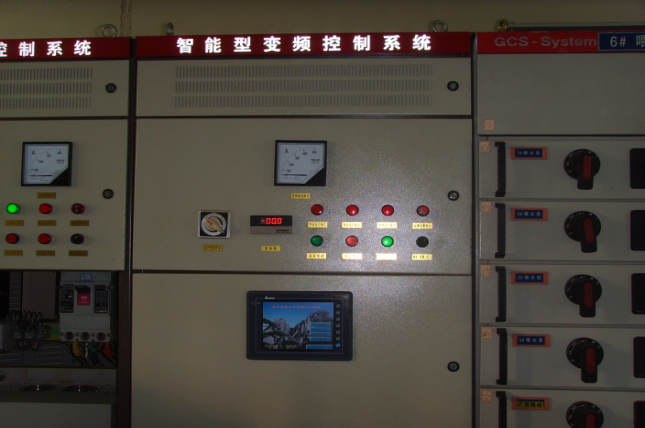
The basic GJB1-ZS configuration uses soft or reduced-voltage starting, fixed-frequency operation and overpressure, overcurrent and phase-loss protection. The manufacturer positions it for a single mobile or skid-mounted task without flow regulation. Confirm the start method and trip settings; motor starting is different from continuous flow control.
The GTSB-ZB configuration uses variable-frequency starting and manual/automatic flow adjustment, with constant-pressure, constant-flow or constant-level loops and additional protection functions. Name the controlled variable, measuring instrument, permitted speed range, alarm/trip response and behaviour after loss of signal or power.
The GKB1-ZB networked arrangement adds remote monitoring/control, data acquisition, analysis and reporting. Specify PLC/HMI interfaces, communications, local override, permissions, network-loss response and commissioning responsibilities. The catalogue’s diagnostic wording is not a guarantee of unattended fault correction.
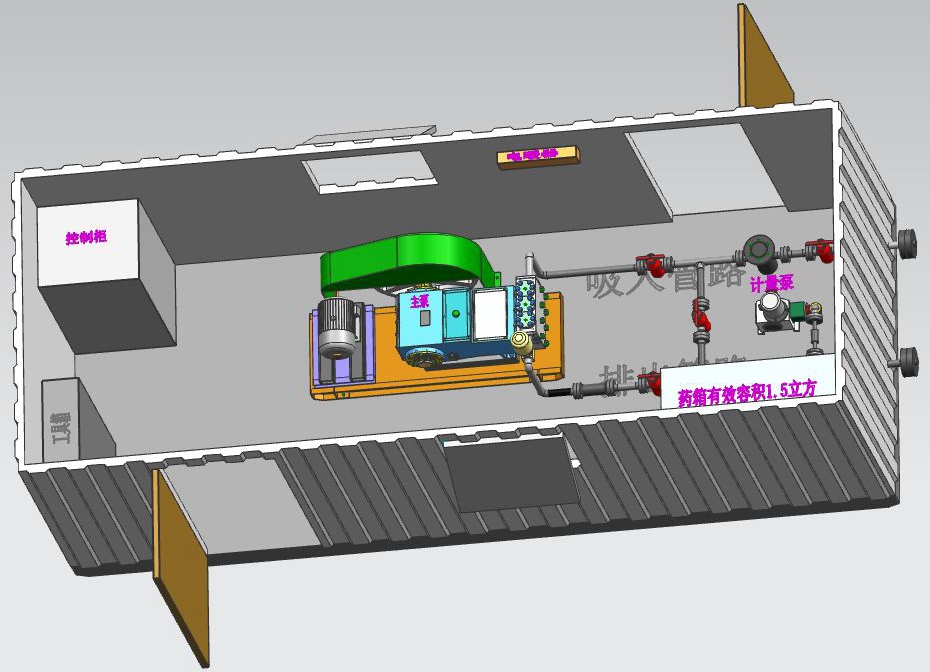
The pump-station page illustrates enclosed/skid packages with internal piping and equipment. The equipment gallery separately shows a pump test installation platform. Define the delivered boundary for motor, cabinet, shelter, inlet/outlet piping, valves, instruments, ventilation, lifting and site connection. Agree a witnessed duty test and control-function test for that package; a factory photograph alone does not establish the test capacity or result.
Send a duty schedule that can be compared and accepted
For a replacement, include the existing nameplate, hydraulic-end drawing, spare-part numbers and control interface. Require written interchangeability confirmation rather than relying on the same family prefix. For a new station, identify the party responsible for site integration and the acceptance documents before comparing total prices.
Organise the complete pump-station quotation request →
Liquid and hydraulic duty
- Clean/produced water, polymer, slurry, grout or emulsion; composition, solids, viscosity and temperature.
- Normal/peak flow, discharge and inlet pressure, operating hours, speed/turndown and selected configuration.
- For PZNB: auxiliary-water supply and interlocks; for polymer: solution-quality test; for grouting: selected matched duty row.
Drive, controls and installation
- Voltage/frequency, motor/start method, permitted environment and exact mine requirements where applicable.
- Basic, variable-frequency or networked controls; instruments, setpoints, trips and communication interfaces.
- Skid/shelter/piping boundary, lifting, maintenance clearances and site utilities.
Inspection and handover
- Issued performance schedule, drawings, selected materials and current compliance/qualification documents.
- Agreed duty test, protection/remote-control demonstration and traceable records for the delivered assembly.
- Wear parts, manuals, installation/commissioning, destination service, quantities and packing.
Submit through KanBeng’s enquiry form with this factory named in your request.