Choose the hydraulic arrangement around the process and liquid level
Jingjiang Zhuoqun Pump Co., Ltd.
Zhuoqun’s catalogue spans self-priming transfer, vertical axial-flow pumping and chemical-process circulation. Those directions solve different installation problems: lifting liquid to a surface pump, moving large water flows through an intake, or overcoming resistance in an evaporator loop. Specify the liquid levels and process layout before comparing pump names.
- Chinese identity
- 靖江市卓群泵业有限公司
- Listed base
- Jingjiang, Jiangsu
- Catalogue directions
- Self-priming · axial flow · process circulation
- Order starting point
- Liquid levels and process layout
Use the catalogue as a route to a selected assembly
The company introduction identifies Jingjiang Zhuoqun Pump Co., Ltd. in Maqiao, Jingjiang. It describes pumps, valves and accessories, wear/heat-resistant steel products, metal piping, environmental equipment and water-treatment equipment. Its stated registration date is 18 March 2011; that is the supplier’s introduction, not a current independently inspected business-registration certificate.
The live range includes self-priming, axial-flow, submerged, filter-press, desulfurisation, chemical, mixed-flow, multistage and magnetic-drive directions. For an enquiry, narrow that navigation to one process problem and a defined delivery: bare pump, pump-and-motor assembly, or a package with auxiliaries. The breadth of a menu does not specify current stock, manufacturing capacity or the contents of a quotation.
The site’s process strip moves from requirement confirmation through material selection and manufacture to inspection and dispatch. Use that sequence to request a documented selection, approved materials and an agreed test plan. Named customer logos and generic experience counters are not inspected project records or a measured qualification for your duty.
Surface suction, an intake and an evaporator loop need different inputs
Start with a sketch showing the pump, tanks, liquid levels and connecting equipment. The relevant question is where the energy is needed and how liquid reaches the inlet. A self-priming label addresses an air-removal task; an axial-flow label addresses hydraulic duty; an evaporator circulation label addresses a process loop. None substitutes for the selected operating curve.
Keep hydraulic selection and mechanical installation together. State normal and minimum liquid level, pipe losses, inlet pressure or suction lift, temperature and the required flow/head. Then identify the materials, seal or containment arrangement and the access needed to maintain the delivered assembly.
| Installation task | Published direction | Decisive order inputs |
|---|---|---|
| Surface pump above the source | ZX / ZW / WFB self-priming directions | Actual lift, suction line, priming conditions and media |
| Large water flow at low head | ZLB vertical axial-flow | Intake geometry, water levels, selected blade angle and curve |
| Evaporator / crystalliser circulation | ECP / SPP mixed-flow | Loop resistance, concentration, temperature and suction pressure |
| Transfer from a tank | FYU submerged direction | Immersion, tank opening, solids and material compatibility |
| Clean chemical containment | HIC stainless magnetic drive | Liquid lubrication, crystallisation, coupling load and protection |
Suction lift, priming time and running flow are separate selections
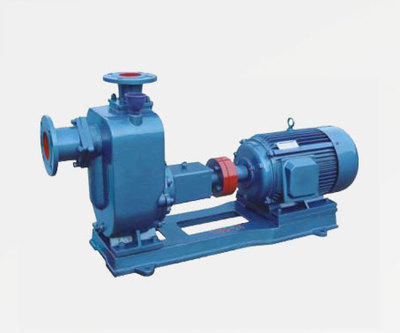
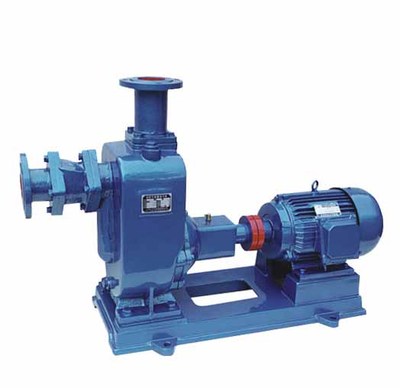
ZX is described as a single-stage self-priming chemical centrifugal pump. The prose lists 0–150°C, particles below 3 mm, a solids-content figure of 35% and a lift within 5 m. Confirm the selected configuration, the concentration basis and the test liquid before applying those descriptive limits to a hot or abrasive process.
The original parameter image gives model-specific flow, head, suction-lift and priming-time columns. For 50ZX12.5-50 it lists 12.5 m³/h, 50 m head, 2,900 r/min and 5.5 kW motor power, with a 6.5 m suction-lift column and 1.4 min/5 m priming notation. Its prose says within 5 m, and the table extends beyond the prose’s overall flow range. Reconcile the selected curve and priming conditions in the issued quotation; do not advertise 6.5 m at every temperature or treat the time notation as a dry-start permission.
Provide suction-pipe diameter and length, fittings, air-leak control, tank level, atmospheric conditions and the liquid’s temperature/vapour behaviour. Request filling, venting and restart instructions and a priming test at the agreed installation conditions. A water-based catalogue value does not determine a hot chemical installation’s available suction head.
ZW’s page explains the 80ZWF50-20 designation, including the corrosion-resistant F option, while WFB describes a centrifugal sealing arrangement. Neither accessible entry supplies a complete selected duty table or witnessed lifetime comparison. Confirm the exact wetted material and sealing behaviour during startup, operation and shutdown; WFB is not the same containment design as HIC magnetic drive.
Review the existing Zhuoqun ZX catalogue record →
Low-head axial flow makes water levels and operation central
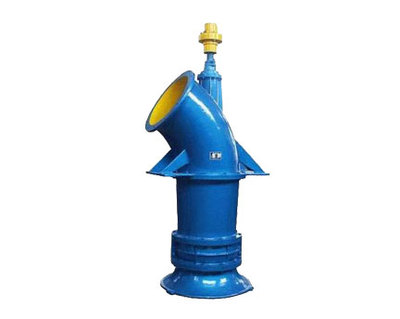
The ZLB description identifies a single-stage vertical axial-flow pump for large flow at low head, with a stated liquid-temperature limit of 50°C. It describes the suction bell, impeller, guide body, discharge bend, shaft and bearings. The 28ZLB-70 example uses 28 inches for the outlet designation; it is not a 28 mm port or an issued performance point.
Its discussion warns that power rises as flow is reduced and that throttling is unsuitable as a general way to control the duty; blade angle changes the curve. It also gives a discharge-open startup direction. Agree the approved startup procedure, permitted operating range and selected blade angle with the actual motor, valve and system arrangement, rather than borrowing a shut-valve procedure from another centrifugal pump.
Hydraulic Institute intake guidance distinguishes minimum submergence for avoiding air-core vortices from the additional requirement to satisfy NPSH. Supply minimum/maximum water level, suction-bell elevation, approach-flow geometry and screens or obstructions. A liquid-temperature limit and pump curve alone do not establish that a sump or intake is acceptable.
ECP and SPP move the enquiry toward loop resistance and process liquid
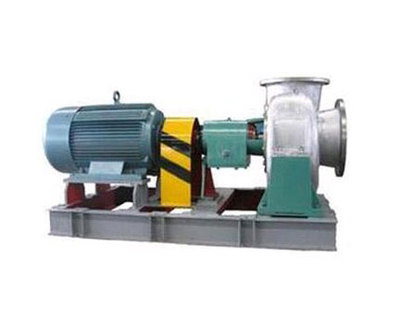
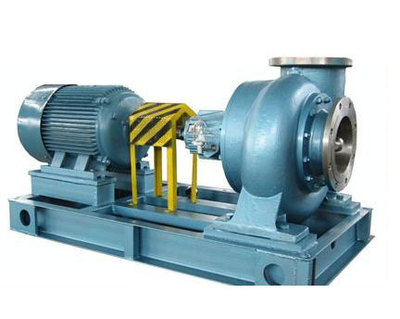
ECP is described as a single-stage cantilever mixed-flow pump for forced evaporator circulation, including multiple heating passes, viscous material and some particle-bearing corrosive media. Its published family envelope is 200–8,610 m³/h, 6–22 m head, pressure up to 1 MPa and temperature up to 170°C. These are separate selection bounds, not an assured simultaneous duty.
The ECP250 example denotes 250 mm inlet/outlet size, not 250 m³/h flow. Send the circulation requirement, pipe and heating-chamber resistance, concentration over the operating cycle, density, viscosity, crystallisation tendency and inlet pressure. Ask for the selected impeller/speed, available suction-head assessment, absorbed power and suitable wetted material for both normal and concentrated liquid.
SPP is described as a mixed-flow chemical direction for large flows and relatively low head, with a broad approximate 5–20 m head discussion. Do not make its general comparison with axial and centrifugal pumps into a model curve or copy its closed-valve statement into the ZLB startup procedure. Obtain the actual operating and startup schedule for the quoted configuration.
FYU and HIC ask different questions about particles and maintenance
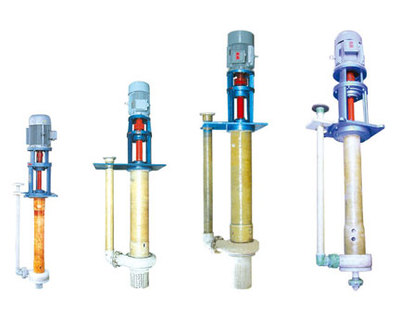
FYU is presented as a modified UHMWPE submerged-pump direction for low-level tanks containing clean liquid or slurry, including corrosive process liquids. Specify immersion depth, tank opening, support and discharge connections, liquid levels and removal clearance. Provide solids and chemistry details so the wet end and submerged structure can be selected together.
The FYU page includes historical installed-unit and repeat-customer claims without supporting records. They do not provide the selected temperature, particle-size or wear allowance. Request the configuration’s limits, component materials, wear spares and dismantling instructions instead of treating those marketing figures as an acceptance criterion.
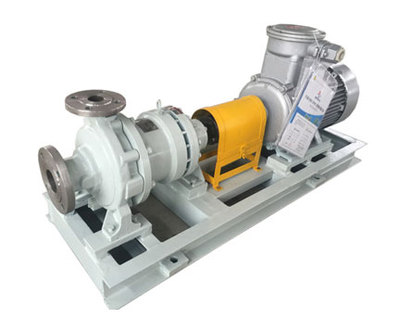
HIC describes a stainless magnetic-drive arrangement, internal bearing materials, rear withdrawal and optional temperature, dry-run and leakage monitoring. It explicitly excludes dry operation and particle-bearing or crystallising media. Discuss the process liquid’s lubrication, viscosity/density, temperature and available inlet conditions, then include the selected protection functions in the quote.
The HIC description contains several different high-temperature and magnet-material statements and an inconsistent density-unit notation. Do not combine them into one approved 450°C pump envelope. Request the specific magnet, containment shell, bearing and material limits, together with coupling-load and cooling requirements for the actual assembly.
Send enough information to compare a selected pump and its responsibilities
A useful quotation should identify the exact assembly, hydraulic duty and installation conditions, with clear boundaries for auxiliaries and service. For replacements, attach the old full nameplate and dimensioned drawing; shared series letters do not establish compatible shaft, flange, ports or rotation.
Build a comparable pump installation enquiry →
Process and inlet
- Task: lift from a source, axial-flow intake, evaporator circulation, submerged transfer or chemical containment.
- Liquid chemistry, concentration, temperature, density/viscosity, particles and crystallisation.
- Required flow/head, suction-line layout or inlet pressure, minimum/maximum levels and startup cycle.
Selected assembly
- Issued model curve, speed/impeller or blade angle; priming or submergence conditions where relevant.
- Wetted materials, seals/containment, immersion and removal clearance; matched mounting and piping interfaces.
- Motor/electrical supply, monitoring, flushing/cooling auxiliaries and control/commissioning responsibilities.
Handover and acceptance
- Duty and priming tests at agreed liquid and installation conditions, plus configuration identification.
- Dimensioned drawings, selected material schedule, test records, manuals and spare-part references.
- Contracting identity, destination support, warranty and packing scope; current qualification records when required.
Submit through KanBeng’s enquiry form with this factory named in your request.