
Select the material route and installation, then define the seal and auxiliary services
Jingjiang Hengli Pump Co., Ltd.
Hengli’s process-pump catalogue separates fluoroplastic transfer, corrosive slurry, self-priming, long-shaft sump and forced-circulation directions. Its UHB operating notes make the auxiliary system especially relevant: loss of liquid, seal cooling and settled solids can change the maintenance outcome. Start with the liquid and tank arrangement, then compare an exact construction and issued duty curve.
- Company identity
- 靖江市恒力泵业有限公司
- Listed base
- Xinqiao, Jingjiang, Jiangsu
- Catalogue focus
- Fluoroplastic · stainless steel · process duties
- Purchase boundary
- Pump · seal · auxiliaries · installation
A process-pump order can include more than the bare pump
The company introduction names fluoroplastic-alloy and stainless-steel pumps alongside stainless-steel and fluorine-lined valves. It lists FSB(L), IHF, UHB, FSZ, IH, HJ, WFB, FY and FJX pump directions, together with several mechanical-seal designations. The separate catalogue pages identify FSB and FZB products, UHB-ZK, FY/FYS/IHY sump arrangements and FJX circulation pumps. Keep the exact quoted designation because the introduction and detailed catalogue do not always use the same suffix.
The listed base is Xinqiao in Jingjiang, and the company identifies itself as 靖江市恒力泵业有限公司. Match this full legal name, the invoicing party and the agreed supply scope in the quotation and purchase contract. Keep product selection, component responsibility and site-service obligations explicit.
Ask whether the offer covers the complete motor assembly, seal, valves and required cooling or flushing equipment. Identify the manufacturer and specification of purchased components. A catalogue assembly photograph documents a listed configuration, not who manufactured every motor or component in it.
Choose a material and installation route before comparing model labels
FSB is listed as a fluoroplastic corrosion-resistant centrifugal pump, while FZB is separately listed as a fluoroplastic self-priming pump. The company introduction also identifies IH as a stainless-steel chemical centrifugal direction. These are useful starting distinctions for a transfer duty; they do not make fluoroplastic or stainless steel universally suitable for every acid, solvent or temperature.
For a material proposal, provide the chemical composition and concentration, normal and upset temperatures, solids, density and viscosity. Ask the quotation to identify the wetted casing/lining, impeller, shaft sleeve, seals and elastomers. Compare the complete wetted construction rather than accepting only a casing material or the word “corrosion-resistant”.
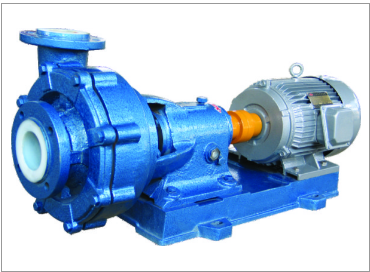
The UHB-ZK listing targets corrosion and wear, the FY/FYS/IHY pages identify submerged or long-shaft arrangements, and FJX has its own forced-circulation listing. Keep these choices separate: a corrosive slurry, a liquid below floor level and a closed process loop need different installation and auxiliary information.
| Actual catalogue direction | First decision | Documents to compare |
|---|---|---|
| FSB / FZB / IH | Liquid chemistry and transfer or priming arrangement | Exact wetted materials, seal selection and duty curve |
| UHB-ZK | Corrosion plus particle wear and settling | Particle specification, wear parts, seal/cooling and shutdown procedure |
| WFB / FY / FYS / IHY | Above-liquid suction or tank-supported submerged arrangement | Levels, priming or shaft length, support and removal drawing |
| FJX | Forced circulation in the process loop | Loop resistance, process pressure, temperature and selected curve |
Explore the fluoroplastic chemical-pump entry →
Read the IH chemical-centrifugal direction →
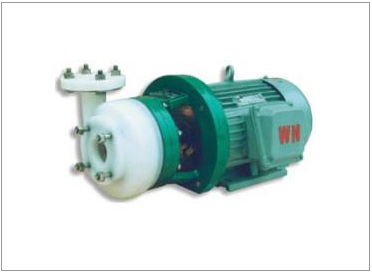
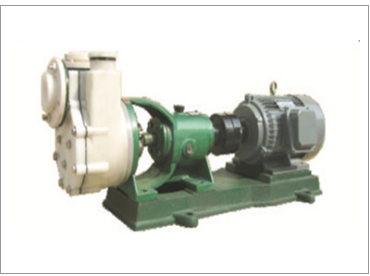
Seal cooling and shutdown sediment are part of the slurry specification
Hengli’s UHB operating article discusses a pump cavity losing liquid because of an emptied tank, blocked intake or unsuccessful low-level suction. It also discusses interruption of seal cooling and thermal shock at a heated ceramic sleeve. Translate those observations into the supplied system: which seal arrangement is offered, whether it needs external cooling or flushing, and how loss of liquid or that service is detected.
The same article proposes a siphon-vessel arrangement for a low-position tank and flushing before shutdown where solids can settle. Ask for a drawing and procedure specific to the offered installation. A vessel choice affects retained liquid, venting and maintenance access; a shutdown flush must use a liquid compatible with the process and the supplied construction.
Obtain the selected unit’s operating limits and protection logic for loss of liquid and seal service. Agree a response to an empty tank, blocked suction or lost cooling, together with compatible cleaning and restart instructions. Include these checks in commissioning so an abnormal condition is detected before continued operation damages the pump.
WFB and long-shaft sump pumps need different site drawings
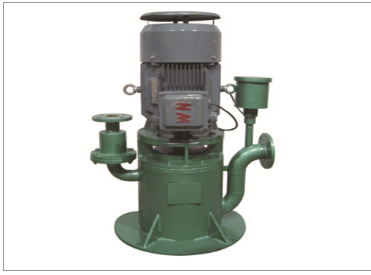
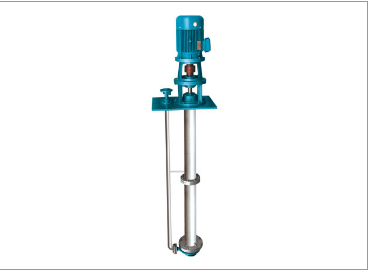
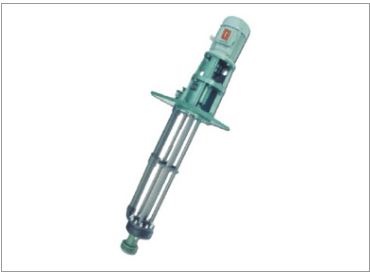
WFB has a dedicated self-priming catalogue page. FY is listed as a long-shaft sump pump, FYS as a fluoroplastic sump pump and IHY as a long-shaft arrangement. A photograph of a long column cannot establish the immersion length, bearing layout or minimum tank level of the pump being quoted.
For a sump proposal, send the tank section, mounting-cover dimensions, lowest and highest liquid levels, sediment depth, discharge position and available lifting height. Ask for the offered shaft/support arrangement and the procedure for removing the unit. Include any liquid circulation or external services needed by its bearings and seal.
For WFB or FZB, instead define the suction-line length, elevation, retained-liquid and venting arrangement, and the required restart behaviour after a stop. Request the selected unit’s priming test conditions and operating instructions. Do not turn a “self-priming” label into an unlimited suction-lift or dry-running claim.
Read the WFB self-priming entry →
Compare the sump-pump direction →
Process-loop pressure and pump differential head are different inputs
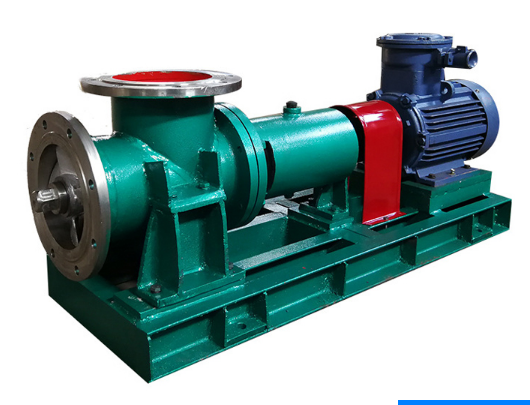
The catalogue has a dedicated FJX forced-circulation listing. Its product page supplies an assembly photograph rather than a usable model-by-model performance table. For an enquiry, define the required circulation flow, loop resistance, vessel pressure, liquid temperature and properties. Request the selected impeller/speed curve and power requirement for that actual liquid.
Identify the installed process pressure separately from the differential head needed to circulate through the loop. Include connected equipment, expansion/support constraints, nozzle loads and any seal-system interfaces. A circulation-pump designation is not a pressure-class, temperature-limit or mechanical-seal specification.
Compare FJX proposals using the issued selection, assembly dimensions and stated installation exclusions. Keep the chosen pump and seal configuration attached to the offer so the loop piping, driver and auxiliary services can be checked against the same revision.
Use measured baselines and drawing-linked spares
The introduction states that the company has a computer-controlled pump testing centre. Treat that as the supplier’s description of its testing capability, then ask for the order’s actual test procedure and results. Agree the pump configuration, liquid, speed and measured flow, head and power; a general testing-centre statement does not verify the offered duty.
The maintenance notes discuss bearing lubrication and temperature, pressure, vibration, coupling alignment, controls, cooling, guards and leakage. Use these to define the supplied inspection schedule and commissioning baseline. Keep the lubricant, service interval and alarm limits tied to the selected pump’s instructions rather than applying one article’s number to every pump.
Because the company also lists seals and valves, specify spares by the actual drawing and materials: seal faces and elastomers, shaft sleeve, impeller, bearings and valve trim. Ask how contaminated components are isolated and cleaned before service, and what parts or site work the warranty excludes.
Send the chemistry and installation brief with the required duty
A Hengli proposal should resolve the pump direction, exact material construction, site arrangement and auxiliary-service responsibilities in one documented offer. Include the information below so alternative proposals can be compared against the same process and maintenance requirements.
Prepare a structured chemical-pump RFQ →
Liquid and duty
- Chemical composition/concentration, temperatures, density, viscosity and particle/settling characteristics.
- Required flow and differential head; process pressure and operating hours.
- Exact selected model, speed, wetted materials and issued performance curve.
Installation and auxiliaries
- Tank section or suction/loop drawing, water levels, mounting and service-removal dimensions.
- Seal construction and required cooling/flushing services, instruments and protection response.
- Driver, coupling/guard, valves, base and control supply boundaries.
Acceptance and maintenance
- Configuration-specific hydraulic test procedure and measured results.
- Priming, cleaning, shutdown and restart instructions for the actual installation.
- Drawing-linked wear/seal spares, lubrication schedule, destination support and exclusions.
Submit through KanBeng’s enquiry form with this factory named in your request.