
Define gas chemistry before choosing the liquid-ring system
Yancheng Tianyuan Pump Co., Ltd.
Tianyuan lists YLJ chlorine and hydrogen-chloride equipment, 2BE vacuum pumps and 2SK-P ejector units. Compare gas conditions, working-liquid circuits and complete package scope before selecting a model.
- Company identity
- 盐城市天源泵业有限公司
- Listed base
- Binhai, Yancheng, Jiangsu
- Selection focus
- Gas · moisture · liquid · pressure
- Catalogue directions
- YLJ · 2BE · 2SK-P
Tianyuan’s chemical-gas equipment needs a process brief, not a water-pump duty point
Yancheng Tianyuan Pump Co., Ltd. identifies itself as 盐城市天源泵业有限公司, with its listed base in Binhai, Yancheng, Jiangsu. Its catalogue separates YLJ chlorine and hydrogen-chloride equipment, liquid-ring compressors, 2BE water-ring vacuum pumps and 2SK-P atmospheric-ejector units. The first procurement decision is therefore the gas service and pressure regime, rather than a liquid flow and head comparison.
For chlorine or hydrogen chloride, identify the gas composition, moisture condition, impurities, suction temperature and expected condensate. Give normal operation, start-up and upset conditions separately. Specify suction and discharge pressures on an absolute basis, or clearly identify gauge readings and the local atmospheric reference.
Also distinguish actual inlet volume from a normalised gas volume. State the temperature and pressure used for any Nm³/h figure. An apparent capacity match can disappear when two quotations use different volume references or when absorption in the working liquid changes the gas stream.
Separate chemical-gas compression from ordinary vacuum service
The catalogue directions below establish what to ask Tianyuan to select. They do not establish that a standard unit can handle every corrosive gas or that a photographed pump includes the complete treatment package.
| Published direction | Selection question | Required proposal detail |
|---|---|---|
| YLJ chlorine equipment | What are the moisture condition and pressure rise? | Exact construction, working liquid, gas-contact materials and duty curve |
| YLJ hydrogen-chloride equipment | Will water, absorption or condensate change the process? | Composition limits, material schedule, liquid circuit and separation arrangement |
| 2BE water-ring vacuum pumps | Is the gas compatible with the standard construction? | Capacity at working absolute pressure and actual service-liquid conditions |
| 2SK-P atmospheric-ejector units | Is a combined ejector and liquid-ring system needed? | Combined curve, ejector arrangement, operating sequence and utilities |
A chlorine proposal must define “dry” against the operating conditions
Tianyuan lists YLJ1800 chlorine equipment and other YLJ variants. The name alone is not a verified capacity or discharge-pressure guarantee. Request a signed selection sheet identifying the offered model, gas conditions, pressure rise, absorbed power and permitted operating range.
Primary chlorine-industry guidance treats dry-chlorine conditions as dependent on temperature, pressure and the facility’s moisture criteria. Ask for the moisture limit and measurement basis at each relevant operating stage, including start-up and cooling. Do not select materials from the word “chlorine” alone or assume that a dry-gas assessment remains valid after liquid carryover.
The material schedule should cover the casing, impeller, shaft protection, seal faces, elastomers, separator, valves and instrument connections. Ask the proposer to state which parts contact gas, working liquid or both, and to justify the construction for the stated moisture and temperature range. Agree how any loss of working-liquid circulation or abnormal pressure is detected and handled.
For hydrogen chloride, water is a process variable as well as a utility
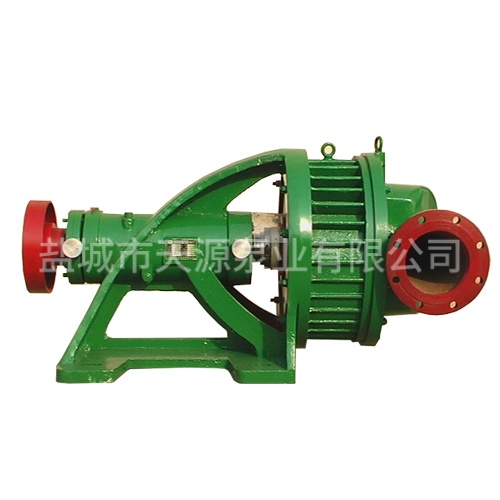
The catalogue separately names YLJ750/0.3 hydrogen-chloride equipment and a 316L-labelled hydrogen-chloride listing. Neither the model code nor a material in a page title replaces a complete duty sheet. Ask for the selected model’s curve and a component-level material schedule for the actual gas and working liquid.
For a gas that dissolves readily in water, the working-liquid choice affects both gas handling and the liquid leaving the system. Define inlet moisture, liquid composition, expected absorption, temperature control and the acceptable change in concentration. Request an agreed mass-balance basis rather than treating inlet gas volume as unchanged outlet product volume.
Identify the make-up liquid, circulation rate, cooler, separator, drainage and containment arrangements. For an existing plant, include the present liquid analysis and corrosion history. A stainless-steel label does not establish compatibility for every concentration, temperature or contaminated stream; obtain the supplier’s written construction basis for this duty.
2BE maximum gas volume and minimum suction pressure are separate ratings
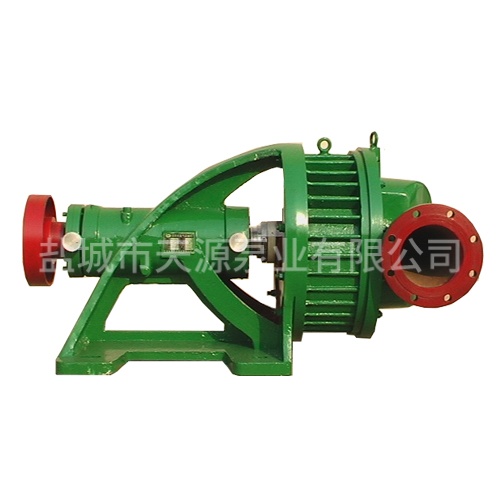
The coherent 2BE family description presents a single-stage, single-acting water-ring pump for gas without solid particles, not readily soluble in water and non-corrosive under the stated standard construction. Corrosive or otherwise different service requires selection of the working liquid, wetted materials and seals; the chemical-gas YLJ direction should not be replaced by a standard 2BE assumption.
The published table pairs pump speed with maximum gas volume and motor power. Selected entries are reproduced below. Its minimum suction absolute pressure is listed separately as 33 hPa, equivalent to 3,300 Pa. That does not mean the listed maximum gas volume is delivered at 33 hPa.
Request the full curve at the required pressure, inlet-gas conditions and service-liquid temperature. The published rows do not establish all test reference conditions, so agree those conditions before comparing capacity. Confirm the offered drive, electrical supply and motor selection rather than using a catalogue maximum as a loaded-process guarantee.
| Published model | Pump speed | Maximum listed gas volume | Motor / drive |
|---|---|---|---|
| 2BE203 | 980 r/min | 18 m³/min | 37 kW / coupling |
| 2BE252 | 740 r/min | 28 m³/min | 45 kW / coupling |
| 2BE253 | 740 r/min | 39 m³/min | 75 kW / coupling |
| 2BE303 | 590 r/min | 52 m³/min | 75 kW / coupling |
Specify what surrounds the pump before comparing prices
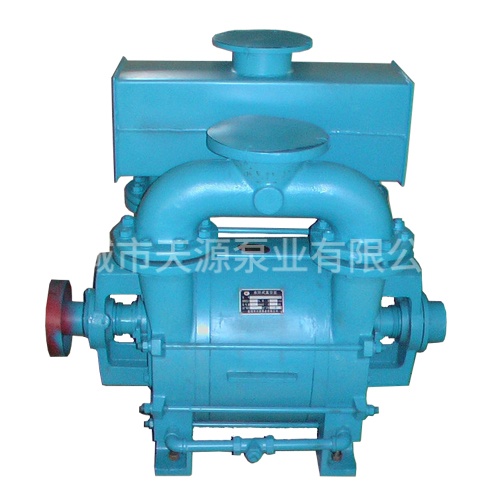
For chemical-gas compression, list the inlet separator or other carryover protection, gas/liquid separator, cooler, circulation equipment, isolation valves, instruments and exhaust or treatment connections required by the process design. Ask which items are included, which are optional and which belong to the plant. A bare-pump photograph cannot establish a complete process package.
For the 2SK-P direction, request the combined ejector and liquid-ring selection with capacity across the required pressure range. Confirm the ejector connection, pump staging, working-liquid supply and shutdown sequence. Do not substitute a domestic water jet-pump duty or infer a combined ultimate pressure from unrelated vacuum-pump literature.
Agree the control narrative and cause-and-effect schedule for the selected system. Identify measurements, trip actions, restart conditions and the interface with plant isolation or treatment equipment. Electrical protection, gas containment and material compatibility need a complete application review; a motor designation alone does not establish suitability of the whole package.
Make acceptance reproducible at the agreed gas and liquid conditions
Compare quotations against the same suction and discharge pressures, gas-volume reference, composition, temperature and working-liquid conditions. For vacuum service, distinguish a blank-off minimum-pressure test from continuous gas capacity at working pressure. For compression, define the test gas and how the contractual duty is demonstrated without assuming an air test reproduces every process effect.
Include the pressure and temperature measurement locations, instrument accuracy, liquid circulation and cooling conditions, electrical input and permitted deviations in the acceptance schedule. Record the actual installed pipework and separator arrangement if performance is to be demonstrated at the process connection rather than at the pump flange.
Request the final general arrangement, wetted-parts list, operating instructions, control drawings and spare-part identifiers. Plan access for seal, bearing and impeller service, with the required decontamination and isolation procedure defined by the plant. Confirm who supplies commissioning instruments, service-liquid preparation and operator training.
Send Tianyuan a gas-service and package brief through KanBeng
These three groups turn a broad chlorine, hydrogen-chloride or vacuum enquiry into a selection that can be checked. Attach the existing nameplate and operating records when replacing installed equipment.
Review the existing Tianyuan chemical-gas equipment reference →
Review the existing 2BE vacuum family reference →
Review the existing 2SK-P vacuum-unit reference →
Prepare a structured equipment enquiry →
Gas and operating duty
- Composition, moisture and impurities; suction temperature; normal, start-up and upset conditions.
- Required suction/discharge absolute pressures, gas volume and its temperature/pressure reference.
- Continuous load or evacuation cycle, condensate and any existing equipment performance shortfall.
Working liquid and construction
- Liquid composition, temperature, supply/circulation conditions and expected absorption or contamination.
- Required wetted-part schedule, seal arrangement, cooling, separation and liquid disposal boundaries.
- Plant utility availability, electrical supply, installation space and maintenance/isolation requirements.
Supply and acceptance
- Selected pump/ejector variant, complete curve and package bill of materials with exclusions.
- Control narrative, measurements, trips, plant interfaces and agreed restart conditions.
- Test basis, acceptance measurements, drawings, manuals, spare parts and commissioning responsibilities.
Submit through KanBeng’s enquiry form with this factory named in your request.