
Reciprocating injection pumps, slurry transport and oilfield skid packages
Baoji Jinxin Pump Manufacturing Co., Ltd.
Jinxin makes reciprocating equipment for several very different jobs: pressurising injection water, placing polymer treatments, moving drilling fluid and transporting abrasive slurry. The useful starting point is the process and its suction conditions, not simply the highest pressure in a brochure.
- Company identity
- 宝鸡市金心泵业制造有限责任公司
- Location
- Baoji, Shaanxi
- Injection directions
- ZS · 3ZY · 3TB · 3MZB
- Slurry directions
- ZB drilling · 3PNB flushing-packing
Keep the order tied to the correct Jinxin company
Baoji Jinxin Pump Manufacturing Co., Ltd. identifies itself in Chinese as 宝鸡市金心泵业制造有限责任公司. The company introduction dates its establishment to April 2000 and describes reciprocating pumps and petroleum drilling/extraction equipment. Its contact information distinguishes an office address from a Chencang production address; name the actual inspection and dispatch location in the order.
Baoji’s industrial authority lists this exact company and its ZS mechanically driven reciprocating pump in the 2023 Shaanxi Industrial Excellence selection, announced in January 2024. That dated product recognition supports the ZS identity. It is distinct from a current management-system certificate, a hazardous-area approval or acceptance of your delivered skid.
The catalogue includes both individual pumping mechanisms and assembled systems. Decide whether you are buying a pump, a motor-driven set or a fully controlled skid. Define that boundary before comparing prices: the inlet supply, flushing arrangement, pressure protection and installation work can be as important as the main pump.
ZS and 3ZY need different suction and pressure information
ZS covers horizontal three- or five-cylinder, single-acting plunger pumps. The product page names 3ZS90, 3ZS132, 3ZS220, 5ZS220 and 5ZS400 bases, with separate family envelopes of 2–86 m³/h, 3–54 MPa and 45–400 kW. Read the selected plunger, speed and motor column together; those limits are not one simultaneous duty.
The downloadable ZS manual gives a useful concrete contrast for 3ZS(90): one column pairs 5 m³/h with 52 MPa and a 35 mm plunger; another pairs 20 m³/h with 13 MPa and a 70 mm plunger. Both are in its 90 kW, 120 mm stroke, 260 strokes/min table. A designation alone therefore does not settle pressure and delivery. Ask for the exact column and operating liquid in the quotation.
3ZY is a hydraulically balanced three-plunger booster intended for clean, ambient-temperature water and single-well boosting. Its manual defines pressure increase as outlet pressure minus inlet pressure. State the existing line’s minimum and maximum pressure as well as the required outlet pressure; quoting only final pressure loses the defining booster condition.
| Process | Catalogue direction | Input that changes selection |
|---|---|---|
| Oilfield water injection | ZS | Paired delivery/pressure, plunger diameter, suction pressure and drive |
| Boosting an existing pressurised supply | 3ZY | Inlet-pressure range, differential pressure, clean-water condition |
| Polymer or plugging treatment | 3TB | Formulation, viscosity/solids, injection schedule and low-speed behaviour |
| Coal-seam injection or fracturing | 3MZB | Injection cycle, approved mine electrical package and matched performance |
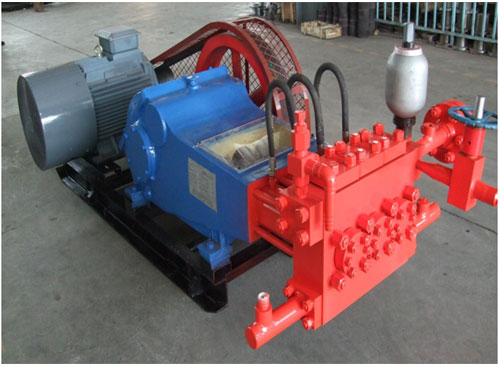
3TB selection includes shear, inlet pressure and adjustment
The 3TB description concerns profile control, plugging and polymer injection. It emphasises a long stroke and low reciprocating frequency to reduce treatment-fluid shear. The useful procurement question is how your formulation behaves through the selected valves and speed range: provide concentration, viscosity, particle or fibre characteristics, temperature and mixing history.
The published table distinguishes, for example, 3TB-2.5/16 at 2.5 m³/h, 16 MPa and 15 kW; 3TB-5/25 at 5 m³/h, 25 MPa and 45 kW; and 3TB-10/30 at 10 m³/h, 30 MPa and 110 kW. Its shared entries state a 120 mm stroke and 0.05–0.2 MPa inlet pressure. These are catalogue selection entries; approve the actual treatment duty and motor with the issued quotation.
The notes make variable-frequency adjustment optional and discuss changing inlet/outlet orientation to suit installation. Specify the required range, allowable changes in formulation, interface orientation and whether the VFD and cabinet are included. Request a treatment-fluid acceptance method rather than converting the catalogue’s broad plugging-agent list into universal chemical compatibility.
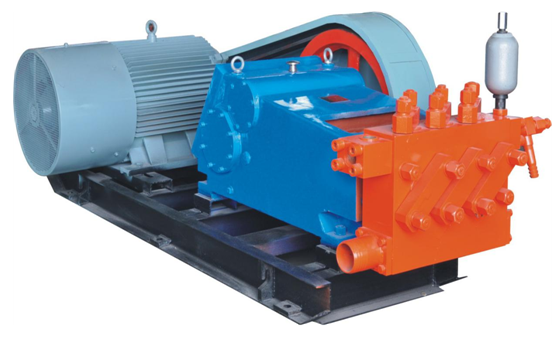
A 3MZB set combines a pump, transmission and mine electrical equipment
The 3MZB page describes a skid with power end, gearbox, fluid end, lubrication and a mining explosion-protected motor. It offers direct gearbox/motor transmission and alternatives incorporating hydraulic transmission. Define fixed or mobile installation, the injection/fracturing sequence, duty cycle, water supply and controls before selecting the drive arrangement.
For 3MZB400 the page separately lists maximum pressure 40 MPa, maximum flow 70 m³/h and maximum power 330 kW; 3MZB600 separately lists 40 MPa, 94 m³/h and 450 kW. These maxima must not be combined into an asserted working point. Obtain matched pressure/flow at the selected plunger and speed, with the thermal and drive limits for the required cycle.
Require the exact motor and electrical protection documents applicable to the installation, the skid drawing, lifting and transport limits, pressure-protection arrangement and commissioning procedure. Naming a mining motor on a catalogue page does not establish approval of every configuration or authority to operate it at a particular mine.
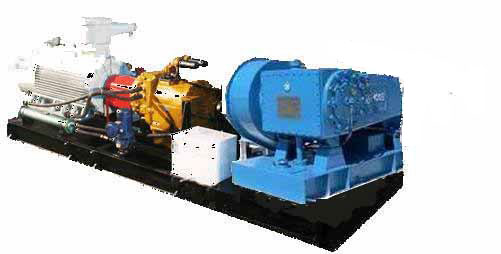
ZB configuration and 3PNB flushing have different site interfaces
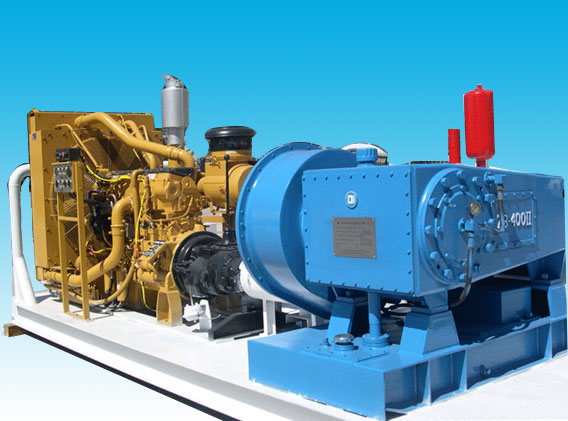
Jinxin’s ZB technical article distinguishes ZB400 and ZB600 piston or plunger arrangements from ZB800’s piston arrangement. It describes diesel/hydraulic transmission, fixed electric variable-speed and vehicle-drive configurations. Specify drilling-fluid properties, operating cycle, mobility and available drive; agree the actual fluid end, transmission and replaceable wear parts on the drawing.
Its ZB notes identify spray support for piston arrangements, possible inlet charging equipment, outlet stabilisation, a shear-pin safety valve and optional pressure alarm/shutdown. Build these into the skid scope and control schedule where applicable. Do not assume every photographed unit contains all optional auxiliaries.
3PNB slurry transport uses separate valve assemblies and pressurised flushing water around the plunger packing to keep slurry away from the sealing region. The downloadable manual separates the main slurry pump from its fitted flushing pump. For 3PNB01-20/2 it lists main delivery 20 m³/h at 2 MPa with 15 kW, alongside a 3DS-3/2.5 flushing unit at 3 m³/h and 2.5 MPa with 3 kW. This illustrates two different liquid circuits, not an extra slurry rating.
Provide slurry solids, particle distribution, concentration, abrasiveness and settling behaviour, plus available clean flushing water and drainage. Define how flushing pressure/flow will be maintained and what happens on loss of flushing. Request valves, plungers and packing by the selected assembly’s drawing numbers rather than ordering a generic “mud-pump spare kit”.
3DS and corrosion-resistant 3DT selection begins with the liquid
The 3DS(T)3 page describes high-pressure liquid supply for hydraulic equipment, pressure testing and cleaning. Its 3DT3 direction uses corrosion-resistant wetted materials. State the actual acid/alkali composition, temperature, viscosity, solids and exposure cycle, and obtain a component-level fluid-end and sealing specification.
The page asks buyers to distinguish continuous from intermittent operation, outdoor from other installation conditions, and explosion-protection needs. Variable delivery may use a speed-controlled motor or VFD. Specify usable low-speed operation, control inputs and the pressure/flow sequence; an adjustable drive is not automatically included or sufficient for precise metering.
The separate metering entry and several assembled-skid entries are primarily photographs/download pointers. For a quantitative dosing requirement, define dose range, backpressure, calibration and control interface on an issued metering schedule. For a treatment skid, require a piping diagram and bill of materials identifying the pumps, tanks, valves, instrumentation and cabinet actually supplied.
Inspect the pressure package and documentation that will ship
The company introduction lists CNC machining, grinding, coordinate measurement, a pump test bench, hardness/strength and temperature/noise instruments. Turn that stated equipment scope into order-specific evidence: dimensional reports for critical fluid-end parts, material identification, inspection records and a witnessed or documented selected-duty test.
A useful skid test records liquid, suction pressure, delivery, discharge pressure, speed, motor input, temperature and test duration. Agree how pressure protection and shutdown functions are demonstrated, how auxiliary flushing is tested, and which dimensions and connections are checked against approved drawings.
Specify the edition and applicability of the mechanical reciprocating-pump or metering-pump standard on the contract and report. A 2021 provincial review recorded outdated standard editions in this company’s then-public declaration; that historical finding does not determine today’s documentation. Obtain the current declared edition and the test scope for this order.
Include operating and maintenance manuals, sectional drawings, spare-part identities, lubrication and flushing instructions, and a service plan for the destination. The website’s domestic response-time and warranty statements should be translated into written territory-specific terms, not copied as an overseas arrival promise.
Give Jinxin the operating cases and package boundary
Send one duty schedule and an equipment-scope drawing with your quantity, destination and required inspection. Identify who provides installation and commissioning, and distinguish initial spare parts from operating consumables.
Prepare a structured pump quotation request →
Injection water or existing-line boosting
- Normal/peak delivery, inlet-pressure range, required discharge and pressure increase.
- Water quality, plunger/speed selection, drive supply and operating cycle.
- Pulsation/pressure protection, controls, skid connections and acceptance point.
Polymer treatment or abrasive slurry
- Formulation, viscosity, solids/particle distribution and treatment or transport cycle.
- Low-speed/valve requirements or clean flushing-water availability and drainage.
- Wear-part drawing numbers, loss-of-feed/flushing response and trial/test conditions.
Mine, drilling or process skid
- Mine/electrical requirements or mobility, drive, hydraulic/chemical duty and site limits.
- Main and auxiliary circuits, cabinet/interlocks, drawings, lifting and transport scope.
- Current documentation, test records, manuals, destination service and spares.
Submit through KanBeng’s enquiry form with this factory named in your request.