
OEM pump supply · fluid-system integration · replacement planning
Wuhan Keerfu Pump Co., Ltd.
Wuhan Keerfu’s published business centres on supplying named OEM fluid-handling equipment and arranging pump-system projects. Start with the original equipment identity and the process duty, then make the supply, integration and service responsibilities explicit.
- Chinese company name
- 武汉科尔富泵业有限公司
- Published base
- Wuhan, Hubei
- Business role
- Fluid-handling equipment supplier and system integrator
- Catalogue directions
- ALLWEILER / IMO · Viking · SANDPIPER
Separate the OEM pump from the company supplying the project
Wuhan Keerfu Pump Co., Ltd. identifies itself as 武汉科尔富泵业有限公司, with KLF TEC on its original company mark. Its company introduction describes fluid-handling equipment supply, pump-group modification and fluid-system design and assembly. The catalogue includes ALLWEILER and IMO screw pumps, Viking gear pumps, SANDPIPER diaphragm pumps, and other fluid-control equipment. These are named OEM product lines, not evidence that Keerfu manufactures every listed pump in Wuhan.
For a purchase, distinguish the pump manufacturer, the contracting supplier and the party responsible for the assembled system. A pump-only replacement needs a complete OEM model and interface match; a retrofit also needs an agreed engineering and commissioning scope. Put the applicable brand supply authority, equipment origin, warranty route and spare-parts traceability into the offer. A catalogue entry alone does not define those commercial responsibilities.
| Buying task | Useful starting point | Required agreement |
|---|---|---|
| Replace an installed pump | OEM nameplate, serial number, complete code and outline | Like-for-like specification, revision, ports, shaft and approved materials |
| Change duty or assemble a pump group | Process duty plus system schematic and controls | Selection calculations, equipment list, interfaces and acceptance boundaries |
| Repair or obtain replacement parts | Failure history, original parts list and assembly revision | Identified parts, inspection scope, test report and warranty responsibility |
Treat screw-pump series and the liquid condition as separate decisions
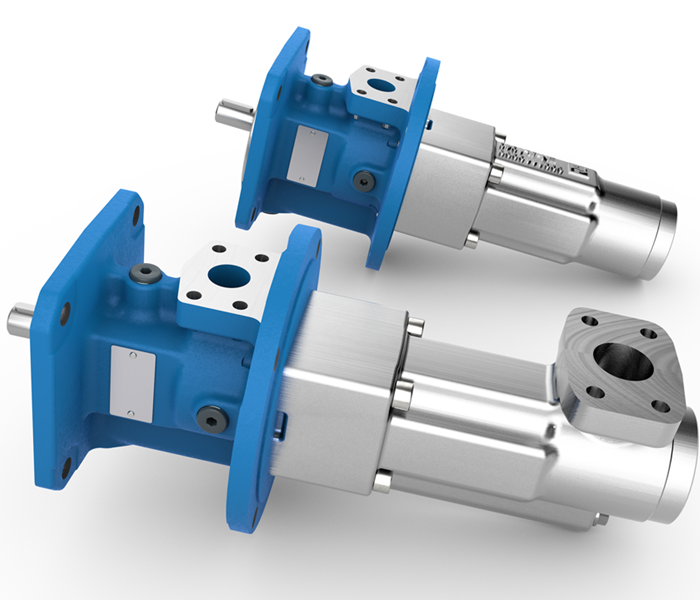
Keerfu publishes distinct IMO US and IMO AB listings, as well as ALLWEILER SN, AFI and EMTEC-C entries. Keep the full brand and series on the enquiry: a generic “IMO screw pump” description does not identify a rotor set, seal, connection arrangement or approved replacement. For an existing installation, include the original nameplate and serial number, speed, rotation, coupling dimensions and the actual fluid grade.
The original ALLWEILER catalogue classifies EMTEC-C as a three-screw pump for machine-tool emulsions up to 80 bar, while EMTEC-A is separately described up to 120 bar. Keerfu’s EMTEC-C text gives 86 bar, so that value is not adopted here as an approved rating. Request the selected current model data and curve, with operating pressure, temperature and emulsion condition stated together. Do not transfer the A-series pressure limit onto a C-series offer.
The CIRCOR three-screw overview distinguishes close-fitting rotors and gives separate series envelopes, including liquid and contamination limits. Keerfu’s broad claims about high-solids or semi-solid service therefore need a specific OEM selection, not just a three-screw label. State particle size, concentration, free water, gas, lubricity and viscosity at the cold start as well as normal operation. Let the chosen product documentation establish the admissible liquid and filtration requirement.
Use the actual SG model row rather than combining family maxima
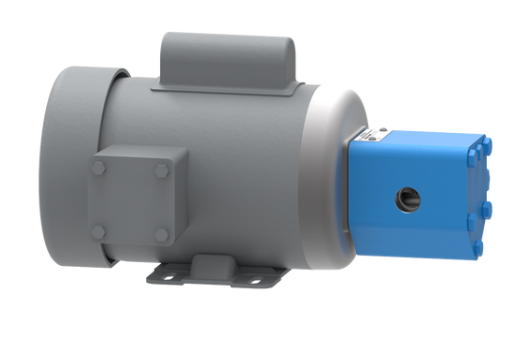
Keerfu’s Viking SG entry describes pipeline injection, sampling and oil-polishing applications. SG is an external spur-gear series, distinct from Viking’s internal-gear product directions. The original OEM page lists direct, motor and bracket mounting choices; specify the physical build together with shaft seal and connection details rather than accepting a pump selected only by nominal flow.
At the published nominal 1,750 r/min, the OEM table lists SG-1436 at 125 GPM (473 L/min) and 34 bar continuous pressure, while SG-1456 is listed at 190 GPM (719 L/min) and 13 bar. Those are different model rows. The largest listed flow cannot be combined with the family’s highest pressure to describe one pump. Ask for the selected model curve at the proposed speed, viscosity and pressure, including the drive power.
For pipeline sampling, define sample volume, timing, backpressure and acceptable temperature change. For injection, define the receiving pressure range and required turndown. For a retrofit, state whether the motor, bracket and coupling are retained. Specify the protective arrangement and shutdown logic in the system design; a flow requirement alone does not make the package complete.
| OEM SG model | Nominal capacity at 1,750 r/min | Listed continuous pressure |
|---|---|---|
| SG-1436 | 125 GPM / 473 L/min | 34 bar |
| SG-1456 | 190 GPM / 719 L/min | 13 bar |
Choose the SANDPIPER valve route before sizing the air supply
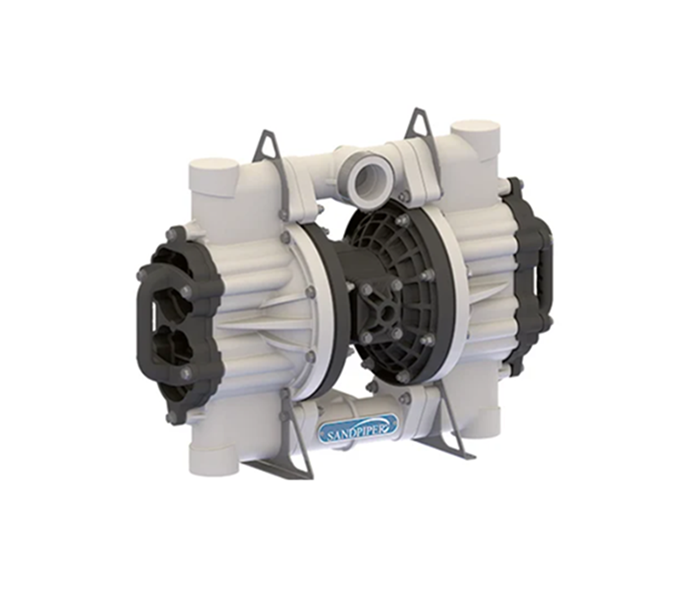
Keerfu lists both heavy-duty flap-valve AODD pumps and a separate 2:1 high-pressure direction. For a solids-bearing sump or transfer task, begin with the settling behaviour and the valve passage. The original SANDPIPER flap range uses bottom discharge and swing-style valves to help move settling solids. Specify the exact pump and wetted construction: the catalogue family includes different sizes and materials, so one maximum solids diameter is not valid for every unit.
Keerfu’s high-pressure text identifies EH2-M. The original SANDPIPER EH2-M page describes a 2-inch compressed-air pump with a 2:1 pressure ratio and a discharge ceiling of 250 psig (17.2 barg). It uses weighted check balls and metallic seats; it is not the same valve route as a solids-handling flap pump. Select from its curve and maximum inlet-air requirements, not by doubling the air pressure without checking the complete assembly.
Provide available air pressure at the pump while running, delivery volume, line size, exhaust conditions and the duty cycle. A compressor’s receiver pressure does not establish available air at the equipment. For chemical service, review every wetted component and elastomer against concentration and temperature. For press feed, include the fill stage, pressure-rise stage and stopping method so the air demand and liquid flow can be evaluated across the cycle.
Define a pump-system handover that the maintenance team can use
Keerfu’s introduction includes pump-group modification and fluid-system design and assembly, while its navigation presents integration and maintenance business routes. The current custom-module category and download table do not publish a detailed standard package. Develop the order around the actual system: a P&ID, equipment list, connection drawing and control sequence, with each supplied and buyer-supplied item identified.
Agree who provides the baseplate, motor, coupling, guards, instruments, valves, filtration and electrical interface. Mark operating and alarm setpoints, shutdown behaviour and the pressure-protection route on the approved schematic. For two pumps in parallel, ask how duty/standby changeover and isolation are handled. Installation access and removal space matter as much as whether the replacement fits the pipe centreline.
For maintenance, supply the complete OEM code and serial number, operating history, symptoms and previous repairs. Request an identified parts list and the inspection/test method before deciding between component repair and replacement. Record the as-built revision, commissioning readings and accepted spares in the handover pack. An unnamed equipment photo or general service slogan is not a witnessed test or an agreed response time.
Prepare an enquiry that distinguishes a new pump from a replacement project
Choose the order type first, then attach the relevant inputs below. Ask for the technical selection, traceable supply scope and delivery documentation in the same quotation. The platform RFQ records the chosen supplier reference; confirm the actual project responsibilities in the resulting offer.
Structure the pump RFQ and document requirements →
Installed equipment and replacement
- OEM brand, full model, serial number and original datasheet revision
- Clear nameplate and connection/shaft/baseplate drawings; current speed and rotation
- Retained motor, coupling and controls; current failure symptoms and replaced parts
Process and utilities
- Required flow across the operating cycle, suction conditions and discharge pressure range
- Liquid composition, viscosity at cold start and normal temperature, solids, water and gas
- Air supply at running load for diaphragm pumps; motor supply and speed control for rotary pumps
Supply and acceptance
- Pump-only, complete drive assembly or engineered module; included instruments and protection
- Brand supply authority, origin, warranty route and traceable parts documentation for the offer
- Approved curve, outline and P&ID where applicable; agreed inspection, commissioning and spare-parts pack
Submit through KanBeng’s enquiry form with this factory named in your request.