
Vacuum technology & scientific instruments · Beijing
KYKY Technology Co., Ltd.
For laboratory and equipment builders, KYKY spans the backing pump, high-vacuum stage and leak-test instrument. Define the gas, target pressure and system interfaces before comparing a pump or a complete package.
- Published Chinese entity
- 北京中科科仪股份有限公司
- Technical origins
- 1958 scientific-instrument predecessor
- Location
- Beijing, China
- Pump directions
- Rotary vane and turbomolecular
- Related equipment
- Helium leak detection, gauges and scientific instruments
Start with the role in your vacuum system
The catalogue covers different jobs. A helium leak detector is an inspection instrument; it is not a replacement for the pumping train that evacuates your process chamber.
| Required job | Published direction | Selection inputs |
|---|---|---|
| Initial evacuation or backing | RV two-stage rotary vane pumps | Gas load, operating pressure, oil compatibility, electrical supply and the high-vacuum pump’s foreline requirements. |
| High-vacuum pumping | Turbomolecular pumps; magnetic-bearing, instrument, grease- and oil-lubricated categories | Gas-specific pumping speed, chamber connection, controller, cooling, foreline and process compatibility. |
| A packaged pumping installation | FJ-300 molecular-pump unit, announced in April 2023 | Current configuration, included backing pump, measurement, valves, controls and chamber connection. |
| Locate or quantify leaks | ZQJ helium mass-spectrometer leak detectors | Test method, allowable leak rate, test-port pressure, test-piece volume and calibration procedure. |
| Measure or isolate the vacuum | Vacuum gauges and valves | Pressure range, gas dependence, flange, seals, control outputs and position in the system. |
RV: specify an oil-sealed backing pump as part of the installation
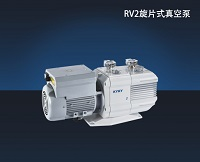
KYKY’s July 2022 RV announcement describes seven two-stage, direct-drive sizes spanning 2–24 L/s. It places the family both in standalone service and as backing pumps for diffusion, Roots and molecular pumping systems. That is a family span, not the operating performance of one RV size; ask for the exact model’s pumping-speed curve and pressure conditions.
The published design includes a fast-closing anti-oil-return arrangement and pressure oil circulation. These features make shutdown behaviour and oil maintenance useful enquiry topics. Specify the process gas and vapour load, ask about the selected oil and gas-ballast operation, and agree how the foreline is isolated during a power loss. An anti-return feature should not be treated as a guarantee of an oil-free chamber.
View the reviewed product family →
For an existing high-vacuum system
Send the high-vacuum pump designation and manual alongside the replacement request. Confirm backing pressure, throughput, pipe connection and shutdown interlocks. Matching only the old motor power or nominal L/s figure leaves important interfaces unresolved.
CXF-200/1401 shows why gas and interfaces belong in the quotation
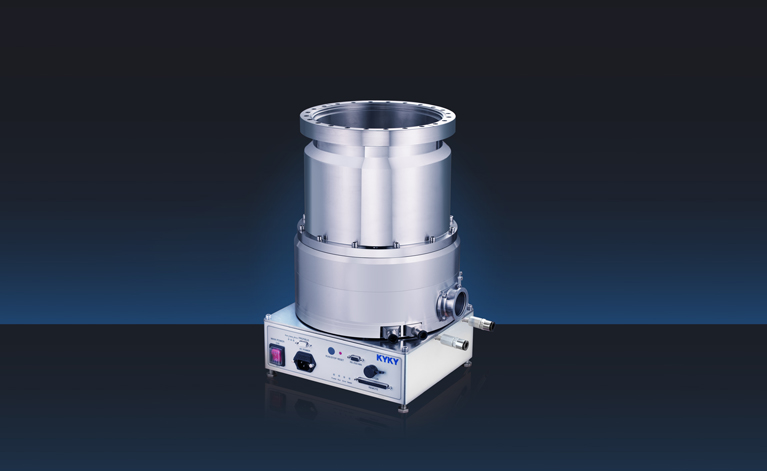
This is one magnetic-bearing molecular-pump example from the official product catalogue. Its figures must not be applied to every CXF pump or to the pressure achievable in a buyer’s assembled chamber.
At system level, ask for pressure and pump-down acceptance at a defined chamber connection, with the agreed gas, backing arrangement and measurement method. Chamber conductance, internal surfaces and process loading belong in that discussion. A catalogue speed at the pump inlet is not a promise of the same speed throughout the installed pipework.
For deposition or etching, provide the gases, reaction products and cleaning sequence. A 2025 Chinese Academy of Sciences report describes KYKY’s work on semiconductor magnetic-bearing pumps, including internal heating intended to reduce deposits and corrosion. That development history is a reason to discuss process-specific designs; it does not establish that the standard CXF example is suitable for every aggressive process.
| Model-specific detail | Published value | What to settle before purchase |
|---|---|---|
| Pumping speed by gas | N₂ 1,280; Ar 1,100; He 880; H₂ 560 L/s | State the actual gas mixture and throughput. A nitrogen figure does not describe hydrogen pumping. |
| Inlet and outlet | DN200 ISO-F standard inlet; DN200 CF optional; KF40 outlet | Match flange standard, seal, chamber geometry and foreline connection on an approved drawing. |
| Cooling | Water cooling; listed water flow 2 L/min and recommended temperature 20 ± 5 °C | Include the cooling-water supply and its operating conditions in the installation scope. |
| Matched power supply/controller | CXFD-1001 | Request the complete matched package, supply voltage version, cables and control interface. |
ZQJ-230D: agree the test method before comparing sensitivity
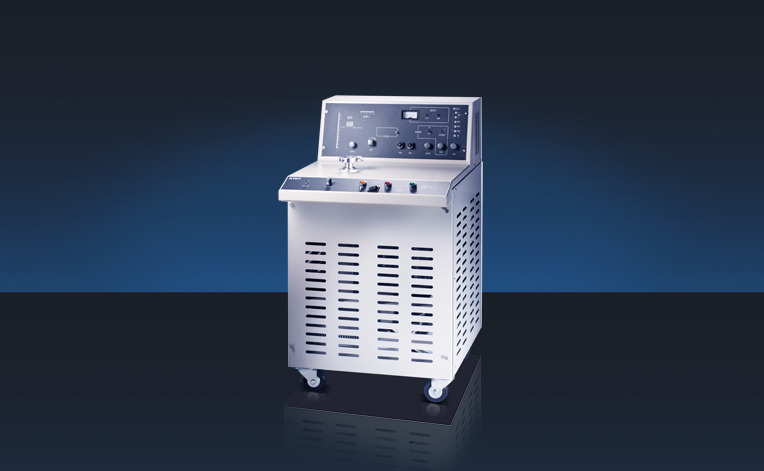
The ZQJ-230D product page describes a PLC-controlled instrument with leak-test and venting states, a molecular-pump system and vacuum protection. It lists a minimum detectable leak rate below 5 × 10⁻¹¹ Pa·m³/s, maximum test-port pressure of 20 Pa and response time no greater than 3 seconds. These are published instrument specifications, not the permissible leak rate of your component.
Set the component acceptance limit and method separately. State whether the part will be evacuated or tested by another agreed arrangement, its internal volume, preparation, connection fixture and available helium. Ask how a calibrated reference leak will be used and how background, stabilisation and recovery between tests are handled. The required production cycle includes loading and evacuation as well as the instrument response.
Define the acceptance quantity
Put the leak-rate limit, units, test gas and method on the test specification. Use the same units in the quotation and report.
Agree the fixture and sequence
Describe the component, port, evacuation, helium application and handling. Ask for the proposed sequence and its timing.
Request traceable test records
Agree calibration information, reference-leak identity, background checks, result storage and the record issued for each batch or part.
Match the business and evidence to the equipment being bought
KYKY identifies its Chinese entity as 北京中科科仪股份有限公司. The company traces its technical origins to a Chinese Academy of Sciences scientific-instrument organisation established in 1958. This is predecessor history; it is not presented here as the incorporation date of the present legal entity. The quotation and purchase order should name the actual supplying entity and equipment configuration.
Its business includes electron optics as well as vacuum technology. A scanning electron microscope, a vacuum component and a custom leak-test station are different supply scopes. For an instrument-builder enquiry, specify whether you want a replaceable pump, a matched pumping package or an engineered subsystem; identify who supplies and integrates the chamber, controls and instrumentation.
A May 2021 report from CAS Holdings records an association appraisal of KYKY’s magnetic-bearing molecular-pump series, including a laboratory visit and review of prototype test material. Alongside the 2025 CAS report, it corroborates a documented development programme. These dated records do not replace the current drawing, certificate scope or acceptance test for your ordered unit.
Send a vacuum brief that resolves system interfaces
Add quantity, destination, desired delivery date and whether the purchase is a new installation or a replacement. Use the relevant group below to make the technical and commercial scope comparable.
Process & vacuum target
- Gas species, vapours, particles and reaction products; normal and peak gas load.
- Target operating pressure, chamber volume and required evacuation sequence.
- Oil or contamination restrictions, cleaning cycle and ambient conditions.
Pump train & utilities
- Existing or preferred pump designation; backing pump and foreline details.
- Inlet/outlet flange standards, mounting drawing and available installation space.
- Power version, controller and interlocks; cooling-water conditions and included cables or valves.
Acceptance & service
- For leak testing: limit with units, component volume, test method and calibrated reference leak.
- Agreed performance or leak-test procedure, tolerances, report format and witness requirements.
- Spare parts, oil and maintenance instructions; start-up assistance and scope of supplied accessories.
Submit through KanBeng’s enquiry form with this factory named in your request.
Documentation used for this profile
Reviewed on 8 October 2026 using the company’s identity and product pages, its dated RV and FJ-300 announcements, and CAS/CAS Holdings reports. The CXF and ZQJ figures above belong to the named examples. Project selection and enquiry preparation are KanBeng editorial analysis; agree the current offered revision and order-specific acceptance before purchase.
Report an outdated detail · Return to the enquiry checklist ↑