Special-metal process pumps, evaporation circulation and replacement components
Baoji Mingyang Pump Co., Ltd.
A pump circulating concentrated liquor through an evaporator faces a different selection problem from a pump emptying a chemical sump. Mingyang’s catalogue offers both directions. Choose the hydraulic arrangement first, then match every wetted component and seal to the actual process chemistry and installation.
- Company identity
- 宝鸡铭扬泵业有限公司
- Location
- Baoji, Shaanxi
- Process directions
- FJX circulation · YCZ transfer · YT submerged
- Additional supply
- Special-metal valves, pump parts and custom machined components
A special-metal equipment supplier, with several different order boundaries
Baoji Mingyang Pump Co., Ltd. identifies itself as 宝鸡铭扬泵业有限公司. Its company introduction covers titanium, nickel, zirconium, tantalum and composite-material equipment, including centrifugal, mixed-flow, axial-flow and submerged pumps, valves, pump components and non-standard machined parts. The Shaanxi Equity Exchange’s company entry independently links that Chinese entity to the same website and describes its titanium-pump, valve, spare-part and custom-product directions.
The exchange entry gives a registered location in Baoji’s high-tech development area; the company website publishes a different operating address in the same wider area. Match the legal name, quotation issuer, fabrication site and inspection location on the order instead of assuming that registration and production take place at one address. The exchange record is identity and business-scope evidence, rather than a pump test or an export approval.
For a complete unit, define the hydraulic pump, motor, coupling and guard, base, seals and auxiliaries. A parts order instead needs component dimensions, material grade and tolerances. The broader equipment introduction does not establish that an evaporator, its process design or its electrical control system is included with a pump.
FJX: establish the circulation requirement before selecting an impeller size
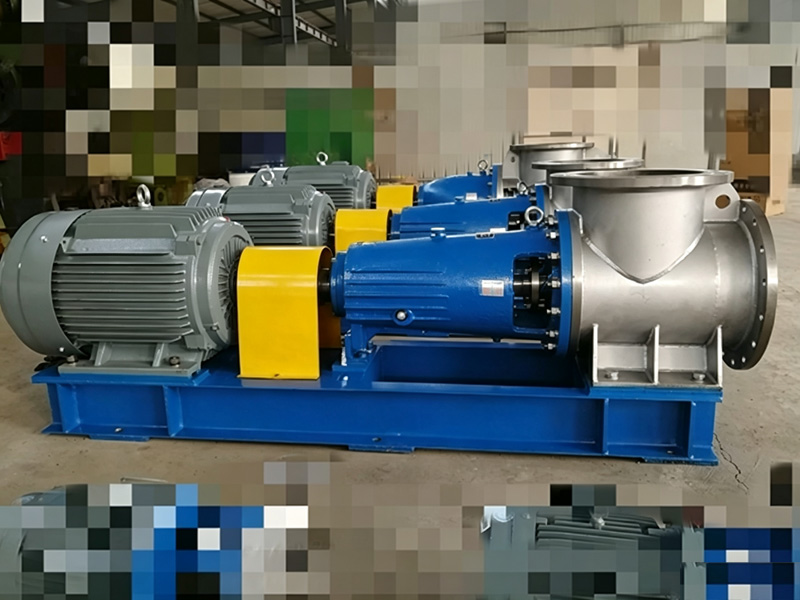
The FJX page describes horizontal forced-circulation pumps for acidic, alkaline or neutral liquids containing a small amount of solids, with evaporation examples including caustic soda, soda ash, sugar and inorganic salts. It publishes a series envelope of 300–23,000 m³/h flow and 2–12 m head, working pressure up to 0.6 MPa and temperature up to 170 °C. These limits are separate catalogue boundaries; they are not one simultaneous operating point.
Provide the evaporator loop drawing, required circulation rate, friction losses, liquid density and viscosity, solids and crystallisation behaviour. Include the vessel pressure or vacuum, liquid level above the suction, temperature and vapour-pressure information. Ask for the selected curve and suction requirement at startup, normal concentration and the most demanding hot condition. The low head of a circulation pump is not a substitute for checking the installation’s pressure rating.
The catalogue explains FJX-450 as a forced-circulation pump with a 450 mm impeller diameter. That suffix does not provide the speed, motor power or delivered flow. Its seal descriptions include packing and an auxiliary-impeller/double-face mechanical arrangement; identify the priced seal, flushing or barrier system and utility responsibilities on the actual proposal.
Review the existing Mingyang FJX product record →
Choose the arrangement from the vessel and piping task
YCZ is presented as a horizontal, single-stage, single-suction overhung chemical process pump. Its product text describes a rear-withdrawal maintenance arrangement and packing or mechanical-seal choices. Plan clearance for the rotor and seal assembly, the coupling and lifting access; an existing foundation requires the issued mounting and nozzle drawing, not an assumption of interchangeability from a standard designation.
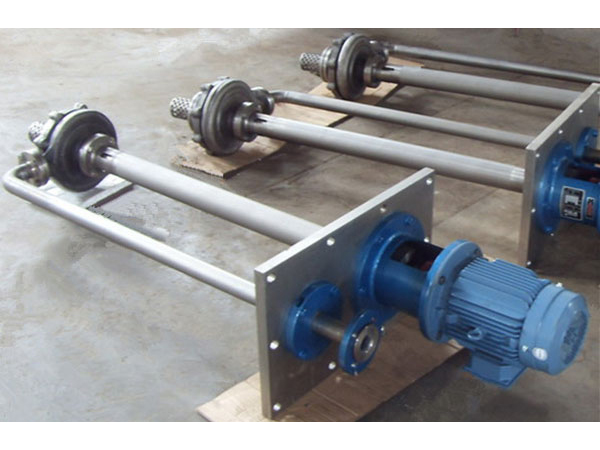
YT places the pump casing and impeller in the liquid. The page lists special-metal submerged parts including casing, impeller, cover, shaft and connecting pipe. Specify vessel depth, normal and lowest liquid levels, mounting flange, insertion length, discharge route and withdrawal height. The catalogue’s 65YT32 naming example describes inlet diameter and head at its basic speed; it is not a complete performance schedule.
The IT text concerns corrosive, solids-free liquid with viscosity similar to water. It gives a usual liquid-temperature range of 20–105 °C, maximum working pressure of 1.6 MPa and inlet pressure no higher than 0.6 MPa. Its title calls the product a titanium pump while the body mentions stainless-steel wetted parts. Select an explicit material bill for the quoted IT configuration; neither wording qualifies it for every corrosive liquid.
YCL appears as a direct-connected discharge-pump product, but that listing does not supply a usable duty table. Treat it as a configuration to discuss for a transfer/discharge task, with a separately issued curve, dimensions and material schedule, rather than borrowing the FJX or IT rating.
| Process task | Catalogue direction | Information that decides the configuration |
|---|---|---|
| High-volume evaporator recirculation | FJX | Loop resistance, hot suction conditions, concentration and seal auxiliaries |
| Piped chemical transfer with maintenance access | YCZ | Duty curve, nozzle/mounting drawing and rear-withdrawal clearance |
| Withdrawal from a vessel or chemical sump | YT | Insertion length, liquid-level range, mounting and submerged components |
| Solids-free, water-like corrosive transfer | IT | Actual wetted material, inlet pressure, temperature and seal |
| Compact discharge arrangement | YCL | Issued duty and layout; no rating borrowed from another series |
Titanium is a material family, not a universal chemical-compatibility answer
The YT page lists titanium grades including TA1, TA2, TA9, TA10 and TC4, nickel N4/N6, named nickel alloys and stainless steels. The company also describes titanium/nickel valves and custom parts, while the exchange entry names TC4 pump shafts, open titanium impellers, sleeves and custom spacers. These are documented supply directions; they do not identify which grade is installed in an unmarked photograph.
Send the full liquid composition and concentration, contaminants, operating and cleaning temperatures, solids and expected concentration changes. Ask the supplier to identify the material of casing, impeller, shaft or sleeve, fasteners, seal faces, elastomers and any wetted lining or composite interface. The seal and secondary materials need their own compatibility review even if the main casing is titanium.
For custom machined components, attach the controlled drawing revision, tolerances, fits, surface finish and material-document requirements. For valves, define the valve function, size, pressure/temperature conditions, end connection, seat and seal materials. Match these items to the pump and piping specification so that an otherwise suitable pump does not introduce an incompatible connection or component.
Use the actual assembly drawing to make replacement work practical
YCZ’s rear-withdrawal description makes maintenance access a useful discussion point: check whether the quoted coupling arrangement lets the rotor be removed without moving the motor or disturbing the process piping. The page also describes seal cooling and bearing lubrication features; ask which features belong to the exact assembly and what utilities and maintenance tasks they require.
For YT, lifting the submerged assembly requires overhead space and a practical isolation and handling plan. For an FJX replacement, record the existing impeller size, speed, rotation, motor, base dimensions, nozzle orientation and seal system. Include photographs of the installed interfaces and nameplate; a shared series label cannot establish interchangeability.
Request the ordered unit’s sectional drawing and identifiable spare-parts list for impeller, shaft/sleeve, seals, bearings and gaskets. Decide which parts should accompany initial delivery and obtain the document and drawing references used for future reorders. Do not infer stock availability or delivery time from the company’s general spare-part catalogue.
Turn the catalogue direction into an order-specific inspection package
The YCZ article references DIN 24256/ISO 2858 dimensions and gives broad series maxima, but also contains inconsistent wording on nozzle arrangement and configuration. Request the actual general-arrangement drawing and selected performance curve. A standard reference in product text does not prove a dimensional match to an installed pump or constitute independent product certification.
The company publishes application photographs labelled as evaporation projects. They help illustrate the circulation setting, but do not establish customer acceptance, the duty of the supplied pump or the scope of the surrounding evaporator. Use your project’s own process schedule as the performance requirement.
Agree the test liquid, speed, operating points, measurement conditions and acceptance criteria, with results tied to the delivered pump identification. Specify material certificates and traceability for the agreed components, dimensional checks against the approved drawing, seal/auxiliary inspection and motor documentation. Efficiency and service-life claims in general promotional text should not replace these records.
Give Mingyang the process case and the physical interfaces together
A useful enquiry separates the required hydraulic performance, chemical compatibility and delivery scope. State quantity, destination, electrical supply and the requested documents, then add the inputs appropriate to the chosen arrangement. This allows the quotation to identify an actual series, material configuration and assembly.
Organise the complete pump quotation request →
Evaporation circulation
- Loop drawing, normal/startup duties, density, viscosity and concentration changes.
- Temperature, vacuum/pressure, liquid level, vapour conditions and solids/crystallisation.
- Impeller/speed, motor/base, seal utilities and witnessed test requirements.
Chemical transfer or submerged duty
- Composition, impurities, cleaning conditions and component-by-component materials.
- Piping and foundation drawing; for YT add vessel depth, insertion length and withdrawal space.
- Curve, inlet conditions, seal/auxiliary arrangement and electrical/area requirements.
Replacement components or valves
- Existing nameplate and dimensions; controlled drawing with fits and tolerances.
- Identified alloy grade, material traceability and required surface finish.
- Connections, pressure/temperature duty, spare identification and inspection scope.
Submit through KanBeng’s enquiry form with this factory named in your request.