Water-supply packages, pump controls and installation services
Guangzhou Haiwei Pump Co., Ltd.
Specify the water source, pressure-control task and project boundary together. Haiwei’s Paida catalogue covers pumps, packaged supply equipment and controls, with installation and maintenance routes.
- Location
- Panyu, Guangzhou, Guangdong
- Brand
- Paida · 湃达
- Supply arrangements
- DWS, MVWS and motor-mounted BWS
- Control routes
- PKB, PKP and customised PK
Buy the pump, controls and site work as clearly defined scopes
Guangzhou Haiwei Pump Co., Ltd. identifies itself as 广州市海威泵业有限公司 and presents Paida (湃达) as its core water-supply brand. Its introduction describes production and sales of supply equipment alongside construction services. The listed business includes packaged water supply, water and drainage pumps, control boxes and cabinets, municipal water works, pressure boosting, facility repairs and maintenance.
The company gives a Panyu, Guangzhou location. For a project, distinguish the equipment supplier from the installer and the party responsible for commissioning. A package quotation should name the pump, motor, controller and accessories, while the site-work quotation should define foundations, pipework, electrical connection and testing. The company’s product and service catalogue provides these enquiry routes; the approved equipment schedule establishes what is supplied for the order.
Start with the water source and the control arrangement
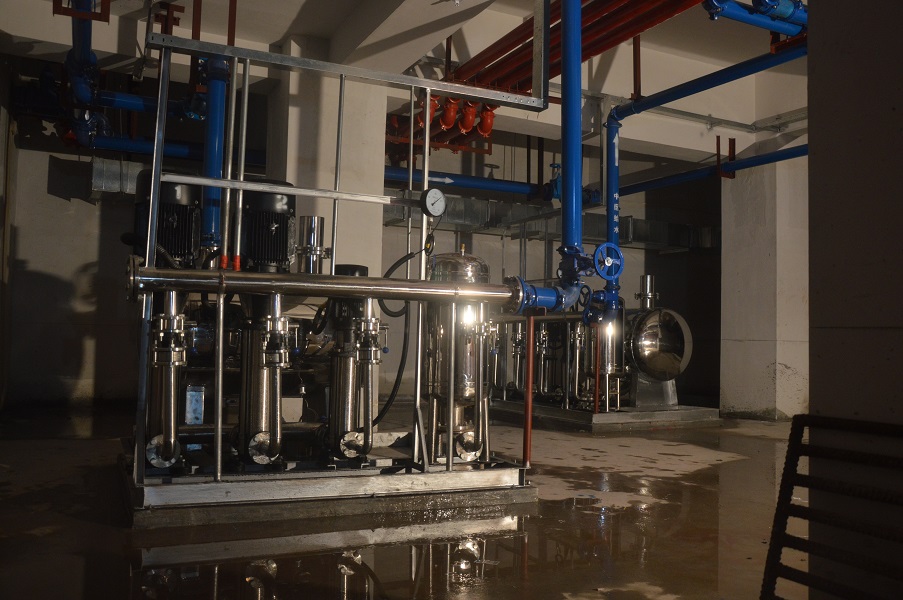
DWS is presented as a network-connected pressure-boosting arrangement using existing supply pressure, a stabilising vessel and a vacuum-elimination device. MVWS uses PLC and inverter PID control, varying motor speed and the number of operating pumps to maintain pressure. BWS puts the inverter on the motor, rather than relying on a separate control cabinet. These differences affect the system drawing, maintenance access and electrical scope.
Specify the lowest and highest inlet pressure, required outlet pressure at the measurement point, demand pattern and the available space. For network-connected DWS, agree the actual supply connection and protective response to low inlet conditions. For a variable-speed package, request the control sequence at low demand, peak demand and a pump fault. The package needs to be selected against the actual inlet conditions and duty.
| Paida arrangement | Documented distinction | Include in the enquiry |
|---|---|---|
| DWS | Network-connected boosting with stabilising/vacuum-elimination components | Inlet-pressure conditions, connection scheme and low-inlet response |
| MVWS | PLC and inverter PID control, speed and pump-number adjustment | Demand range, pressure-sensor position, operating sequence and cabinet |
| BWS | Inverter mounted on the motor | Motor-top access, environmental conditions and local control arrangement |
Separate constant-pressure control from level control and customised starting
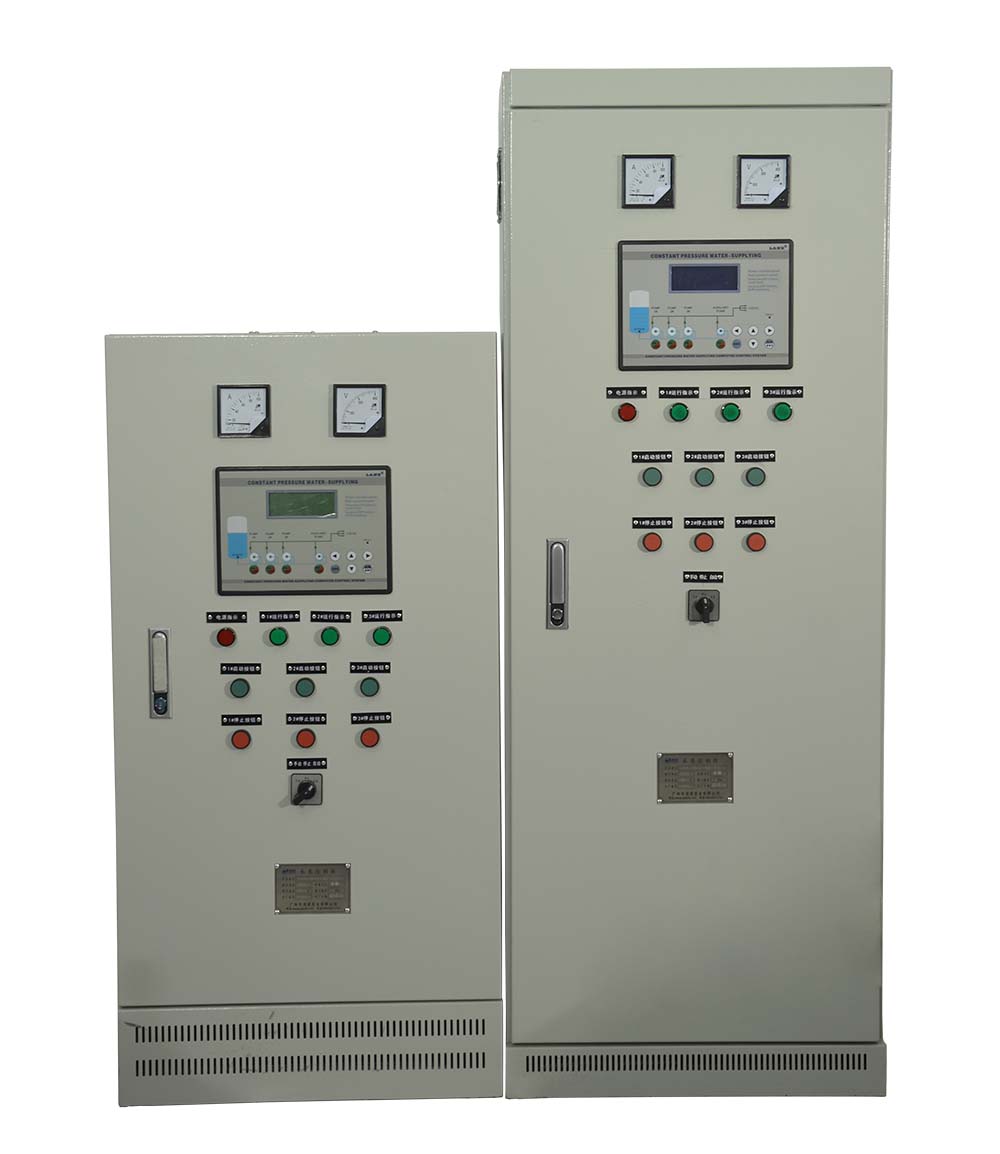
PKB is the dedicated variable-frequency constant-pressure supply cabinet. Its page gives a family power range of 0.55–160 kW and 380 V, and describes frequency conversion, programmable control and pressure regulation. These family figures identify the catalogue route; the cabinet must be matched to each motor’s electrical data and to the intended operating combination.
PKP is described as automatic pressure or liquid-level control, while PK is a customised pump-control or AC-motor starting system. Both pages list broad power and voltage options, but a 24 V entry must not be assumed to be the power supply for a large pump motor. Request a circuit diagram identifying the main power, control supply, sensors, starters or drives and protective devices.
For a cabinet retrofit, send motor nameplates, pump count, existing wiring and the required inputs and outputs. Agree manual/automatic selection, duty rotation, fault signalling and the response when a sensor fails. A cabinet photograph shows an example panel arrangement; it does not prove that every quoted unit includes the same controller or spare capacity.
| Control route | Primary task | Order definition |
|---|---|---|
| PKB | Variable-frequency constant-pressure supply | Motor/drive schedule, sensor, setpoint and pump staging |
| PKP | Pressure or liquid-level automatic control | Sensor type, start/stop logic, operating combinations and alarm response |
| PK | Custom pump or other AC-motor control/starting | Starter method, main/control voltages, protection and drawings |
Match a supply or circulation package to its actual pump series
IS is the horizontal single-stage clean-water centrifugal route. The current series page lists DN50–200 connections, 3.5–400 m³/h, 3.9–125 m head and 1,450 or 2,900 r/min across the family. These are catalogue boundaries, not one duty point. Send the required paired flow and head, inlet conditions and installation drawing so that the exact size and speed can be selected.
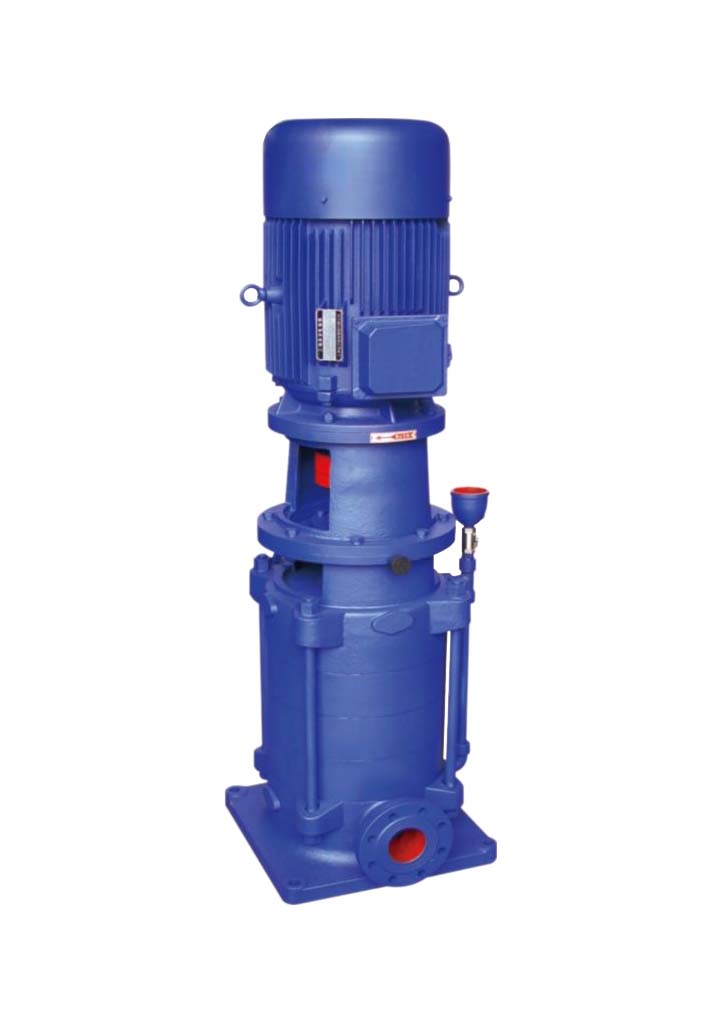
DL provides a vertical multistage option for water-supply and air-conditioning systems, with a segmental multistage structure and a listed speed of 1,480 r/min. A vertical arrangement changes the required headroom and lifting/removal path. Compare that space with the horizontal IS or KTZ layout before approving the pump-room drawing.
For air-conditioning circulation, KTZ is a direct-coupled single-stage route, listed at 1,450 r/min. ISR is the hot-water route and its description specifies a heat-resistant mechanical seal for media up to 100°C. The ISR Chinese and English flow/head limits differ, so use an issued curve for the chosen version. The water-supply and circulation duties still need their own liquid, system-loss and installation information.
IS clean-water centrifugal series →
For an existing pump room, record the system before choosing replacement equipment
The site separates installation, retrofit and repair project categories. That distinction is useful when preparing an enquiry: a new package order starts with the design duty and drawing, while a retrofit also needs the installed condition. Send current pump and motor identification, control-panel information, pipe connections, available access and the operating problem to be corrected.
If the complaint is unstable pressure, describe when it occurs, where pressure is measured, the inlet conditions and which pumps are running. If the problem is leakage, noise or unreliable starting, supply the affected component and operating observations. Agree whether the quote covers diagnosis, replacement equipment, installation or an entire control upgrade. A change of drive or seal should not be treated as evidence that the original hydraulic selection is correct.
The company describes technical guidance, training and maintenance services. For delivery outside its normal working area, agree the actual site-support arrangement, who performs the work, the required shutdown period and the commissioning handover. Service availability, travel and response time belong in the agreement rather than being inferred from a general service slogan.
Make the acceptance test cover the complete equipment arrangement
For a water-supply package, request the approved hydraulic diagram, pump curves, motor and drive schedule, control logic and component list. Define the test conditions and measurement locations. Low-demand operation, pump changeover, peak demand and agreed fault responses should be included in the commissioning plan, so that the controls are checked together with the hydraulic equipment.
For retrofit work, document the original condition and the delivered configuration. Record settings, wiring changes, replacement part identifiers and test results for handover. Agree manuals, maintenance tasks and spares with the supplied components. Claims of energy savings require a stated comparison and measurements; a general case-study percentage is not an acceptance result for another installation.
The catalogue includes fire-related application wording alongside ordinary supply equipment. A fire-duty enquiry needs the exact equipment and acceptance documents required for that project. General catalogue headings or an ISO9001 management statement should not be read as current product approval of every pump and cabinet.
Send the equipment duty and work boundary in one structured request
Use the groups below to define a bare-pump, packaged-equipment or retrofit enquiry. The platform form carries the Haiwei factory name into your request.
Prepare a complete pump-system RFQ →
Water and hydraulic task
- Supply source and measured inlet-pressure range
- Paired required flow/head or pressure demand, including operating variation
- Liquid, temperature, connection sizes and room/pit drawing
Controls and installation
- Motor nameplates, pump count, power/control supplies and existing wiring
- Pressure or level sensors, operating sequence and fault outputs
- Equipment, pipework, electrical, installation and commissioning responsibility
Acceptance and handover
- Exact series/version, component schedule and selected pump curves
- Test conditions, measurement points and agreed functional checks
- Inspection location, manuals, spare parts and site-support arrangements
Submit through KanBeng’s enquiry form with this factory named in your request.