
Select the slurry circuit and define the complete supply
Shijiazhuang Industrial Pump Factory Co., Ltd.
SGB documents horizontal and vertical slurry pumps, desulfurization equipment, dredge pumps and anti-abrasion multistage pumps. Choose around solids, chemistry, installation and the duty cycle.
- Company identity
- 石家庄工业泵厂有限公司
- Listed base
- Jingxing Mine District, Shijiazhuang, Hebei
- Core directions
- Slurry · FGD · dredging
- Selection basis
- Solids · chemistry · circuit · installation
SGB: select around the slurry circuit, not only the pump designation
Shijiazhuang Industrial Pump Factory Co., Ltd. uses the SGB name and identifies its Chinese company as 石家庄工业泵厂有限公司. Its company and product documents cover mineral-slurry transfer, absorber recirculation, pit duty, filter-press feeding and dredging. Municipal government profiles identify the same industrial-pump business and its transition into slurry-pump production in 1989.
These duties require different selection inputs. For a coal washery or concentrator, begin with the solids analysis and pipeline. For an absorber, begin with slurry chemistry and spray requirements. For a dredger, begin with sediment, suction arrangement and discharge distance. This separates a useful technical proposal from a nominal flow-and-head quotation.
For an existing installation, include the nameplate, impeller diameter, drive speed, suction levels, operating measurements and where the wet end is wearing. The requested replacement should be checked against the actual installation, including nozzle loads and removal space.
Match the published product family to the work it must perform
SGB lists both horizontal and vertical slurry equipment. The catalogue also separates desulfurization and dredging products, so a generic slurry-pump description is not sufficient for those processes. Use the following routes to frame the enquiry; obtain the selected construction and curve in the proposal.
| Process requirement | SGB catalogue direction | Decision to settle |
|---|---|---|
| Mineral or coal slurry transfer | ZJ; HZJ heavy-duty double-case; D single-case | Particle distribution, solids concentration, wear material, seal and drive |
| Abrasive sump removal | ZJL vertical slurry | Pit depth, liquid levels, installation length and settling |
| Filter-press feeding | DG / ZJG listed feed-pump routes | Fill and pressure phases, control, relief and maximum casing pressure |
| Wet FGD absorber circulation / pit drainage | DT horizontal / TL vertical pit | Chemistry, circulation versus sump duty, material and seal utilities |
| Sediment transport | N dredge pumps; gearbox-integrated route | Suction depth, discharge line, solids and drive interface |
| Low-concentration solids at high head | MD multistage anti-abrasion | Stage configuration, slurry limits and operating curve |
Compare the wet-end construction and maintenance access
The ZJ page describes a single-stage horizontal pump with high-chromium cast-iron wet parts and packing or mechanical sealing. HZJ is explicitly a heavy-duty double-case design; D is listed as a single-case route. Request a sectional drawing to identify the pressure casing, replaceable wear components, bearing arrangement and actual material grades.
HZJ documentation describes thickened wet parts and wider impeller passages for severe abrasion. That is a reason to compare the wet-end design with your particle distribution, not a published wear-life guarantee. Require the proposed impeller passage, particle limits and expected operating region rather than choosing solely by the largest nominal solids size.
Packing and mechanical sealing carry different clean-water, flushing and maintenance requirements. Define the available water pressure and quality, contamination restrictions and shutdown behaviour. The layout should provide room to remove the wet end and handle its weight without disturbing unrelated process equipment.
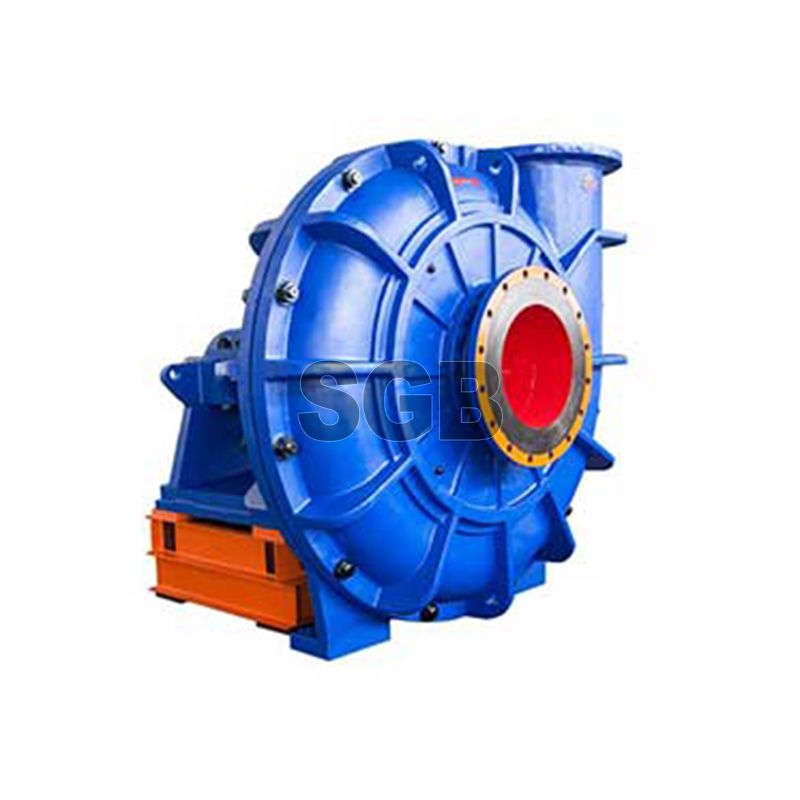
Clear-water ranges are a starting point for slurry selection
The official ZJ table labels its hydraulic values as clear-water performance. Each row includes a speed range; it does not describe one point combining the largest flow with the largest head. Ask for a curve at the selected speed and impeller diameter, together with the slurry basis and absorbed power.
The table also distinguishes a particle size handled occasionally. Do not turn that figure into a continuous-feed specification. Submit the normal particle distribution, the expected oversize fraction, solids density, concentration basis and any entrained air.
The illustrative rows below show how widely two ZJ configurations differ. The allowable motor-power column is a catalogue limit, not the selected motor requirement. Select the motor and suction margin from the proposed operating duty and starting conditions.
| ZJ configuration | Clear-water capacity (m³/h) | Head range (m) | Speed range (rpm) |
|---|---|---|---|
| 350ZJ-I-F100 | 526–2,339 | 14.9–62.8 | 300–590 |
| 150ZJ-I-A50 | 115–460 | 9.5–43.1 | 490–980 |
| 65ZJ-I-A30 | 23–79 | 7.4–34.8 | 700–1,460 |
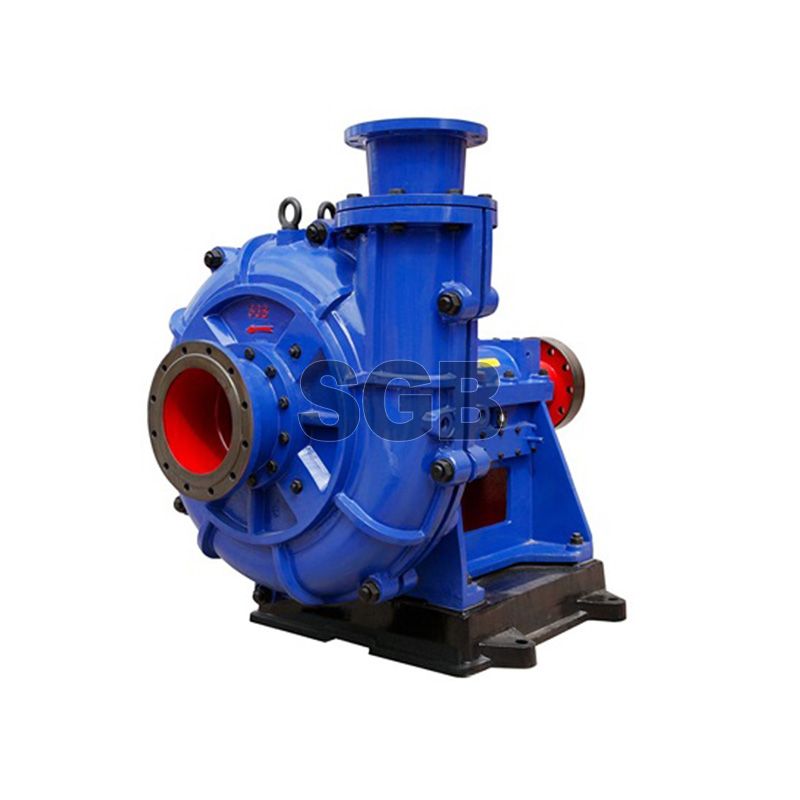
Separate absorber circulation from desulfurization pit drainage
DT is the horizontal desulfurization route; TL is the vertical pit route. An absorber recirculation proposal should state the required spray-layer flow, hydraulic losses, slurry density and operating liquid level. A pit proposal needs minimum and maximum levels, solids settling, support arrangement and installation length.
The current Chinese DT document distinguishes a suspension arrangement developed for rear rotor removal without moving inlet and outlet piping, and a bracket arrangement used mainly in other FGD process positions. Specify the actual rotor construction and withdrawal clearance; the DT family name does not mean every pump has the absorber-maintenance arrangement.
The DT page names GLH-5 and GLH-6 wet-end materials and describes abrasion-and-corrosion service. Obtain the actual composition and inspection documents for the selected material. Supply pH, chloride concentration, temperature, solids and upset conditions; a catalogue alloy name alone does not establish compatibility.
For an absorber replacement, agree flange positions, base and anchor details, impeller adjustment, sealing and lifting access before manufacture. Ask for the operating point and performance acceptance separately from the material inspection and dimensional checks.
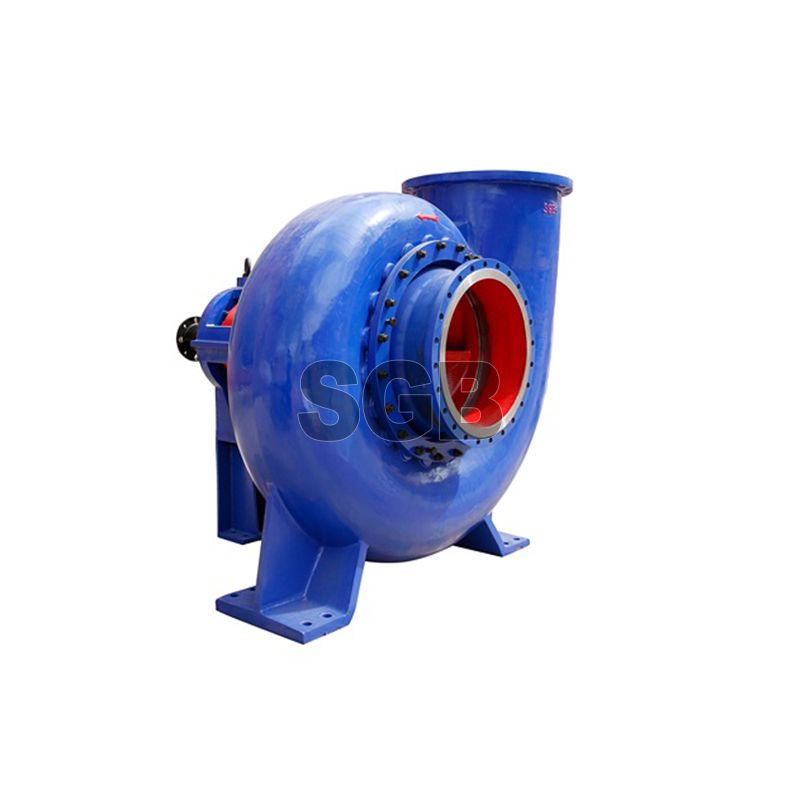
Resolve the conditions that change during operation
DG is documented for filter-press feeding. Provide the filling phase and final-pressure phase, cycle duration, slurry settling behaviour and the press pressure limit. Agree how the pump is controlled as the cake resistance increases, including interlocks, relief protection and allowable operating duration at reduced flow.
ZJL and TL documentation describe vertical arrangements and mention inlet agitation for concentrated fluid and inlet extensions according to pit depth. Ask for the actual supplied arrangement, submerged length, minimum operating level and maintenance lifting height. Do not substitute a photograph for an installation drawing.
MD is documented as a multistage route for low-concentration fluid containing solids. Specify particle distribution and concentration together with the high-head duty. The proposed stage configuration, casing pressure and suction requirements should be checked as a system, rather than importing the solids capability of a large single-stage pump.
Treat sediment transport and wear-part replacement as distinct purchases
The N product direction addresses dredging, and the catalogue includes a gearbox-integrated dredger route. Supply sediment size and density, mixture concentration, suction arrangement, water levels, pipe diameter, discharge length and elevation. Identify whether the scope is a pump, a pump-and-gearbox assembly or a complete drive package.
A spare-parts enquiry needs the original model, serial number, part drawing and revision, wear material and measured failure location. SGB lists impellers and other wet-end components and offers manufacture against drawings. Verify dimensions, fit and material before approving a replacement; a similar appearance or family name does not prove interchangeability.
Agree which parts must be available for the first maintenance cycle, including impeller, liners, shaft sleeve and seal consumables as applicable. Ask how adjustment and replacement will be performed with the actual lifting equipment and plant access.
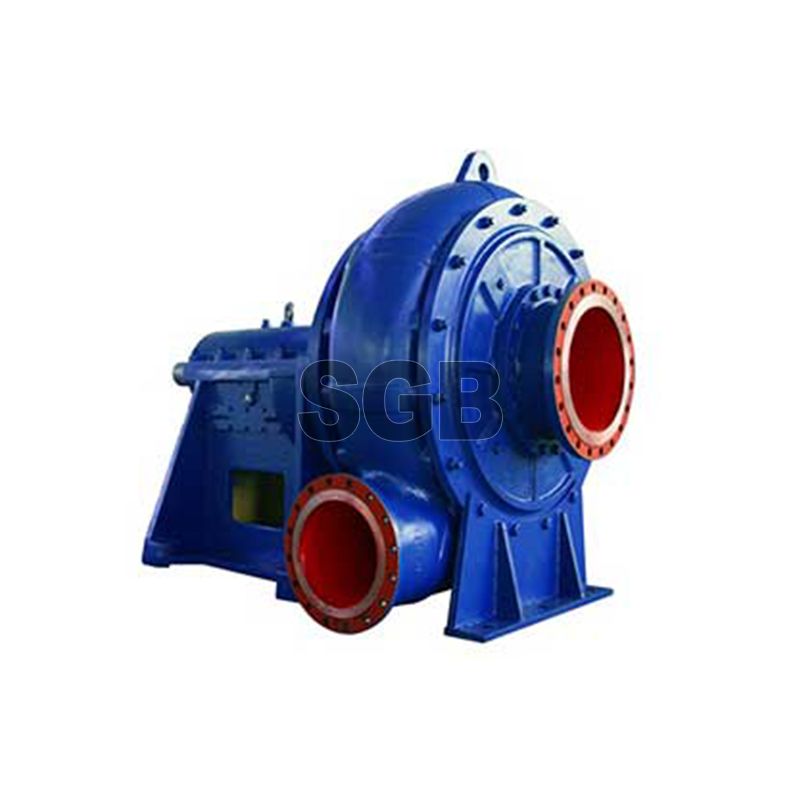
Send a circuit-specific enquiry and agree the acceptance package
Ask for a proposal that identifies the exact pump construction, selected curve, drive, wet-end materials, seal system, accessories and exclusions. Where a trial or witnessed test is needed, agree the test medium, measured quantities, tolerances and report format before the purchase order.
For slurry service, retain the basis used to translate the hydraulic selection into the supplied duty. For replacements, obtain a dimensional approval drawing before committing to an installation date. Use the grouped inputs below to prepare a platform enquiry for SGB.
Review the existing ZJ product family →
Prepare a structured process-pump enquiry →
Slurry transfer / filter press
- Solids analysis, density and concentration basis; normal and oversize particles
- Flow and system head across the cycle; suction levels and pipe arrangement
- Drive, seal utilities, pressure limits, controls and maintenance access
FGD / sump equipment
- Slurry chemistry, temperature, chloride and solids; normal and upset duty
- Circulation or pit role, levels, installation length and flange/base dimensions
- Material certificates, sealing, lift arrangement and inspection requirements
Dredging / replacement parts
- Sediment, suction depth, discharge pipe and distance, drive/gearbox scope
- Installed nameplate, serial number, drawing revision and required wear parts
- Curve and dimensional approval, test scope, spare-parts list and destination
Submit through KanBeng’s enquiry form with this factory named in your request.