
Resolve the circulation process and installation before buying
Sichuan Zigong Industrial Pump Co., Ltd.
Zigong documents evaporation circulation and crystallizer axial-flow equipment alongside mixed-flow, slurry and multiphase pumps. Match the process variant, supports, seals and acceptance scope.
- Company identity
- 四川省自贡工业泵有限责任公司
- Listed base
- Zigong high-tech industrial area, Sichuan
- Process focus
- Evaporation · crystallization · transfer
- Selection priority
- Hydraulics · piping · materials · utilities
Zigong Industrial Pump: define evaporation and crystallization duty before selecting the pump
Sichuan Zigong Industrial Pump Co., Ltd. identifies its Chinese company as 四川省自贡工业泵有限责任公司 and lists its base in the Zigong high-tech industrial area. Its Chinese company history traces the business to the 1967 industrial-pump factory and the present company establishment in 2005. The documented range includes evaporation circulation, crystallizer axial-flow, chemical-process, slurry and multiphase equipment.
A particularly useful reason to consider its catalogue is a process needing large circulation flow at relatively low head. In an evaporator or crystallizer, the circulation requirement, liquid properties and installation arrangement need to be agreed together. Start with the process design rather than a pipe diameter or motor size copied from a previous project.
The public procurement record for the Lianyungang soda-ash relocation project listed this company as the first-ranked candidate and proposed winner for vertical axial-flow pumps in November 2022. This is a dated tender-stage record for that equipment scope; it does not establish a completed installation or its operating performance.
Foundation-supported and suspended circulation pumps impose different piping requirements
The ZW product direction serves forced circulation and evaporation. The English product pages distinguish ZWQF foundation-supported installation from ZWQE semi-suspended installation. For ZWQF, the pump and motor require support, and the page describes an expansion joint for high-temperature piping. For ZWQE, the piping supports the pump weight and the described drive options include belt or universal-joint transmission.
Choose the arrangement with the piping designer. Agree pump weight, nozzle loads, thermal movement, supports, alignment, access and the drive interface before ordering. A suspended catalogue arrangement is not permission to remove an expansion joint from an unreviewed existing system.
The Chinese ZW document describes adjustable impeller blades, an elbow-type pump body, cartridge mechanical sealing and several transmission arrangements. Ask for the selected blade setting, speed, material schedule and approved installation drawing. The appropriate configuration depends on the operating circulation loop and available space.
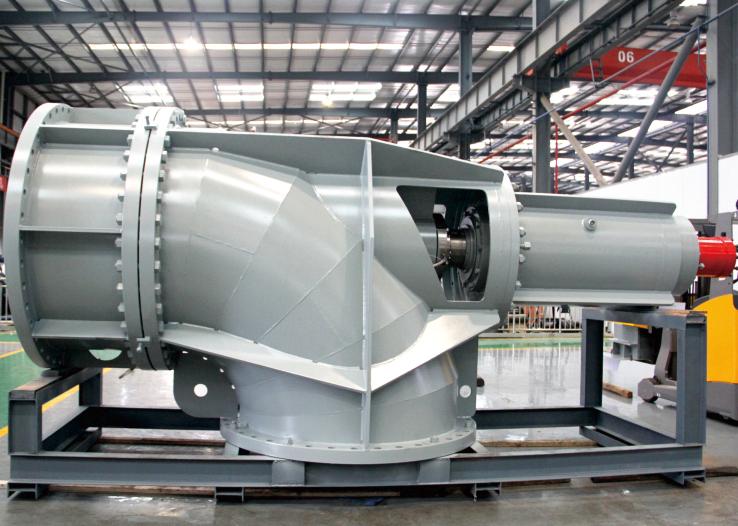
Keep ZLH salt-crystallization and cooling-crystallization selections separate
The Chinese catalogue provides separate ZLH pages for salt crystallization and cooling crystallization. Both describe vertical installation, adjustable blades and low-speed operation. These are process-specific routes: the liquid composition, solids and circulation role should accompany the series designation.
The two Chinese pages publish different head and temperature envelopes, shown below. The broader English ZLH summary gives another general range. Use the exact process variant and a selected curve in the proposal rather than combining the highest capacity, temperature and head from different documents.
For crystallizer service, describe crystal size distribution, solids concentration, liquid density, operating levels and the intended circulation pattern. Include allowable crystal damage or product-quality criteria where they matter, and agree how performance will be measured in the actual process.
| Chinese product direction | Published head envelope | Published temperature envelope | Information needed for selection |
|---|---|---|---|
| ZLH salt crystallization | 1–2 m | 0 to +80°C | Process composition, levels, crystal load and selected circulation duty |
| ZLH cooling crystallization | 2–6 m | −20 to +150°C | Cold/hot states, crystal load, installation and selected curve |
Check the seal utilities against the actual chemical duty
The Chinese ZLH pages describe dynamic sealing combined with packing. The English ZLH document also discusses cartridge mechanical sealing and packing arrangements. Resolve the exact seal construction in the equipment schedule; similarly named variants need not have identical seal utilities.
For a cartridge arrangement, obtain the required flush pressure relative to the selected pump discharge pressure, flush flow, fluid quality and temperature. Confirm whether the flush can enter the product and what happens when the circulation pump stops. Do not apply a generic seal-water instruction without checking the supplied arrangement.
For a hot or cooling crystallization process, include startup, normal circulation, washout and shutdown conditions. Ask for the permitted operating sequence and service-fluid interlocks. Maintenance access should allow removal of the seal and rotor without an unplanned dismantling of the vessel or process pipework.
Use ZHH or a slurry construction when the process calls for it
The ZHH page addresses ammonium-phosphate and potash-fertilizer circulation. It describes an axially adjustable rotor to restore the impeller/front-cover clearance after slight wear, and a discharge direction that can be configured for the process. Ask how the adjustment is measured and carried out in the installed layout.
The Chinese slurry catalogue distinguishes ZD single-case, ZJY double-case, submerged ZLJ/ZLX and ZDSC silicon-carbide directions. For ZJY, obtain the wet-end drawing, selected wear material, seal arrangement and hydraulic proposal against the actual solids. Do not treat the solids capability of one construction as the specification for every catalogue family.
The ZDSC page includes a particle-size condition, but its temperature statements conflict and its broad chemical-resistance and life-multiple claims need a specific material and service basis. A ceramic enquiry should therefore provide particle distribution, chemistry, temperature and thermal transitions, and request the selected component materials and operating limits.
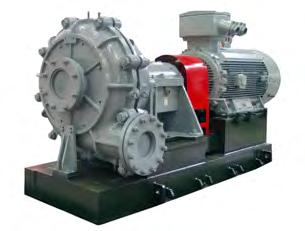
Describe the mixture and pressure states for an LY multiphase enquiry
LY is the Chinese catalogue direction for mixed oil-and-gas delivery during oil production and transport. Its document describes multiple impeller stages, bearing lubrication and seals at the suction and discharge ends. The enquiry needs the mixture and pressure conditions, rather than a single liquid-flow figure.
Provide minimum, normal and maximum suction pressure, discharge requirements, oil and water properties, temperature, gas composition and gas-volume fraction at stated inlet conditions. Include slugging, sand and other solids, and the operating transitions the package must handle.
Obtain a proposal defining the selected stages, allowable mixture envelope, seal and lubrication systems, materials, controls and protection. The catalogue title references API 610; specify the contractual standard edition, configuration and inspection requirements rather than assuming the title alone establishes complete compliance.
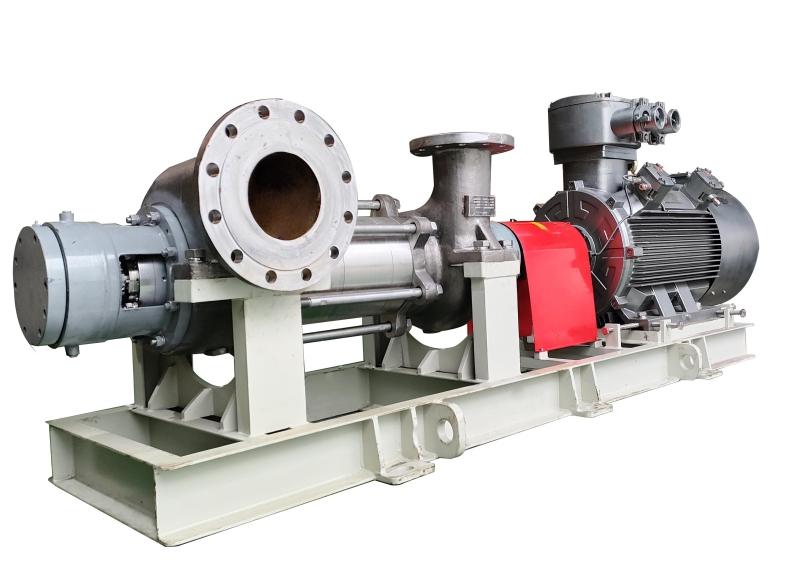
Connect manufacturing checks to the order you are placing
The Chinese quality-control page describes material investigation, physical and chemical analysis, moulding-sand testing, dynamic balancing, spectral metal analysis and pump performance testing. Use these documented inspection directions to define an order-specific inspection and test plan.
For corrosion-sensitive wetted parts, specify the exact material grades, component allocation, traceability and certificates. Agree which alloy components need positive material identification and how any fabricated or welded construction will be documented. A general list of stainless steels and nickel alloys is not the bill of materials for the selected pump.
For hydraulic acceptance, identify the test medium, speed, measurement points and agreed tolerances. Separate flow/head/power testing from dimensional, material, seal and noise checks. State whether tests are witnessed, which reports accompany delivery, and how site commissioning responsibilities are divided.
Package the process and installation information into a usable RFQ
For a new evaporator, send the process circulation requirement together with the piping and vessel arrangement. For a replacement, include the original pump and drive nameplates, measured duty, drawings and the current maintenance problem. This lets the proposal address both hydraulic selection and physical fit.
Ask for the complete scope: pump, drive and transmission, supports or base, seal services, instrumentation, control interfaces, spare parts, documentation and exclusions. Define destination, electrical supply, dimensional approval and acceptance requirements before comparing offers.
Review the existing multiphase product family →
Prepare a structured pump-system enquiry →
Evaporation / crystallization
- Process variant, liquid chemistry, density, viscosity, temperature and crystal load
- Circulation duty, operating levels, startup/washout states and process-quality limits
- Foundation or suspension layout, thermal movement, supports and drive interfaces
Slurry / mixed-phase transfer
- Solids distribution and concentration; oil/water/gas properties as applicable
- Suction and discharge conditions, gas fraction reference and transient states
- Wear materials, seals, lubrication, protection and maintenance space
Supply and acceptance
- Selected curve and construction, material schedule and approved drawings
- Inspection plan, hydraulic test conditions, reports and commissioning scope
- Transmission and utility scope, first-maintenance spares and delivery destination
Submit through KanBeng’s enquiry form with this factory named in your request.