
Plunger grouting · slurry preparation · high-pressure cleaning
Tianjin Juneng High Pressure Pump Co., Ltd.
Tianjin Juneng’s catalogue brings together high-pressure plunger pumps and the equipment around them: slurry preparation, an enclosed pumping station and cleaning sets. A grouting buyer needs a matched delivery and pressure at the selected stroke rate—not the largest flow beside the largest pressure in a family table. Feed preparation, abrasive wear, jobsite power and the included controls are equally important to a workable package.
- Chinese legal name
- 天津市聚能高压泵有限公司
- Published location
- Beichen, Tianjin
- Reviewed equipment
- JN400 · ZJ-40 · QX-700
- Existing model
- JN400 grouting
JN400: choose a combination, rather than combining family maxima
The grouting tables use a 150 mm stroke and 75–105 mm plungers, with 81 or 122 strokes per minute and 200–400 kW motor choices. Their flow figures are theoretical. The following examples are individual cells within the stated 65 MPa grouting limit.
These examples expose the trade-off: the 475 L/min configuration does not also provide the family’s 65 MPa maximum. Select the required simultaneous flow and pressure, then obtain the permissible continuous duty and motor loading for the actual grout. Include startup, pressure changes, flushing and the expected working cycle in that request.
One 75 mm / 122 strokes/min table cell exceeds the same page’s explicit 65 MPa grouting limit. That conflicting value is excluded here. Require a corrected, signed selection for the ordered configuration; do not use the inconsistent cell to justify an operating pressure.
The page also contains separate water-injection tables, with different stroke rates, plunger sizes and pressures. A water-injection maximum is not a JN400 grouting rating. Keep the medium, table and offered liquid-end construction together.
| Grouting configuration | Theoretical delivery | Published pressure at that motor |
|---|---|---|
| 122 strokes/min · 105 mm · 400 kW | 475 L/min | 46 MPa |
| 81 strokes/min · 105 mm · 400 kW | 315 L/min | 65 MPa |
| 122 strokes/min · 80 mm · 250 kW | 275 L/min | 50 MPa |
View the reviewed product family →
Describe the slurry that will reach the valves and plungers
The JN400 description associates its long-stroke, low-stroke-rate arrangement with grouting media and discusses valve and plunger-seal wear. For selection, specify cement/additives, water-to-solids ratio, density, particle size, abrasiveness and any setting-time constraint. Ask which valve, plunger and seal materials are supplied for that mixture.
State the feed conditions and distance between mixer and pump, the usable tank level range, site temperature and the sequence when delivery stops. Agree the flushing liquid, connections and procedure, and identify how grout is kept from setting in the feed path and pump. These are order questions, not a promise that every composition is acceptable.
Plan the consumables with the working cycle
Request identifiable seal packs, plungers and valve assemblies, with the replacement procedure and tools. Ask how wear is assessed and what shutdown/cleaning steps the supplier requires; do not substitute a broad catalogue durability statement for a maintenance plan.
ZJ-40: match preparation and storage to the pumping schedule
The official ZJ-40 image brochure describes centralized powder feeding, mixing, storage, weighing, pneumatic control, water supply and a PLC control room. It specifies screw conveying for cement or other powder, high-speed mixing and lower-speed storage agitation. Its PLC arrangement retains manual operation; these functions must be identified in the quoted set.
The brochure lists 36–40 m³/h preparation and up to 40 batches/h, a 3.2 m³ calculated batching volume and two 2.5 m³ calculated mixing/storage tank volumes. It lists 430 r/min and 29 r/min agitator speeds for the different duties. These catalogue values do not prove achievable grout output for every recipe.
Provide the batch recipe, powder delivery method, water supply, mixing time and the required continuous pump feed. Ask for usable tank volume, weighing accuracy, the batch/level interlocks and the agitation/transfer sequence. Reconcile the pump’s L/min requirement with preparation availability and the expected pauses; do not equate calculated tank volume with usable buffer capacity.
Fix the recipe and feed interfaces
Identify powder storage/conveying, water metering, additives and site utilities. Confirm what arrives inside the package and what the site supplies.
Check the batch-to-pump sequence
Agree mixing time, release criteria, storage agitation, minimum feed level and actions when either mixer or pump stops.
Include washout and access
Specify cleaning connections, drain handling, operator access and the route to inspect agitators and weighing components.
A pump set and an instrumented station have different supply boundaries
Ask which measurements are directly sensed, how density is determined and which alarms or shutdowns are provided. Specify record retention, timestamping and the format required by the grouting project. The existence of a station option does not mean every basic set includes those functions.
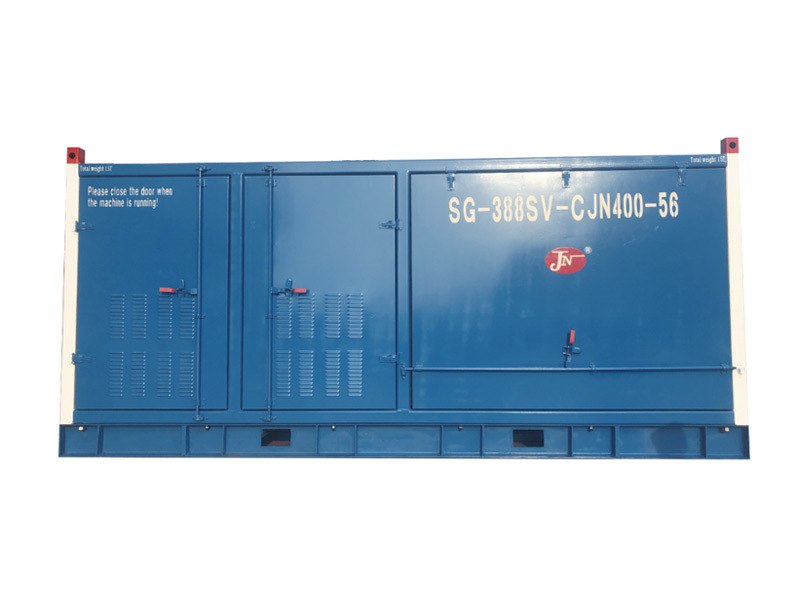
Give the site power, placement dimensions, lifting and transport limits, access for consumable replacement and the delivery-line layout. Agree pressure protection and operating procedures for the complete system. A photograph of the enclosure cannot establish the motor, selected pressure or controls inside.
| Catalogue arrangement | Described scope | What to put in the purchase order |
|---|---|---|
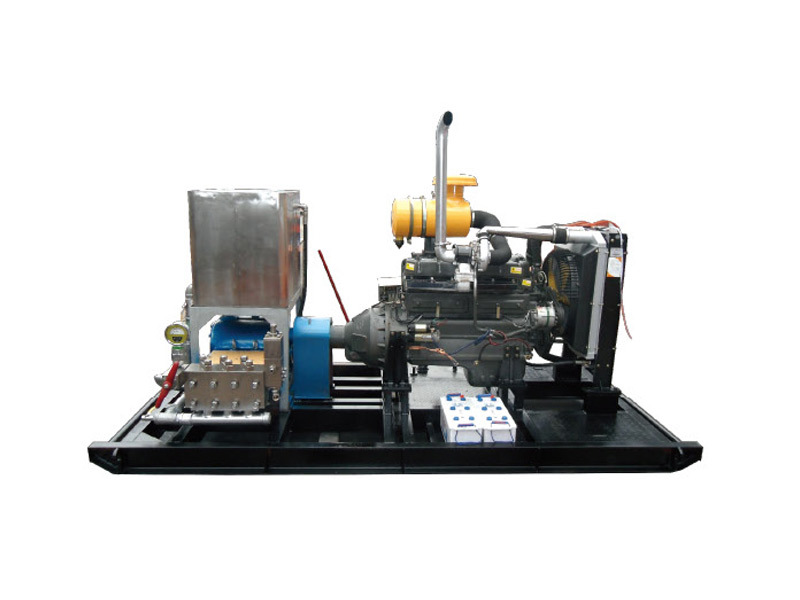
| Basic JN400 set | Pump, motor, base and electrical cabinet | Connections, motor/electrical supply, protection, mounting and commissioning responsibilities. |
| Enclosed pumping station | Pressure, flow and slurry-density display; storage, printing and remote transmission described | Included sensors, ranges, calibration, logging interval, export/printing, communications and enclosure services. |
QX-700 cleaning: nozzle demand determines the useful configuration
The QX-700 source distinguishes fixed QXD1/QXD2 and mobile QXC1/QXC2 arrangements, for pipe, heat-exchanger, condenser and other cleaning tasks. Its table specifies a 1,480 r/min input shaft and 100 mm plunger stroke; figures are theoretical for medium specific gravity 1.0.
These are separate cleaning selections, not grouting specifications. Define the surface or tube geometry, deposit, nozzle type, hose length and simultaneous operators. Request the selected set’s permitted duty, pressure control, hose/nozzle ratings and operating procedure.
The description includes safety/throttling valves, a shutoff spray gun and foot control intended to leave the reciprocating pump at low pressure between cleaning intervals. Confirm that arrangement and all included accessories. The broad continuous-running statement is not used as an unconditional guarantee; agree the operating conditions and maintenance requirements for the actual package.
| Table selection | Theoretical flow | Rated discharge pressure |
|---|---|---|
| 30 mm plunger · 37 kW motor | 70 L/min | 28 MPa |
| 30 mm plunger · 90 kW motor | 70 L/min | 70 MPa |
| 45 mm plunger · 90 kW motor | 156 L/min | 30 MPa |
Separate a drafting record from an order’s approvals and test results
The company’s official pages identify 天津市聚能高压泵有限公司 in Beichen, Tianjin. A National Standardization Administration notice dated 27 January 2025 lists the same company among the drafting bodies for recommended-standard plan 20250123-T-603, concerning high-pressure pump stations for mine hydraulic operations. This establishes participation in that published plan; it does not certify JN400, QX-700 or every supplied station, and is not proof that the planned standard has been issued.
The company overview also refers to historical ISO 9001:2000 and mine-product approval milestones. Those old statements are not presented as current certificates. If a project requires a mine approval or other conformity record, request the current issuer-verifiable document for the exact model, scope and supplier.
For acceptance, agree the selected simultaneous pressure/flow, test medium and conditions, instrumentation calibration, protection functions and documentation. Grout-specific selection and a water test have different evidentiary roles; ask how the offered performance and wear-sensitive parts are validated for your medium. Match the delivered identification and component list to the order.
Send a brief that links preparation, pumping and project records
Grout and delivery
- Recipe, density, particles/abrasiveness, setting-time constraints and feed arrangement.
- Required simultaneous flow and pressure, continuous/intermittent cycle, flushing and shutdown sequence.
- Selected stroke rate/plunger/motor combination, site power and delivery-line geometry.
Preparation and station scope
- Powder/water/additive interfaces, batch sequence, usable buffer and cleaning/drain handling.
- Basic set versus enclosed station, dimensions, lifting, access and supplied connections.
- Sensors, calibrated ranges, alarms/interlocks, logging/export and remote communications.
Acceptance and maintenance
- Selected test basis, tolerances, protection checks, identification and handover records.
- Project-specific approvals for the exact supplied equipment, if required.
- Seal/valve/plunger spares, replacement procedure, quantity, destination and requested delivery date.
Submit through KanBeng’s enquiry form with this factory named in your request.