
Screw-pump selection · marine water circuits · oil-and-gas packages
Tianjin Pumps & Machinery Group Co., Ltd.
CTP is the brand used by Tianjin Pumps & Machinery Group. Its catalogue spans single-, twin- and three-screw pumps, marine centrifugal pumps, gear pumps and multiphase packages. These are different buying routes: a small high-pressure oil pump, a solids-bearing transfer pump, a marine cooling-water pump and an oil/gas gathering skid need different selection data. Start with the fluid and system boundaries, then compare the relevant construction and documents.
- Chinese legal name
- 天津泵业机械集团有限公司
- Published location
- Beichen, Tianjin
- Brand
- CTP
- Existing model
- SD three-screw
Separate oil duty, difficult transfer and marine water service
CTP’s history traces its predecessor pump factory to 1956. Its current product menu covers several pumping principles; the SD model already listed on KanBeng represents only one of them. Use the following directions to prepare a selection request, rather than treating every CTP pump as a substitute for SD.
| Requirement | Catalogue direction | Information that changes the selection |
|---|---|---|
| Small-flow, high-pressure oil service | SD three-screw | Oil viscosity at start and normal operation, differential pressure, speed and mounting. |
| Fibrous or particle-bearing transfer | G single-screw | Solid/fibre description, stator compatibility, stage count and inlet supply. |
| Compact set with cleaning access | W.Kse twin-screw | Fluid properties, dismantling route, cleaning method and wetted/seal materials. |
| Larger transfer duty with aligned ports | 2G twin-screw | Simultaneous flow and pressure, actual temperature, nozzle loads and package layout. |
| Oil, water and gas gathered together | HW / multiphase skid | Gas fraction and slugging, separate inlet/outlet pressures, controls and full supply boundary. |
| Freshwater or seawater cooling on a vessel | TMC centrifugal | Water chemistry, actual curve/speed, system head, electrical supply and vessel requirements. |
SD: specify differential pressure together with oil viscosity
SD is described as a single-suction three-screw design for high pressure and comparatively low flow. An adapter arrangement permits horizontal, vertical or oil-immersed installation. A mounting designation alone does not establish the final drive, coupling, tank clearance or connection geometry; obtain the selected assembly drawing.
The catalogue figures below are limits for the series, not one simultaneous continuous operating point. Keep pressure in MPa: converting it to head requires the actual liquid density. Give both inlet and outlet pressure, with their reference basis, so that the required differential and casing conditions can be checked.
Provide viscosity at the coldest start and at normal pumping temperature. Request the selected flow, speed, absorbed power and drive sizing at those conditions. A nominal oil grade or a maximum pressure by itself is insufficient to establish the pump-and-motor combination.
| Catalogue quantity | Published figure | Use in a selection request |
|---|---|---|
| Maximum flow | 10 m³/h | Required continuous flow and any turndown. |
| Maximum differential pressure | Approximately 21 MPa | Inlet/outlet conditions and required pressure protection. |
| Maximum speed | 3,400 r/min | Actual drive speed, oil condition and power. |
| Maximum liquid temperature | 80°C | Startup and operating temperatures. |
| Viscosity interval | 30–380 cSt | Viscosity at the stated temperatures, not only the oil name. |
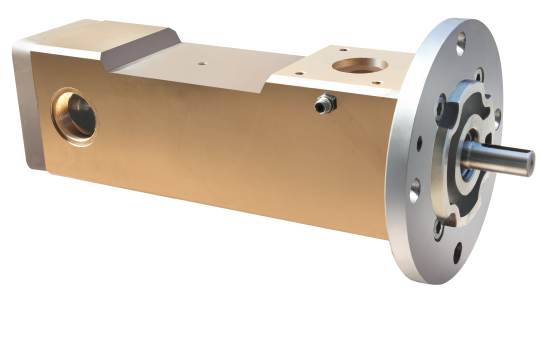
View the reviewed product family →
G: stage count changes pressure, while the stator remains a fluid decision
The G series is a horizontal, flanged single-screw direction. Its published construction uses small eccentricity and a medium lead. The source describes changing stator length for different stage counts while retaining the lead; it explicitly says the stages do not change the stated suction capability. Adding stages therefore does not resolve an inadequate inlet arrangement.
The catalogue gives maximum pressures of 0.6 MPa for one stage, 1.2 MPa for two and 1.8 MPa for three. Its broad series envelope includes flow up to 130 m³/h, viscosity up to 2.7 × 10⁵ cSt and temperature up to 150°C. These figures do not establish one pump’s duty or the suitability of an unspecified stator material.
This direction is described for liquids containing fibres, solid particles or gas. Specify particle size and loading, fibre behaviour, abrasiveness, liquid composition and operating temperature. Ask for the selected rotor/stator materials, seal arrangement and replacement references, together with inlet and operating instructions for that assembly.
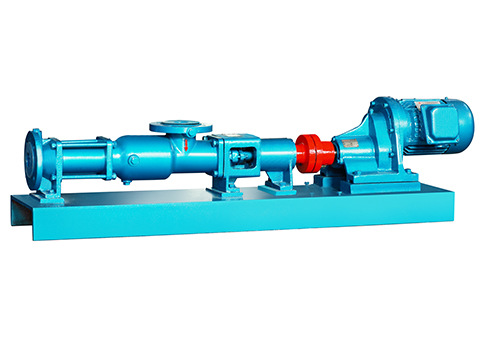
W.Kse and 2G: compare access and pipe geometry as well as capacity
W.Kse is described as a compact, single-suction twin-screw construction that can be dismantled and cleaned quickly. Its published direction is about 40 m³/h, 1.2 MPa differential pressure and 120°C. Listing food, beverage or pharmaceutical applications does not itself establish a hygienic certification, cleaning validation or a particular wetted material.
For a cleaning-sensitive duty, identify the product being pumped and the cleaning agents, temperatures and sequence. Confirm seal and contact materials, drainability, the parts that must be removed and the space needed to withdraw them. Agree any food-contact or hygienic documentation required by the project before accepting the offer.
The 2G page describes short shafts, double suction, a welded casing and inlet/outlet connections on the same horizontal line. Its family direction extends to approximately 550 m³/h and 1.4 MPa differential pressure, with a printed temperature range of 80–150°C. Ask for the actual temperature capability of the selected construction rather than applying that interval to every 2G pump.
For a retrofit, supply the existing flange centres, orientation, supports and available maintenance space. Match simultaneous flow, pressure and fluid properties to the selected set, then compare motor, coupling, seal, base and pipe-load requirements. Port alignment can simplify a layout, but it does not make the pump a dimensionally interchangeable replacement.
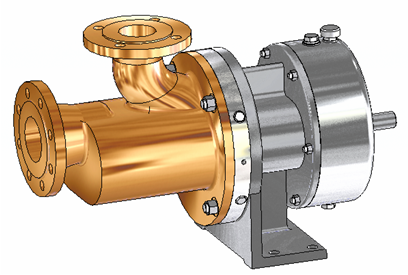
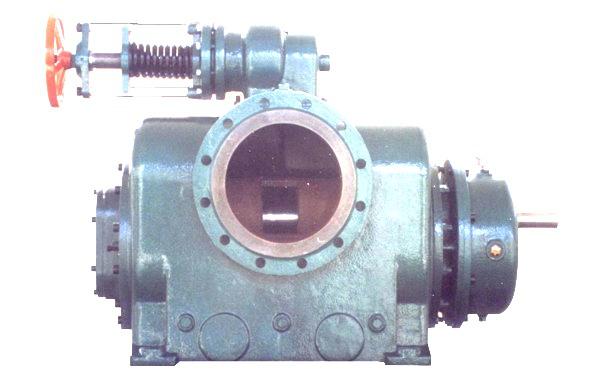
HW mixed-phase duty is a system brief, not just a gas-percentage target
The HW direction covers combined oil/gas transport with horizontal, flanged installation. Its overview lists inlet and discharge pressures separately; do not read a discharge-pressure entry as a differential-pressure rating. State minimum, normal and maximum inlet/outlet conditions on the same pressure basis.
The catalogue advertises very high gas fractions and a limited interval for all-gas operation. These statements do not establish unrestricted dry running or a universal operating envelope. Describe liquid availability, gas-volume-fraction basis, pressure/temperature changes, slugs, sand and wax. Obtain the selected permissible envelope, service arrangements, protective response and restart procedure.
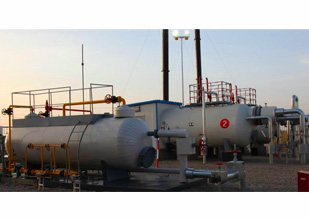
The published multiphase skid combines a pump, variable-frequency motor, computer closed-loop control, detection and protection. Define which equipment is included: pump/drive, instruments, controls, protection, auxiliaries, piping, valves and electrical interfaces. Agree the control narrative and the responsibility for system commissioning.
One company-published example identifies HW9.3ZK-90B for combined crude oil, water and natural gas: inlet 0.4 MPa, outlet 1.6 MPa, volumetric flow 673 m³/h, maximum gas content 85.5%, 315 kW motor and 1,450 r/min. It is a specific catalogue example, not an independently witnessed test or a rating for every HW set. Ask how the volume and gas fraction are referenced before comparing it with a new duty.
TMC: select on a water-system curve and the vessel’s actual requirements
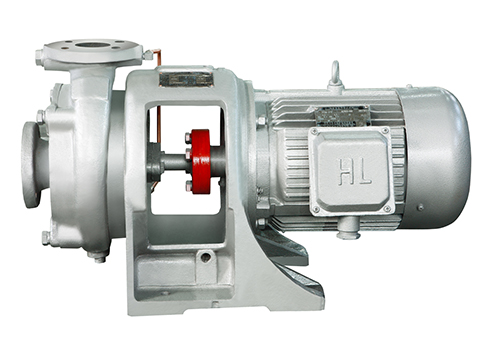
TMC is listed for freshwater cooling, seawater cooling and freshwater/sanitary services. The page gives maximum flow 150 m³/h, head 70 m, speed 3,550 r/min and working temperature 80°C. Treat these as separate catalogue bounds; obtain the relevant curve at the vessel’s electrical frequency and selected speed.
Provide the water chemistry, temperature, available inlet condition and system losses, along with the required operating and standby arrangements. Specify wetted materials, connections and seal parts for the actual circuit. A seawater application label alone does not select a corrosion-compatible material schedule.
The company’s qualification page describes historical management-system certificates and several ship-inspection routes. For a classed vessel, name the required society and identify the exact product approval, order-specific survey, test witnessing and documentation required. Historical company qualifications are not a substitute for the delivered pump’s applicable records.
Connect rotor manufacture and standards to the documents for the order
CTP’s manufacturing page describes screw-rotor machining over a broad dimensional range. For a replacement or engineered set, tie the rotor, stator/casing and seal references to the selected drawing revision and serial identification. Agree dimensional records and the inspection points that matter for the supplied assembly, rather than treating a general machinery claim as an order record.
The national standards platform lists this legal company among the drafting organisations for GB/T 10886-2019, Three screw pumps, published on 18 October 2019 and implemented on 1 May 2020. That establishes a documented standards contribution. It does not demonstrate that a particular SD set has passed the purchaser’s test; state the applicable standard, deviations and acceptance criteria in the order.
A 19 April 2025 listed-company disclosure identifies Tianjin Pumps & Machinery Group as a controlled subsidiary of Tianjin Benefo Tejing Electric and describes a special marine-pump research/manufacturing project. This corroborates the entity relationship at that disclosure date. The project description is not used to infer completed new capacity, current lead time or product certification.
Oil or difficult-liquid duty
- Fluid composition, density, viscosity versus temperature, solids/fibres and any gas.
- Simultaneous flow and pressure, inlet conditions, starts and operating variation.
- Selected family, construction, speed, motor supply and rotor/stator/seal material schedule.
Marine circuit or multiphase system
- Cooling-system curve or pressure/gas/slugs envelope, with all reference conditions.
- Connection drawing, maintenance clearance and pump/skid supply boundaries.
- Required class documents or control/protection narrative and commissioning interfaces.
Delivery and continuing service
- Performance and dimensional acceptance, test-fluid basis and witnessed points.
- Identification records, drawing revisions, operating instructions and wear-part references.
- Quantity, destination and requested date, with delivery and service scope confirmed in the offer.
Submit through KanBeng’s enquiry form with this factory named in your request.