
Seawater intake · clean-water lifting · sewage · Tianjin
Tianjin Runjin Pump Manufacturing Co., Ltd.
Runjin’s reviewed QH, QJ and WQ families address different intake waters. Seawater chemistry and sand, clean-water impurity limits, and sewage solids require different questions even when the requested flow and head are similar. Define the actual water and the lowest operating level before deciding the materials, motor and installation.
- Company identity
- 天津市润津泵业制造有限公司
- Published location
- Wuqing, Tianjin, China
- Reviewed intake directions
- QH seawater · QJ clean water · WQ wastewater
- Installation inputs
- Water analysis, low levels, intake, cable and retrieval
Start with the water—not a shared headline capacity range
The QH and QJ equipment tables repeat the same broad customisable ranges. They do not identify a single tested duty point or make a QJ unit suitable for seawater. Ask for an exact pump curve and material/motor configuration for the water being handled.
| Direction | Supplier’s published scope | Buyer information needed |
|---|---|---|
| QH | Submerged multistage pumping for seawater and similar corrosive liquids. | Salinity/chemistry, temperature, sand and marine growth; tide, intake height, materials and motor configuration. |
| QJ | Submerged water lifting with stated clean-water chemical and impurity limits. | Water analysis, sand/solids, bore/intake dimensions, dynamic water level and discharge duty. |
| WQ | Sewage/wastewater service with impeller, protection and installation options. | Actual solids/fibres, chemistry, wet-well levels, retrieval arrangement and control scope. |
QH: specify seawater materials and the lowest tidal condition
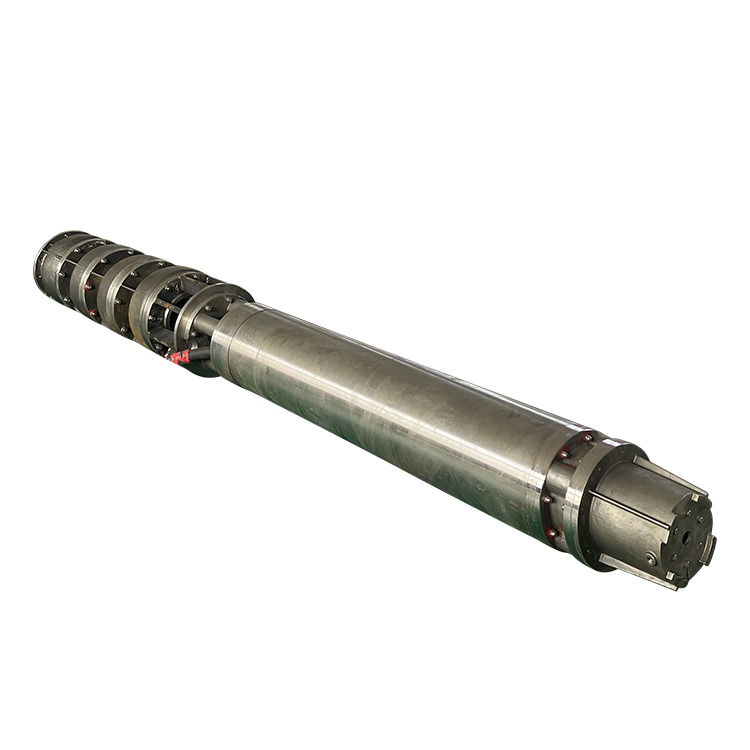
The QH page describes a multistage centrifugal pump with a water-filled submersible motor. It says copper-nickel alloy or stainless-steel pump materials are typically selected for seawater/corrosive duty, with exposed motor materials selected for the service. Request the actual alloy schedule, seals, cable jacket and corrosion provisions; “stainless” alone does not establish resistance to every seawater condition.
Its installation guidance places the intake at least 1.5 m below the dynamic low-tide sea level, normally with at least 2 m between motor bottom and seabed, and gives a maximum unit immersion depth of 70 m. Submit the actual tides, waves, seabed/sediment and intake drawing for confirmation. These distances are published QH guidance, not a complete marine-intake design or permission to ignore changed levels.
The narrative permits up to 5% sand by weight, but does not specify particle size or an abrasion-life guarantee. State the measured concentration, size distribution and variability. The text’s 90°C temperature statement conflicts with the equipment table’s 85°C, and its vertical-use instruction sits beside other customisable installation options. Obtain written approval of temperature, orientation and motor cooling for the exact offered configuration.
View the reviewed product family →
QJ: compare the actual water analysis with the published limits
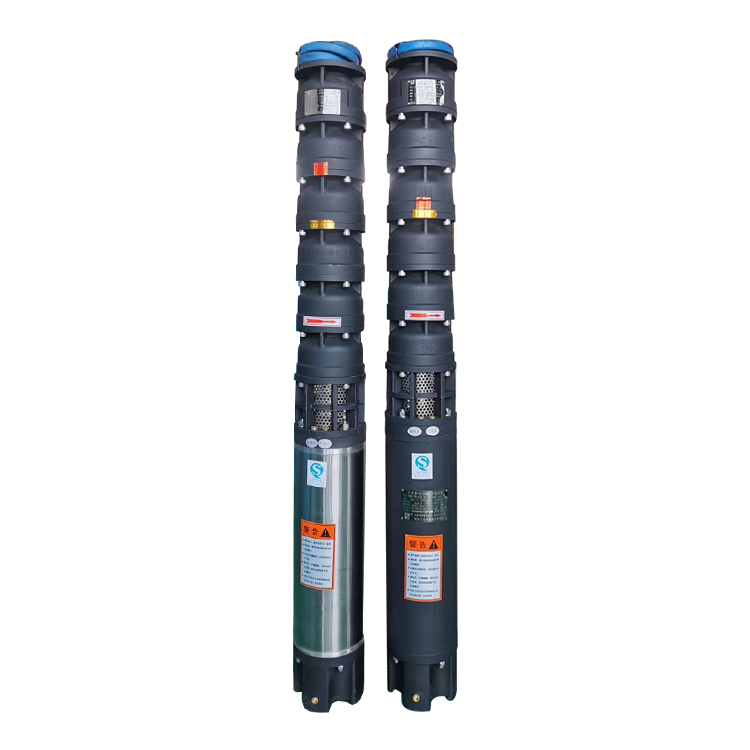
The QJ page lists a working-water temperature of +5 to +85°C, solid impurities no more than 0.05% by mass, pH 6.5–8.5, hydrogen sulphide no more than 1.5 mg/L and chloride no more than 400 mg/L. These are the supplier’s QJ conditions; confirm the offered model and construction against the actual water analysis.
The chloride and impurity conditions are a reason to review brackish, saline or sandy water explicitly rather than selecting QJ from a generic flow/head table. Provide seasonal water changes and any abrasive material, treatment or cleaning chemicals. Where the water falls outside the published conditions, request a suitable construction instead of assuming the same model remains acceptable.
The page requires the unit to remain fully submerged. Provide the lowest dynamic water level while pumping, bore or intake geometry and the proposed motor-cooling path, with any installation sleeve needed. Obtain the selected model’s drawing, permissible installation and cooling requirements before setting the stop level.
View the reviewed product family →
WQ: agree the impeller, solids passage and retrieval arrangement
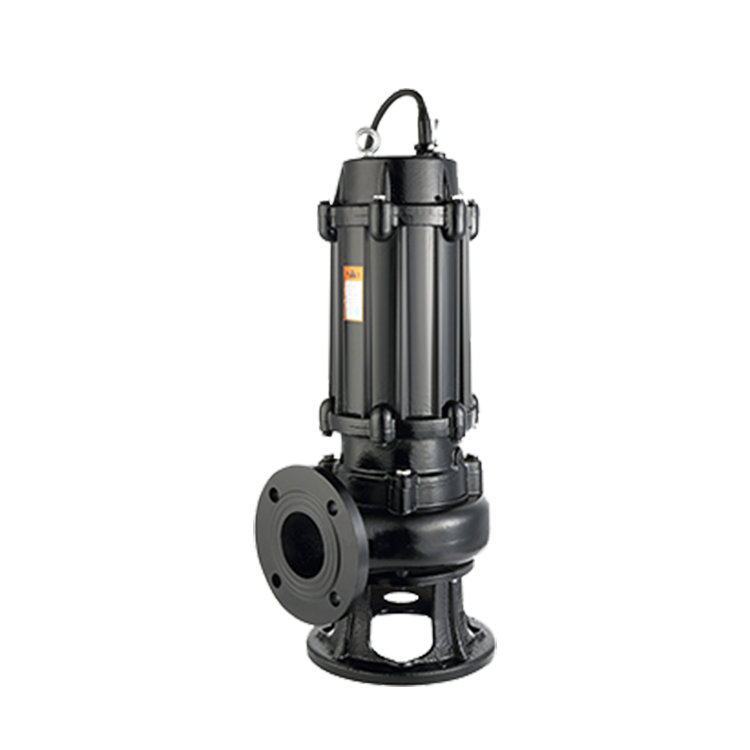
The WQ page describes sewage service, single- or double-channel impeller directions, fixed automatic-coupling and portable installation, with optional level/control equipment. Describe the solids, fibres, grit and actual wastewater chemistry and ask for the selected model’s impeller, free passage and material limits.
The same text also discusses JYWQ/JPWQ mixing and ASWQ tearing variants. Those are separate constructions; do not assume a quoted WQ pump has an agitator or cutter. Broad statements about passing particles equal to half the discharge size, long fibres, 8,000-hour seal life or operation at every head are not used here as guarantees.
Define the wet well, start/stop/alarm levels, access opening and lifting route. Confirm whether the guide rails, coupling/base, leakage and thermal signals, float switches and panel functions are actually included. The published table’s 60°C direction still requires approval for the selected motor, immersion and liquid.
View the reviewed product family →
Give the supplier a water-level and installation drawing
Show the water and lowest level
Provide water analysis and the minimum dynamic/tidal level. Mark the seabed/well bottom, intake, sediment and changes while operating.
Define the hydraulic duty
Give normal/peak required flow, static elevation, discharge route, pipe sizes and losses, plus changing downstream levels or pressure.
Match pump, motor and cable
Agree the selected curve, stages, materials, motor supply/frequency, temperature and cooling conditions, cable length and connections.
Plan installation and retrieval
Request the unit’s dimensions and weight, supports, discharge connections, lifting and maintenance access. Confirm whether any horizontal or floating option is approved.
Agree protection and commissioning
Define stop/alarm levels, motor and leakage/thermal signals, control-panel functions, inspection criteria and the site commissioning responsibilities.
A customisable range is not one pump’s guaranteed operating point
The QH/QJ equipment tables publish family ranges of 50–2,200 m³/h, 5–800 m head, 3–850 kW and 380–10,000 V with customisation noted. These separate family ranges cannot be combined into a single maximum duty. Obtain a selected model, curve, allowable operating range and motor rating at the specified water and installation.
The WQ table gives a different broad family envelope. Ask for its actual model and duty rather than borrowing QH/QJ performance. Include the electrical supply and starting/control method; the existence of a wide voltage range is not proof that the photographed or quoted unit supports every voltage.
For long discharge lines or deep installations, provide the pipeline and shutdown conditions and request review of pressure transients, check-valve arrangement and supports. The supplier’s check-valve marketing statement does not replace a project-specific assessment of the pipe system.
Company-name evidence and project approvals serve different purposes
The official company profile identifies 天津市润津泵业制造有限公司 in Wuqing, Tianjin, gives a 2004 company-history statement and describes petrochemical and water-engineering work. A CNOOC procurement notice dated 7 March 2025 independently names the same entity in a seawater-lift/fire-pump maintenance and commissioning project. It records a qualified bidder that did not enter the ranked award-candidate list. This supports a historical company-name cross-check; it is not an award, current supplier approval or product certification.
The profile mentions ISO management systems and classification-related certification without establishing the scope and validity for the specific unit being purchased. If marine/offshore or other project approvals are required, request the current documents covering the actual pump, motor, materials and intended service, and compare them with the purchase specification.
Engineering consultation, installation guidance and repair services are described in the official profile. Agree the actual supply/service scope, personnel responsibilities, test records, commissioning, spare parts and warranty terms in the offer. A service catalogue is not confirmation that these items are included in every pump order.
Send water analysis, duty and the low-level drawing together
Reviewed on 8 October 2026 from the official company profile and QH/QJ/WQ pages and parameter tables, with a dated CNOOC procurement notice used for the company-name cross-check. Images illustrate published families. Obtain the supplier’s approved model, current documents and operating conditions for the actual water and installation.
Water and operating requirements
- Freshwater/seawater/wastewater, chemistry, temperature and sand or solids/fibres.
- Required flow/head, operating cycle, discharge line and lowest dynamic/tidal levels.
- New installation or replacement, with existing nameplate and drawings where relevant.
Equipment and project requirements
- Materials, motor supply/control, cable, intake geometry and retrieval route.
- Pump-only or installation/control/service package, with clear scope boundaries.
- Quantity, destination, project-specific approvals, inspection/test requirements and schedule.
Submit through KanBeng’s enquiry form with this factory named in your request.
Report an outdated detail · Return to the enquiry checklist ↑