
Match the WRY circulation pump, bearing lubrication and thermal fluid
Changzhou Wushi Hot Oil Pump Co., Ltd.
Wushi’s catalogue combines WRY hot-oil circulation pumps with mineral and synthetic heat-transfer fluids. Its detailed pump instructions make oil viscosity at the front bearing a specific selection input. Compare an exact flow/head/speed row, then check the fluid, seal, pipe support and coordinated heater startup procedure.
- Company identity
- 常州市武氏导热油泵有限公司
- Listed base
- Henglin, Changzhou, Jiangsu
- Product focus
- WRY circulation pumps · heat-transfer fluids
- Selection input
- Duty · viscosity · seals · thermal expansion
A thermal-oil circuit needs a matched pump and fluid
Changzhou Wushi identifies itself as 常州市武氏导热油泵有限公司 and lists both hot-oil pumps and heat-transfer fluids. Its company introduction describes a predecessor, Changzhou Wujin First Hot Oil Pump Factory, while the listed base is Henglin in Changzhou, Jiangsu. Use the current full company name on the offer and invoice, and identify the pump, driver, fluid and installation work as separate deliverables.
This combination is relevant when replacing a heater circulation pump, renewing an oil charge or investigating poor circulation. The WRY catalogue is a pump specification; the WRY oil grades are fluid specifications. A matching prefix does not make them one interchangeable product or establish a safe operating temperature for the entire heater.
The applications page discusses indirect heating for reaction, drying, plastics, rubber, food-processing and other industrial duties. Treat these as thermal-circuit applications. For a food process, distinguish the sealed heating circuit from any potential contact with the product and request the required fluid documentation.
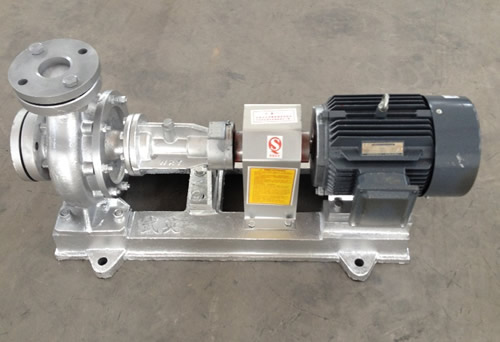
Keep flow, head, speed and motor power in the same row
The WRY page describes a single-stage, single-suction, foot-supported cantilever arrangement with axial suction, upward discharge and pump/motor on a common base. Its stated application is high-temperature, weakly corrosive liquid without solid particles; the catalogue temperature statement is up to 350°C. The selected fluid, seal, bearing lubrication and heater still need their own operating limits.
The following examples preserve individual performance-table rows. Shaft power and fitted motor power are separate columns. Do not combine the largest flow, head and power from different rows or use an installation dimension as a duty value. Provide normal and startup oil properties with the required operating point.
The page also has older curve images. For example, the 100-65-200 table row states 2,930 r/min while its plotted curve is labelled 2,900. Request the issued curve, impeller and driver speed for the selected configuration; do not assume every illustration and table is the same revision.
| WRY table model | Flow / head | Speed | Shaft / fitted motor |
|---|---|---|---|
| 20-20-125 | 1.5 m³/h / 22 m | 2,800 r/min | 0.45 / 0.75 kW |
| 80-50-200A | 60 m³/h / 38 m | 2,900 r/min | 9.2 / 11 kW |
| 150-125-280Y | 400 m³/h / 78 m | 2,970 r/min | 106 / 132 kW |
The fluid also affects WRY bearing lubrication
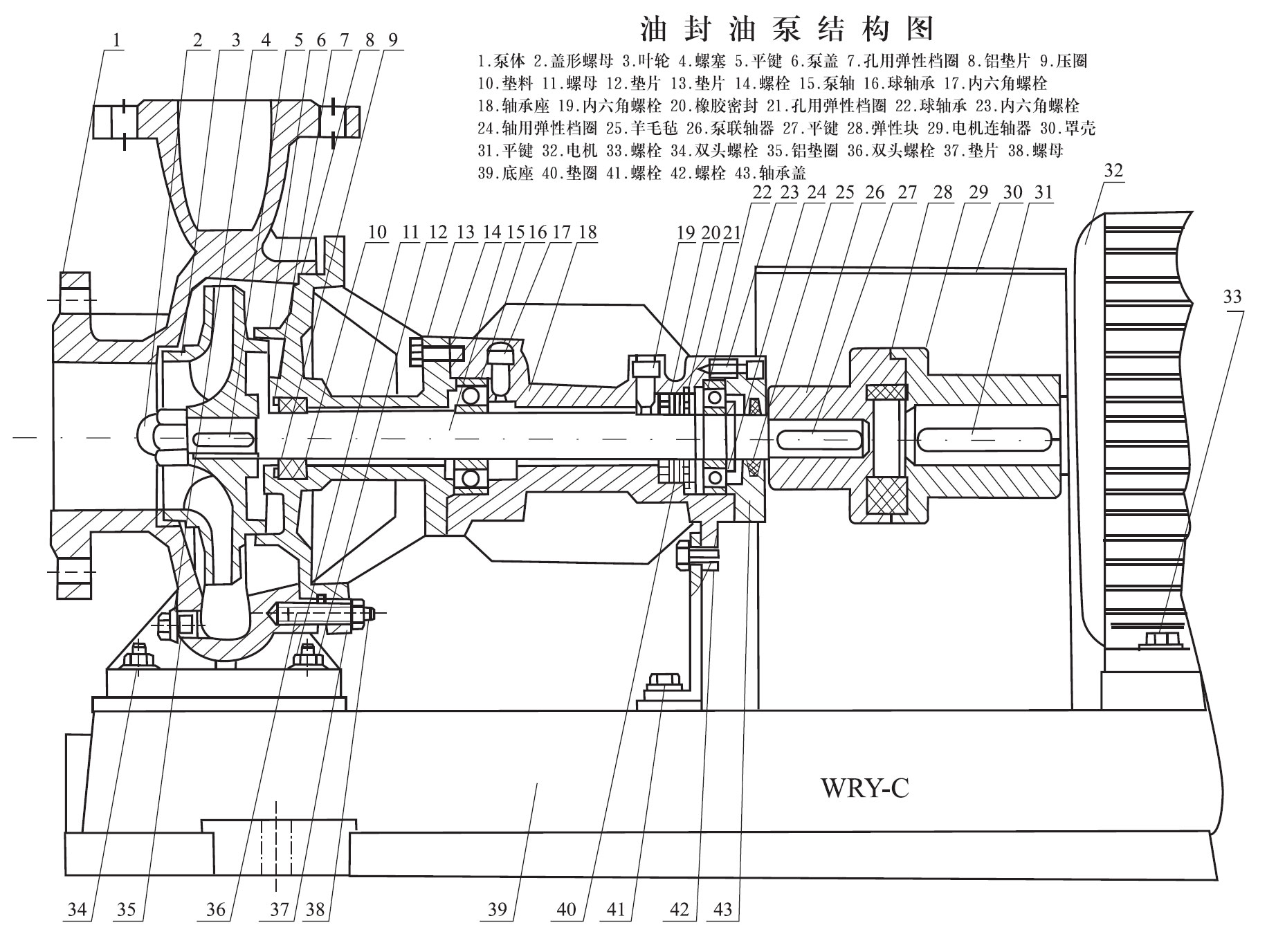
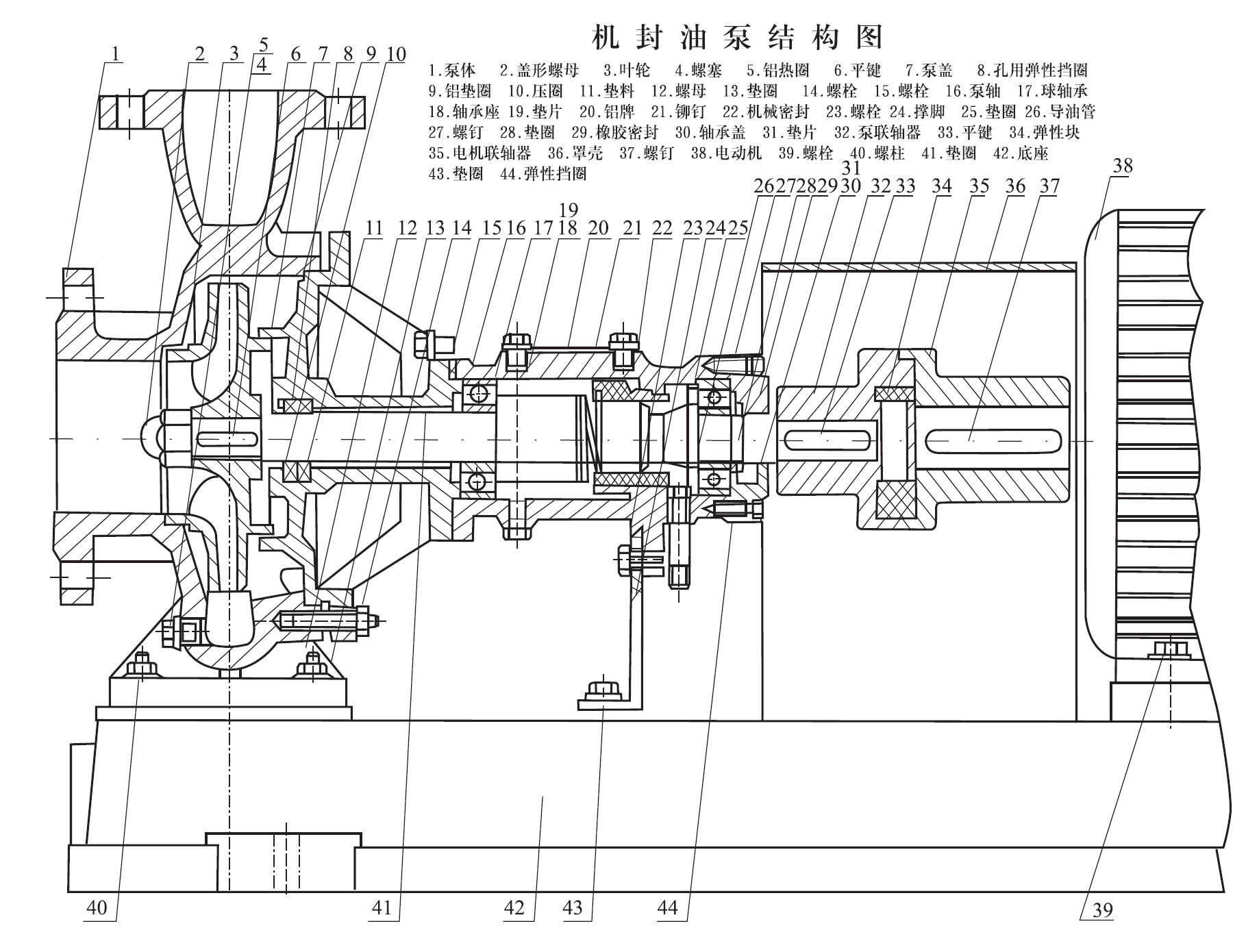
The detailed WRY description distinguishes a front bearing lubricated by heat-transfer oil from a rear bearing lubricated by grease, with a drain/observation pipe for seal leakage. It describes natural heat dissipation rather than the traditional water-cooled arrangement. Keep this area accessible and ventilated in the installation layout.
A specific catalogue instruction calls for the heat-transfer oil to have a kinematic viscosity of 10–15 mm²/s at 70°C for the front-bearing arrangement, and says to notify the supplier if it is below 10 mm²/s. This is a configuration-specific requirement to check against the offered pump, not a universal rule for all thermal oils. Send a viscosity-temperature curve, including cold startup and bearing conditions.
The same page shows packing-seal and mechanical-seal section drawings. Ask which construction is supplied, what lubricates each bearing and which seal faces, elastomers and wear parts are fitted. Include those drawing references in the spare-parts order rather than ordering only by WRY family name.
Oil grade numbers and flash points answer different questions
The catalogue distinguishes mineral-type heat-transfer oil from alkyl-based synthetic fluid. It publishes WRY-300 through WRY-350 high-temperature grades and 300S through 350S synthetic grades. Ask for the exact grade, batch certificate, safety data sheet and declared maximum bulk and film temperatures for the system.
The high-temperature table lists open-cup flash-point minima of 190°C for WRY-300 and 215°C for WRY-350; the synthetic table lists 180°C for 300S and 210°C for 350S. These are flash-point specifications, not maximum operating temperatures or permission to expose hot fluid to air. A grade number alone does not define startup pumpability, compatibility with old oil or the heater film-temperature limit.
The national standards catalogue identifies GB 23971-2009 as the current heat-transfer-fluid standard. Ask the proposed fluid documents to identify the applicable standard and exact test methods. The company’s older tables contain inconsistent density units, and the mobile links do not consistently match their labels; use a current grade-specific data sheet for calculations and comparisons.
Check pipe support, thermal movement and the supplied startup procedure
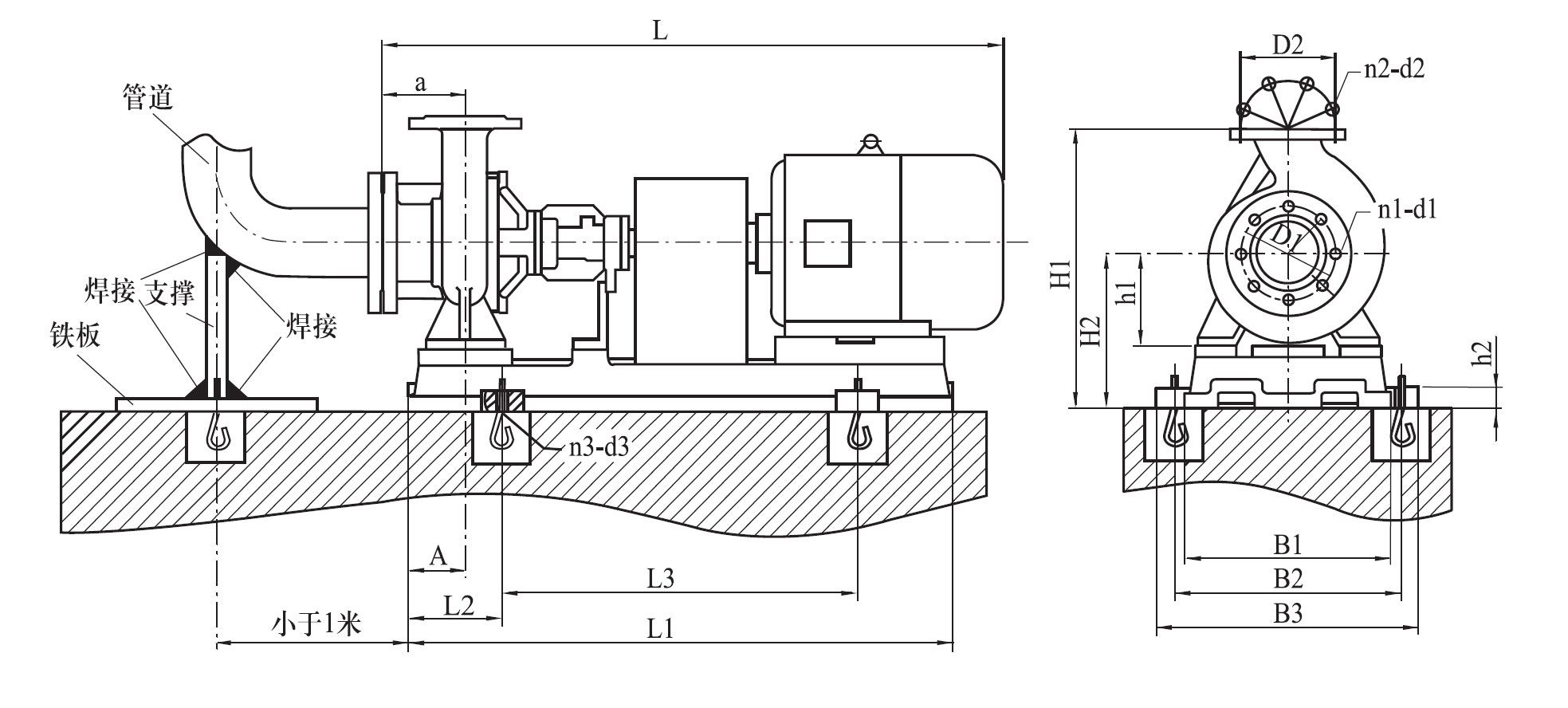
The WRY installation guidance requires separately supported suction and discharge piping because thermal expansion loads can distort the pump, coupling, bearings and shaft. It also calls for sufficient service and cooling space, alignment after foundation work and another alignment check after connecting the pipework. A bolt pattern alone is not a complete replacement check.
The supplier publishes both pump-specific preheating instructions and a separate system warmup article, with different ramp figures. Obtain one coordinated commissioning procedure from the pump and heater suppliers for the actual fluid and installation. Agree how the circuit is filled and vented, how moisture is removed, how circulation is confirmed and what happens on loss of power.
The operating notes warn against throttling the suction valve and discuss bypass provision for low-flow operation. Include the minimum continuous pump flow, heater circulation requirement, filter pressure loss and protection logic in the design review. Neither a closed-discharge startup instruction nor a generic article is permission for prolonged blocked-flow operation.
Use an oil-analysis trend alongside pump measurements
The company’s analysis article discusses water, viscosity, acidity, residual carbon, low-boiling components, flash point and insoluble deposits. Its accident discussion links fluid degradation, water contamination, leaks into insulation and inadequate circulation with operating problems. These observations make fluid condition relevant to a pump enquiry, especially when the old system has vibration or falling pressure.
Send dated oil-analysis results together with inlet/outlet temperatures, pressures, flow, motor current, filter condition and the timing of the fault. Compare samples using consistent methods. Colour is an observation, not a complete acceptance test; request grade-specific action limits and a documented changeover/cleaning procedure before mixing or replacing an oil charge.
Supply the circuit information that determines the replacement
For a Wushi enquiry, compare a pump-only replacement with a pump-and-fluid proposal using the same operating conditions. Ask the offer to state the exact WRY configuration, issued curve, fluid grade where included, supply boundaries and commissioning documents. Use the groups below to prepare a useful enquiry.
Prepare a structured pump enquiry →
Pump and existing circuit
- Required circulation flow and differential head, heater minimum flow and existing pump nameplate.
- Suction level, pipe sizes, filter losses, base/flange measurements and thermal-movement allowance.
- Driver voltage/frequency, duty schedule, seal construction and required wear/bearing spares.
Fluid and temperatures
- Current and proposed oil grade; cold startup, normal bulk and maximum film temperatures.
- Viscosity-temperature curve including the selected bearing-lubrication condition.
- Batch and safety documents, recent oil analyses, contamination history and changeover requirements.
Commissioning and acceptance
- Issued curve at the offered speed and oil properties; fitted motor and agreed test records.
- Coordinated filling, venting, warmup, minimum-flow and power-loss procedures.
- Installation/site-work exclusions, warranty terms, quantities and destination.
Submit through KanBeng’s enquiry form with this factory named in your request.