Stainless transfer, multistage boosting and wastewater pumps
Xin Wuyang Pump (Guangdong) Co., Ltd.
A tank-transfer pump, a pressure booster and a sewage pump need different purchase briefs. Compare the actual series, then specify the liquid, suction arrangement and service access.
- Office
- Dongguan, Guangdong
- Company-listed factory
- Zengcheng, Guangzhou
- Transfer choices
- GLF, GLF-X, FSB and ISWH
- Other routes
- CDLF boosting, WQ drainage and HVAC
Separate the Wuyang brand, office and factory in the order
Xin Wuyang Pump (Guangdong) Co., Ltd. identifies itself as 新五羊水泵(广东)有限公司 and presents the Wuyang pump brand. Its company introduction explains that the brand previously concentrated on processing and manufacture, with sales handled through agents and dealers, and that a newly registered business was established to develop its sales activity. The brand’s history and the contracting company’s legal age should therefore be treated separately.
The contact page distinguishes a Dongguan office from a factory location in Zengcheng, Guangzhou. For an equipment order, name the contracting entity and agree the dispatch location, inspection location and responsibility for assembly. The catalogue spans stainless centrifugal and self-priming pumps, vertical multistage pumps, sewage pumps, chemical pumps and air-conditioning circulation equipment; the useful starting point is the liquid-handling task, rather than the breadth of that list.
Choose between transfer, boosting, circulation and drainage
The series below solve different installation problems. GLF and GLF-X are closely related stainless transfer choices, but the X series is presented as self-priming. CDLF is explicitly non-self-priming and intended for clean, thin liquids. WQ and WQ(D)-F address wastewater, with different construction and installation information. These distinctions matter more than choosing the highest flow listed in a catalogue.
| Series | Useful enquiry route | Selection detail to settle |
|---|---|---|
| GLF / GLF-X | Stainless liquid transfer / self-priming transfer | Suction level, liquid chemistry, impeller arrangement and seal |
| CDLF | Clean-water boosting or process-water pressure duty | Inlet conditions, stage selection, motor and protection |
| KTZ / GDD | Horizontal / vertical HVAC circulation | Circuit losses, flange layout, temperature and removal space |
| WQ / WQ(D)-F | Guide-rail sewage installation / stainless submersible wastewater | Waste composition, minimum level, connections and lifting |
| FSB / ISWH / GDF | Fluoroplastic-lined / stainless chemical or inline transfer | Exact chemical, concentration, temperature and wetted materials |
| QBY | Air-operated diaphragm transfer | Air supply, diaphragm and valve materials, required duty |
For tank transfer, resolve the suction arrangement before the material
The GLF documentation describes stainless wetted parts with 304, 316 and 316L choices. It distinguishes close-coupled construction from a bearing-bracket arrangement and mentions both semi-open and closed impellers. Its temperature limits differ by construction: up to 100°C for the close-coupled version and up to 160°C for the bearing-bracket version. A quote must identify the actual arrangement; the higher figure cannot be applied to every GLF.
GLF-X is the self-priming route. Record the lowest tank level, pump elevation, suction-pipe length and fittings, liquid temperature and the expected air entry. Self-priming does not remove the need to follow the selected pump’s initial filling procedure. Ask for the priming instructions and the applicable suction conditions, alongside the normal running curve.
The published table gives 50GLF-18 a paired point of 13 m³/h at 18 m head with a 1.5 kW motor. For 40GLF-X-16, it pairs 10 m³/h with 16 m head and a 1.1 kW motor. These examples describe different pumps and operating points; combining the largest flow and head from unrelated rows would produce a misleading selection. For soft particles or fibres, state their size and quantity and obtain an agreed impeller and seal configuration.
Use CDLF stages to meet a clean-liquid pressure duty
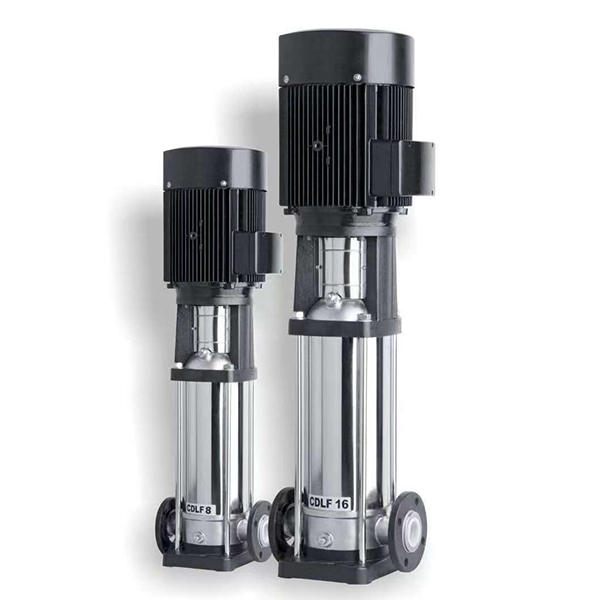
CDLF has a vertical multistage arrangement, stainless stamped and welded hydraulic components, a standard vertical motor and a quick-install mechanical seal. The inlet and outlet are on the same horizontal axis at the base. The documentation limits its liquid route to thin, clean media without solid particles or fibres, excluding flammable and explosive media; mild corrosion still requires the right stainless and seal selection.
The table below retains complete model rows. Compare the required duty with the selected curve, available inlet conditions and actual electrical supply. The company offers dry-running, phase-loss and overload protection as an option, so include the protection devices and control wiring in the quotation instead of assuming they accompany every bare pump.
| Catalogue model | Flow / head | Motor / connection / speed |
|---|---|---|
| CDLF4-60 | 4 m³/h / 48 m | 1.1 kW / 32 mm / 2,900 r/min |
| CDLF16-80 | 16 m³/h / 94 m | 7.5 kW / 50 mm / 2,900 r/min |
| CDLF32-40 | 32 m³/h / 53 m | 7.5 kW / 65 mm / 2,900 r/min |
For circulation, compare horizontal KTZ with vertical GDD
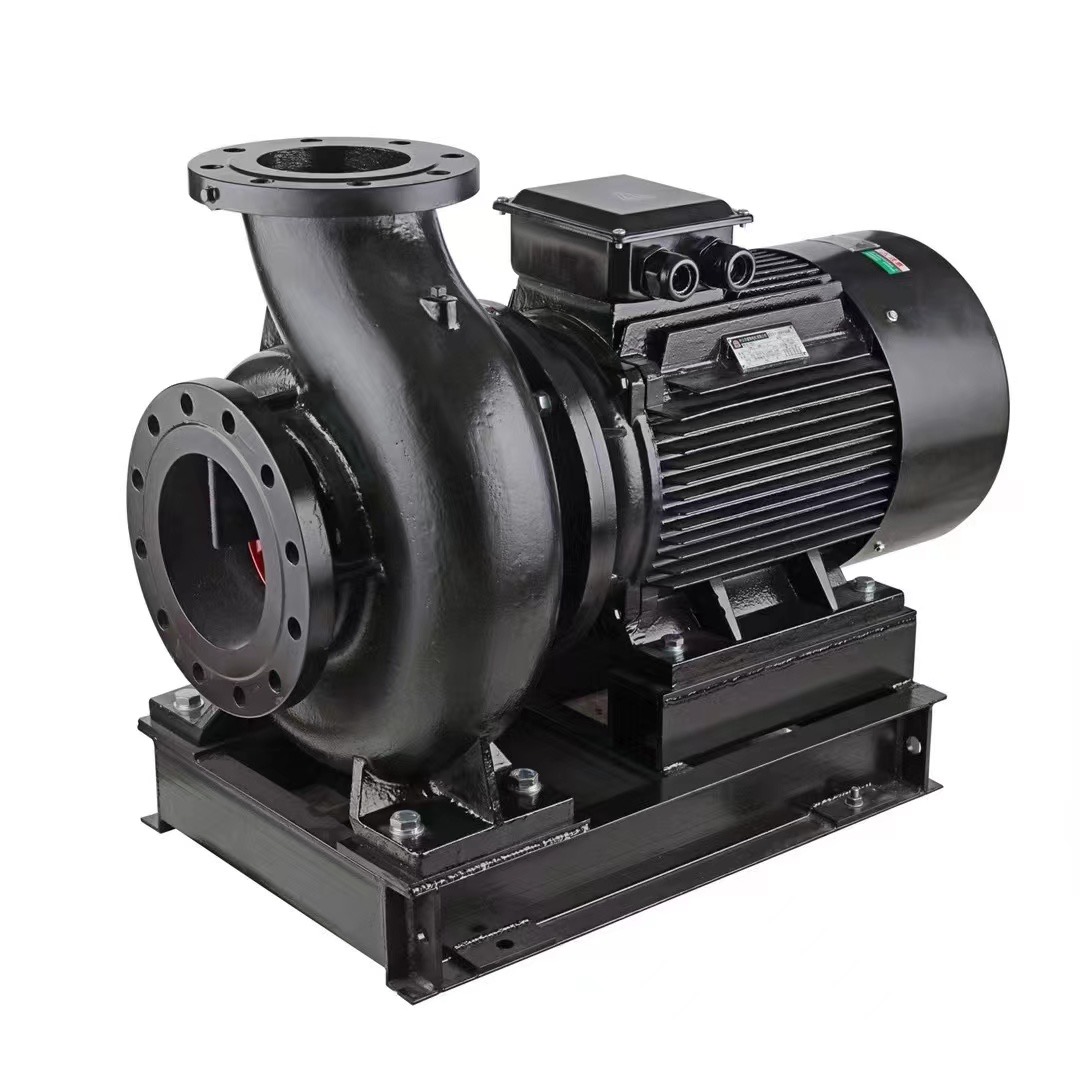
KTZ is a horizontal close-coupled single-stage pump for water and similar liquids. The company describes a rear-removal arrangement allowing access to the impeller and seal without removing the connected pipework. Its KTZ200-150-400 entry and table agree on 400 m³/h at 50 m head with a 90 kW motor; the featured entry lists 1,450 r/min. Allow enough withdrawal space around the motor and obtain the actual outline drawing.
GDD offers a vertical inline route with equal connection diameters and a low-speed motor. Its description limits the easy-removal construction to larger pumps above 45 kW, so that feature should not be assumed for a smaller model. For an HVAC order, supply the circuit arrangement, required flow, calculated losses, fluid temperature and water treatment, then agree the casing pressure rating and flange interfaces.
Resolve document inconsistencies in the selected order: the KTZ page’s featured temperature and detailed operating limit differ, while the GDD150-32 header and table give different speeds. Request a signed configuration sheet with the exact temperature and motor speed before accepting a replacement. A vertical GDF stainless inline option also exists; its material selection and temperature rating need the same configuration review.
Match wastewater construction and removal method to the pit
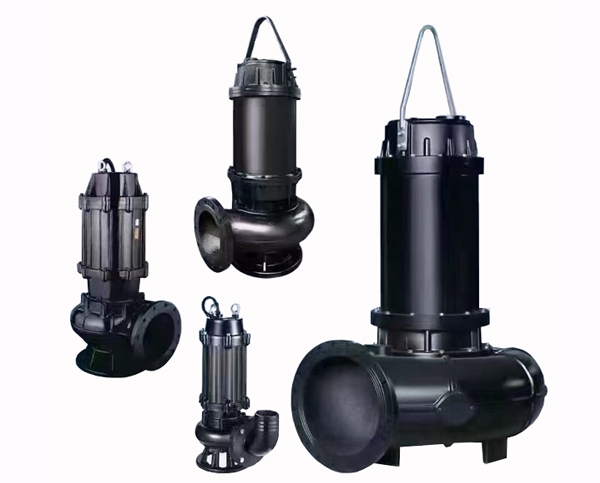
The fixed-coupling WQ documentation describes a guide-rail installation with a coupling base, flange, upper support and sealing arrangement. The 100WQ100-15-7.5 row pairs 100 m³/h with 15 m head, a 7.5 kW motor, a 100 mm outlet and 100GAK coupling. Its stated operating conditions include 380 V, 50 Hz three-phase power, liquid temperature no higher than 60°C and pH 5–9. The liquid and pit conditions must match the selected version.
WQ(D)-F is a separate stainless precision-cast submersible route, with 304, 316 and 316L options and threaded elbow connections described in its table notes. WQF15-15-1.5 is listed at 15 m³/h, 15 m head, 1.5 kW and a 50 mm connection. It should not inherit the large WQ guide-rail installation or its coupling specification simply because both names start with WQ.
Provide the pit section, inlet position, minimum and maximum water levels, debris and fibre content, cable route and safe lifting arrangement. Agree the actual solids passage, thermal protection and leakage monitoring with the order. Material names or a pH band alone do not establish compatibility with a particular industrial waste stream; identify chemicals, concentrations and temperature together.
WQF stainless submersible series →
Build a chemical-transfer specification around every wetted component
FSB is described as a metal casing lined with F46 fluoroplastic, with fluoroplastic-covered metal inserts and a mechanical seal. A selected row, 65FSB-32L, lists 25 m³/h at 32 m head and a 5.5 kW motor. For a chemical enquiry, specify concentration, mixtures, temperature, solids and cleaning fluid. Obtain compatibility confirmation for the lining, seal faces, elastomers and fittings together; a general corrosion-resistance claim is not a universal chemical approval.
ISWH is the horizontal stainless chemical route for corrosive liquids without solid particles and with viscosity similar to water. GDF is a stainless inline route with a top-opening maintenance arrangement. Choose between these layouts using the actual liquid specification, nozzle orientation and maintenance space, rather than transferring another series’ temperature or performance range.
QBY offers air-operated diaphragm transfer and therefore needs an air-supply brief as well as a liquid brief. Specify available air pressure and capacity, required liquid duty, diaphragm and valve materials and discharge conditions. The QBY-40 featured entry and QBY-40K table are different designations; obtain the curve for the exact supplied designation. An air drive by itself does not establish hazardous-area approval.
Turn the company’s assembly offering into an inspectable order
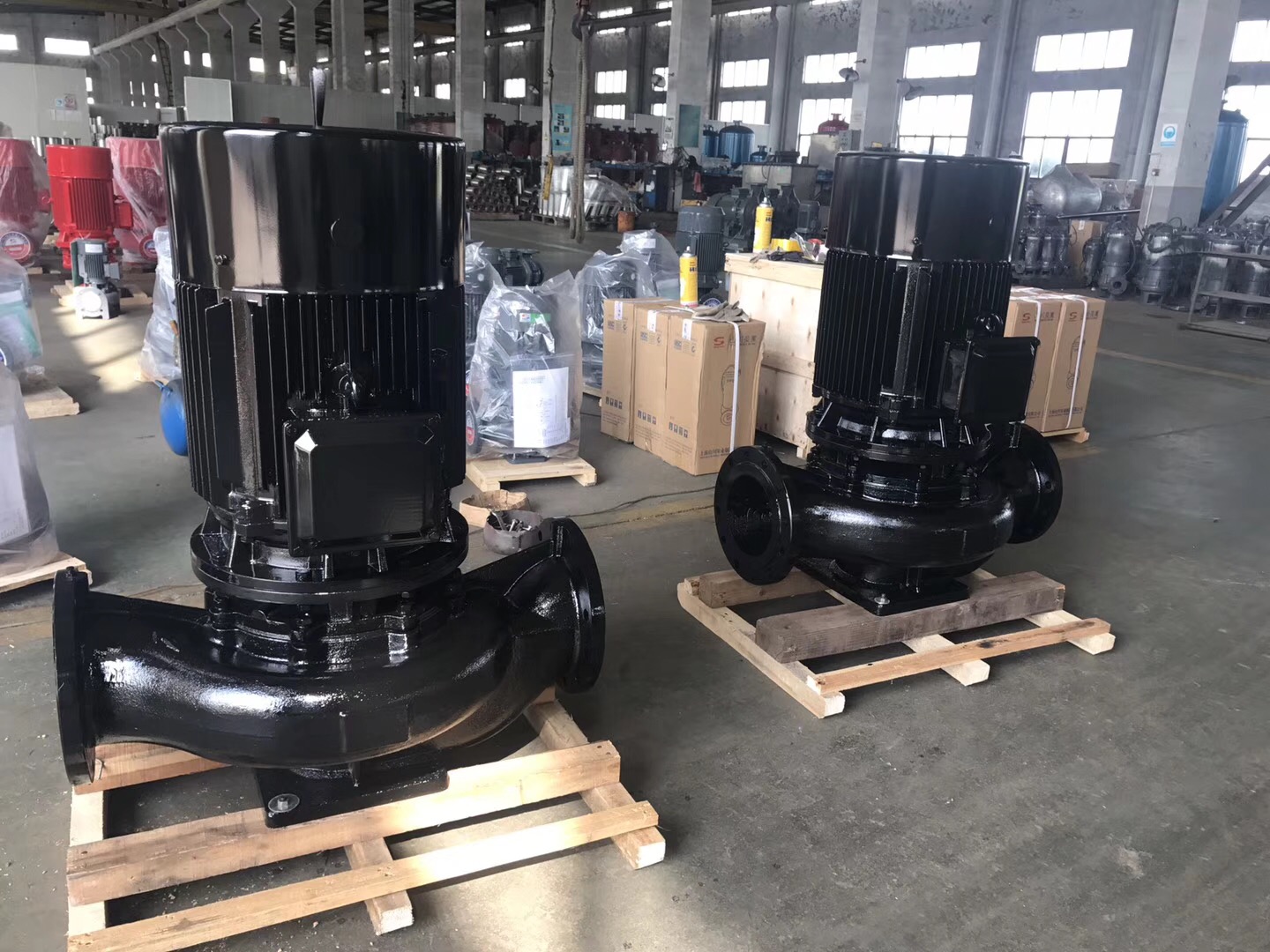
The introduction describes design work, casting, fabrication, assembly and pump-testing facilities, and its gallery shows pumps in an assembly setting. For a purchase, ask which work applies to the selected equipment and specify the inspection and acceptance documents. The gallery provides context; the approved drawing, material records and test report define the order.
For a replacement, send the existing nameplate, flange dimensions and installed photographs. Agree the impeller version, seal arrangement, motor rating, service instructions and spare-parts identifiers. Catalogue references to international standards or broad product categories should lead to a precise order requirement, rather than an assumed certification of all equipment.
Send one enquiry with the operating task and acceptance scope
Choose the relevant series route and include the information below. KanBeng’s enquiry form carries this factory name into the request, so the operating details can be reviewed alongside the intended supplier.
Build a complete pump enquiry →
Transfer or chemical service
- Liquid composition, concentration, temperature, viscosity and solids
- Tank levels, suction elevation, pipework and required paired flow/head
- Stainless grade or lining, seal materials and cleaning procedure
Boosting, circulation or sewage
- Circuit or pit drawing, working levels and required duty
- Power supply, control/protection scope and connection dimensions
- Withdrawal or lifting space, installation accessories and cable requirements
Equipment and acceptance
- Exact model/version, motor, material and component schedule
- Outline drawing, issued curve and agreed performance test
- Dispatch and inspection location, manuals and identified spare parts
Submit through KanBeng’s enquiry form with this factory named in your request.