
Match the pump arrangement to the water level, station layout and available driver
Yancheng Ruijia Pump Co., Ltd.
Ruijia’s catalogue brings together horizontal mixed-flow pumps, vertical mixed-flow and axial-flow arrangements, submersible station pumps and engine-driven assemblies. The practical starting point is the station: water-level variation, required discharge, lifting access and available power. Those choices determine which catalogue direction deserves a detailed curve and installation proposal.
- Company identity
- 盐城瑞佳泵业有限公司
- Listed base
- Tinghu, Yancheng, Jiangsu
- Main decision
- HW · HL · ZLB · submersible installation
- Driver choices
- Motor · diesel · direct or speed-changing drive
Buy the pump, its drive and the station interfaces as a defined package
The company introduction identifies Yancheng Ruijia Pump in Jiangsu and lists HW/HBC mixed-flow pumps, ZLB axial-flow pumps, self-priming assemblies, water-ring vacuum pumps, centrifugal and multistage directions. Its separate product listings show HW motor assemblies and a 250HW-10-1130 diesel-engine assembly. This is a catalogue with several installation and drive routes, rather than one interchangeable pump for every water-transfer job.
For a pump-only purchase, identify the required casing, shaft, impeller and connection arrangement. For an assembled unit, add the motor or engine, coupling or belt drive, base, guards and controls to the quotation. For a pumping station, define the civil works, intake, discharge valves and commissioning responsibility separately. A photographed pump assembly does not include all those services automatically.
Start with the shaft and motor location before comparing pump sizes
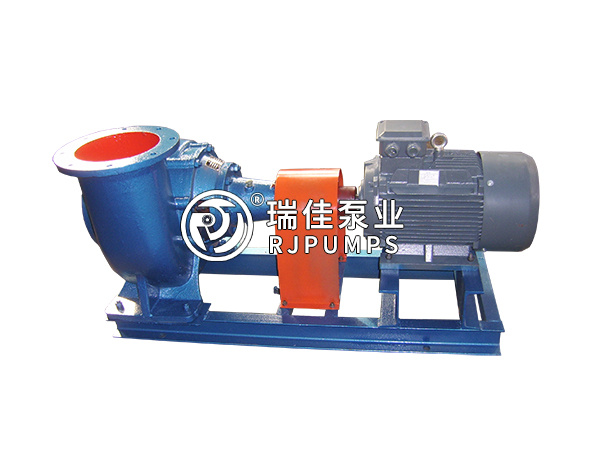
The HW pages describe direct drive and speed-changing drive, commonly using motors or diesel engines. They explicitly ask the buyer to state driver model, power and speed so the coupling or pulley can be determined. The catalogue’s 250HW-18.5KW assembly name and diesel-package designation identify advertised configurations; neither is a complete hydraulic duty point.
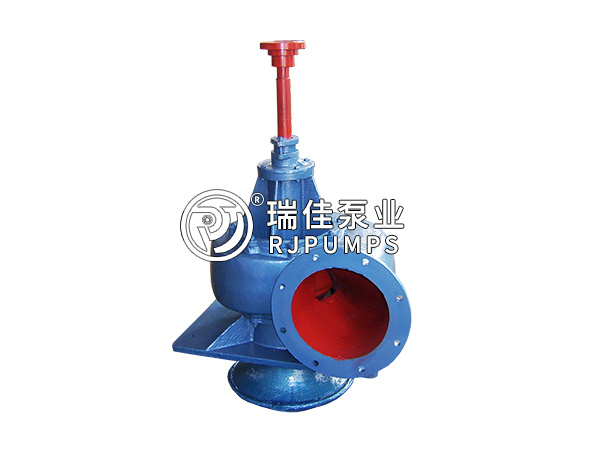
The HL description identifies a single-stage, single-suction vertical volute mixed-flow pump for clear water or a liquid with similar physical and chemical properties, with a stated medium-temperature limit of 50°C. It describes direct drive by a vertical motor. The original 350HL listing gives family ranges, not a curve proving that this particular pump supplies every combination of flow and head.
The ZLB listings emphasise large-volume, low-head transfer and show extended-shaft and two-outlet arrangements. Require the actual discharge geometry and operating modes. A two-outlet housing is not evidence that the pump can be reversed electrically to pump both ways.
| Catalogue direction | Arrangement to compare | Information needed before selection |
|---|---|---|
| HW/HBC and HW assemblies | Horizontal pump with motor or engine drive | Duty curve at the actual pump speed; coupling/pulley and base scope |
| HL vertical mixed-flow | Vertical shaft and volute layout | Installation drawing, motor position, water levels and service access |
| ZLB axial-flow | Extended shaft or specified outlet housing | Shaft length, foundation, blade setting and outlet/valve arrangement |
| QSH / QSZ / ZQB | Submersible mixed-flow or axial-flow direction | Well/barrel support, lifting, minimum level, motor cooling and protection |
Explore the existing mixed-flow entry →
Explore ZLB and ZL axial-flow directions →
Submergence and motor cooling are separate parts of the station design
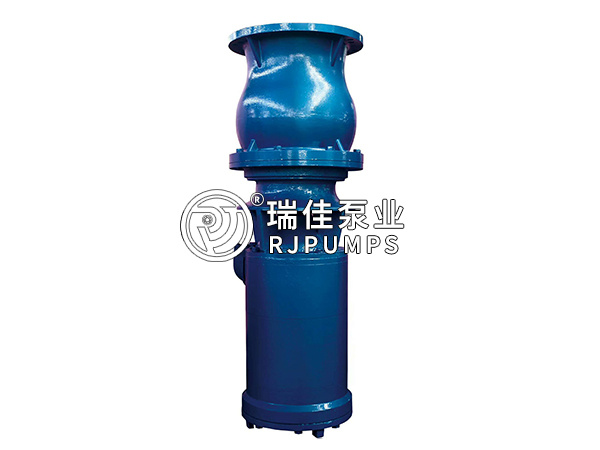
Ruijia’s submersible-pump discussion describes suspended, steel-barrel and precast-concrete-well arrangements, with different support and anti-rotation interfaces. It explains that water movement around the immersed motor assists cooling. Use these as installation questions: which arrangement is being offered, what minimum operating level it needs, and how the unit is lifted out for inspection.
The Hydraulic Institute’s intake guidance distinguishes submergence needed to prevent air-core vortices from the available suction-head requirement. A submerged inlet alone does not establish an acceptable intake. Provide the lowest and highest intake levels, inlet-bell position, approach-flow geometry and screen losses; ask for the selected pump’s NPSH and submergence checks at the required operating points.
Also ask how the motor remains adequately cooled during low-water operation and how the control prevents an unacceptable level condition. The site’s general discussion does not establish one cooling velocity, protection setting or permitted dry-running time for every QSH, QSZ or ZQB unit. Require the issued motor and installation instructions for the actual supplied model.
Read the submersible pump direction →
A diesel engine model is not the pump’s operating speed
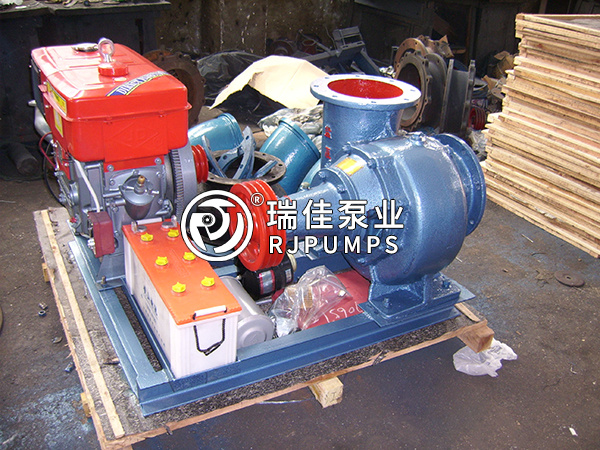
The 250HW-10-1130 diesel listing and HW motor listings share the requirement to specify the driver’s power and speed. For an engine proposal, ask for the engine model, rated duty, governed speed and any speed-changing transmission. For a motor proposal, state frequency, voltage, starting method and the actual running speed. Compare proposals on the resulting pump duty, rather than on engine size or motor nameplate power alone.
Keep the installation scope explicit: engine cooling, exhaust, fuel arrangements, coupling or belt guard, base anchoring and vibration isolation where required. The separately named mobile assembly needs its own transport and support drawing; the available product photograph is not a specification for a road trailer or towing approval.
Ruijia also lists TC and SCP self-priming directions and SZG-8 water-ring vacuum equipment. The TC/SCP descriptions mix material and application statements between families. Ask for the exact priming method, retained-liquid requirements, suction-line arrangement and allowed priming duration of the offered model. Do not use the vacuum-pump name as a guarantee of water lift or dry-running capability.
Compare self-priming directions →
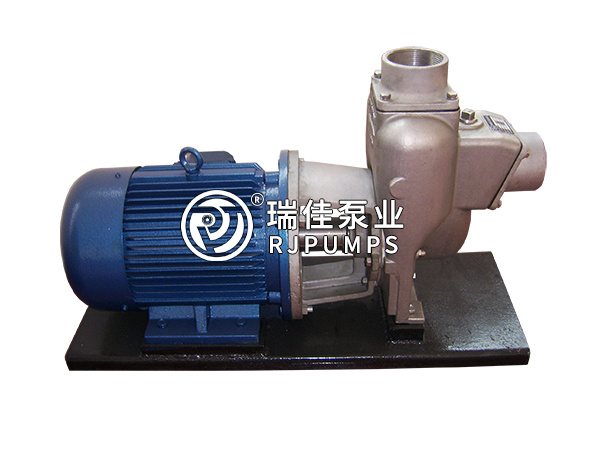
XA trim, speed and back-pull-out space affect a replacement order
The XA description states that the pump can be opened from the back without removing the suction and discharge pipework. It describes either packing or a mechanical seal and two suspension bearings lubricated with oil or grease. A replacement brief should therefore identify seal construction, bearing lubrication and the space needed behind the pump to remove the rotating assembly.
Its published catalogue envelopes are 32–200 mm connections, 4.5–460 m³/h flow and 4.7–98 m head, with 1450/2900 r/min speeds. These endpoints describe a series; they are not one operating point. The page also links changed impeller diameter to A/B/C model suffixes and notes a reduced impeller diameter for the stated 60 Hz direction. Require the actual model, trim and frequency-specific curve instead of scaling a 50 Hz headline without the supplied selection.
The XA page describes a normal 1 MPa working-pressure direction and asks the buyer to specify a 1.6 MPa requirement when ordering. Those figures concern pressure construction, not metres of pump head. Agree the pressure boundary and materials for the selected liquid and temperature. The page’s broad application list does not establish a fire-service approval or chemical compatibility for every version.
The introduction separately lists DL/DW multistage and IH chemical pumps. Use their existing entries for those enquiries and request their own stage count, materials and seal documents; XA’s maintenance description and pressure envelope should not be assigned to those families.
Read the centrifugal-pump entry →
Read the multistage direction →
Read the chemical-pump direction →
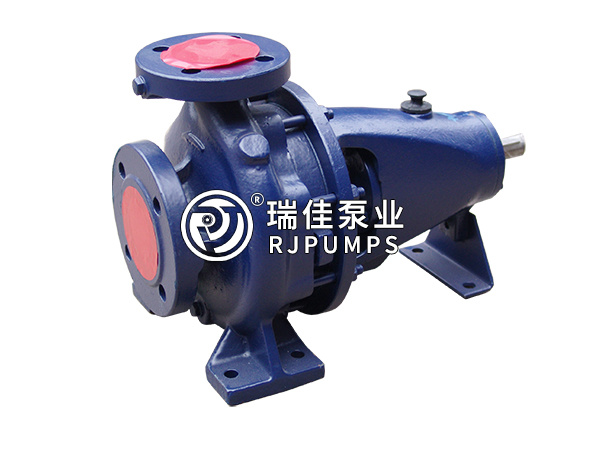
A split impeller chamber helps only if the station leaves room to open it
The ZLB description identifies a split impeller chamber and a semi-adjustable impeller. That makes chamber access and the specified blade setting relevant to the installation. Ask how the chamber can be opened, which parts require lifting and what the issued curve assumes. The online blade-angle notation is ambiguous; use the selected pump’s drawing and instructions for its actual setting.
Ruijia’s monitoring discussion names flow, vibration, temperature and inlet-water signals. Turn that discussion into a contract schedule: which instruments are supplied, where readings are taken, which alarms or shutdowns are required and who tests them. Do not assume the photographed pump includes an instrumented monitoring system.
For a station order, agree hydraulic test points, speed, measured power, test liquid and documentation, plus the installation and functional checks. Keep spare impellers, bearings, shaft sections, seals and discharge components tied to the exact assembly drawing. This is particularly important when replacing a long-shaft unit or maintaining different outlet housings.
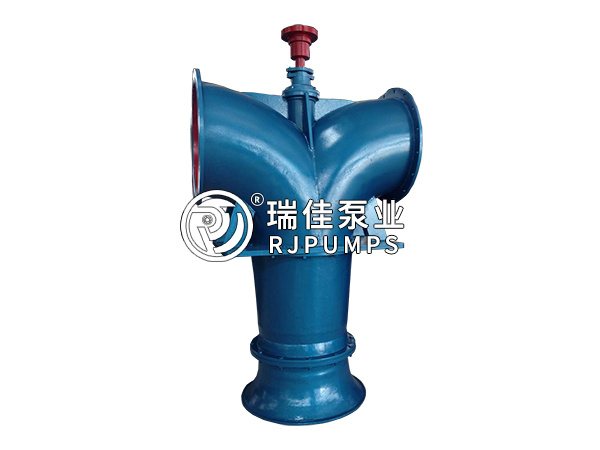
Send the station drawing with the duty requirements
A useful Ruijia enquiry identifies the desired installation direction and includes the site information that can change the selection. Ask the quotation to mark pump, driver, controls and installation exclusions separately. Retain the issued curve and assembly drawing revision with the offer so the delivered unit and spare parts can be checked against the same configuration.
Prepare a structured pumping-station RFQ →
Hydraulic and intake conditions
- Required duty points, operating hours and seasonal intake/discharge water levels.
- Liquid temperature, solids/debris conditions, screens and suction/discharge losses.
- Selected model/speed, curve, NPSH and minimum-submergence requirements.
Installation and drive
- HW, HL, ZLB or submersible layout with intake, foundation/barrel and discharge drawings.
- Motor frequency/voltage or engine duty/speed, transmission and starting/control requirements.
- Support, anti-rotation, lifting, service clearance and scope of included guards and valves.
Verification and support
- Agreed hydraulic test points, operating conditions and recorded performance.
- Supplied sensors/protection, low-water logic and commissioning responsibilities.
- Drawing-linked spares, maintenance instructions, destination support and delivery exclusions.
Submit through KanBeng’s enquiry form with this factory named in your request.