Building water supply, stainless centrifugal pumps and electrical controls
Guangzhou Yibeng Electromechanical Equipment Co., Ltd.
Start with the incoming water and the scope of work. Yibeng’s catalogue combines DWS network boosting, MVWS pressure-controlled packages, stainless centrifugal pumps, tanks and cabinets; each needs a defined equipment and installation schedule.
- Location
- Panyu, Guangzhou, Guangdong
- Supply routes
- DWS network boosting · MVWS pressure control
- Pump selection
- JYF/JYFT · GDF · ZW · WQ/WQP
- Project interfaces
- Tank · cabinet · installation · commissioning
A water-system order involves more than a pump
Guangzhou Yibeng Electromechanical Equipment Co., Ltd. identifies itself as 广州市壹泵机电设备有限公司. Its company introduction describes work on water pumps, domestic and production water-supply equipment, electrical controls and project design, installation and commissioning. The listed location is Panyu, Guangzhou. Its published business-licence copy records establishment in December 2009; that historical document is separate from a current factory inspection.
For a building project, decide whether the enquiry concerns one replacement pump, a pressure-boosting package, a control retrofit or equipment with installation. Yibeng’s catalogue separates these routes. A quotation should identify the actual pump series, control sequence, incoming-water arrangement and work boundaries, rather than treating every water-supply photograph as the same standard package.
DWS: check water availability before choosing direct network boosting
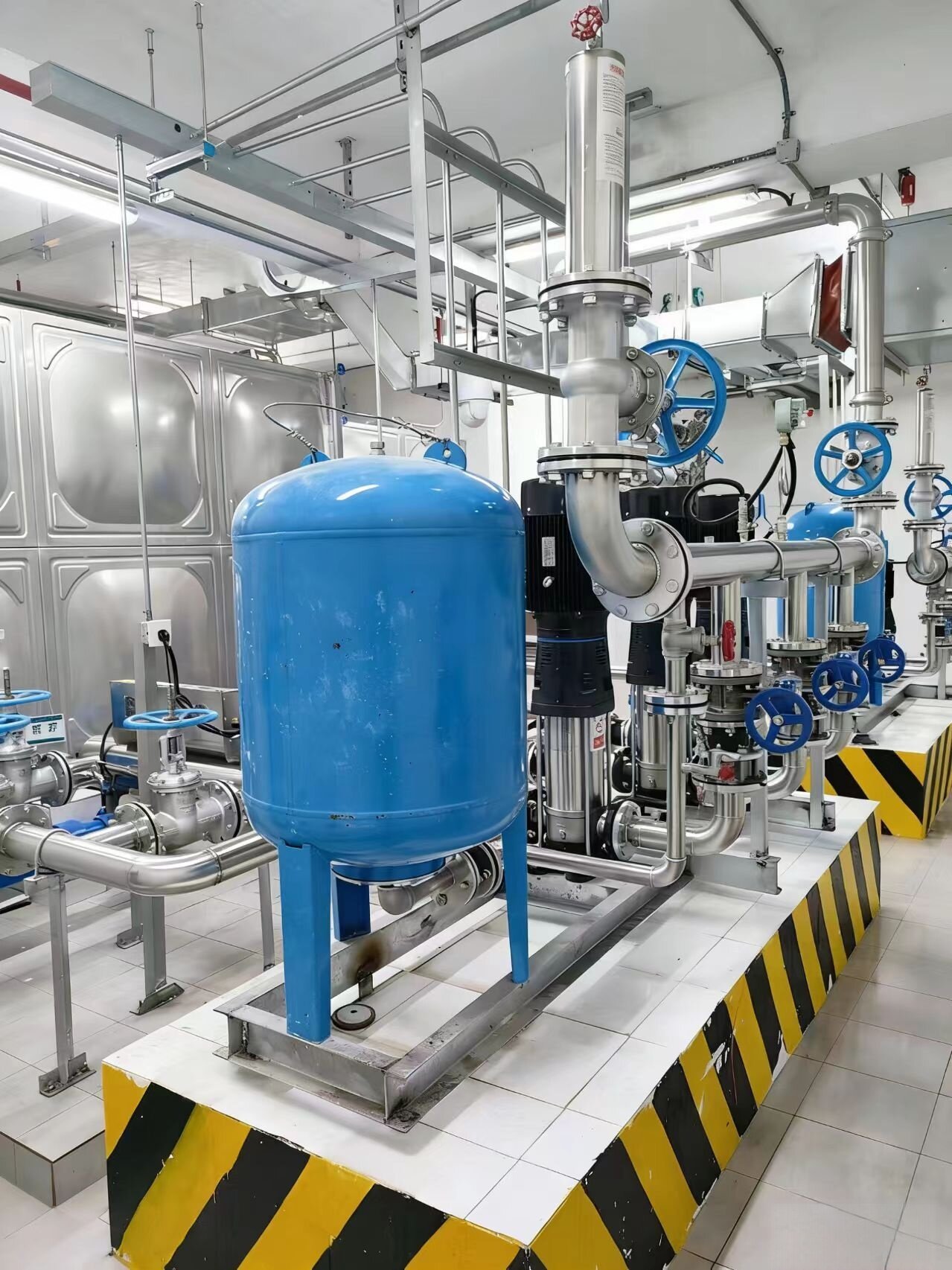
The DWS description connects the equipment directly to the incoming water network, using a stabilising tank and vacuum-elimination arrangement. It describes bypass supply when incoming pressure is adequate, pump operation when more pressure is needed, and low-water shutdown. Those functions make the incoming supply a selection input, not merely a connection size.
The detailed instructions state a normal incoming-pressure requirement of at least 0.12 MPa and sufficient incoming flow for the design demand. Where supply is frequently interrupted or inadequate, the document calls for particular caution. Send measured minimum and maximum inlet pressure, available flow, interruption history, meter arrangement and the required outlet duty. Agree the connection arrangement and any local water-supplier requirements before approving equipment.
The same page defines an ordinary supply boundary from the stabilising-tank inlet flange to the outlet-header flanges, with a steel equipment frame but no concrete foundation platform. Where installation is included, it describes motor-power and related control wiring within 15 m of the cabinet. Confirm those boundaries in the quotation, including civil work, longer cable runs and external pipework; do not assume “complete supply” includes the entire building installation.
MVWS: distinguish the application and low-demand arrangement
The MVWS page distinguishes MVWS-I for domestic or production supply, MVWS-II for combined domestic/fire service and MVWS-X for fire service. These are catalogue application designations. For a fire-related project, request the exact approved equipment and required acceptance documents for that jurisdiction; an application label is not product certification.
The document describes pressure feedback to a PLC, PID control of the inverter and changes in the number of operating pumps. At very low demand, an auxiliary pump and pressure vessel may replace the main-pump operation. Define peak and minimum demand, the pressure-sensor location, duty rotation, standby response and recovery after loss of supply.
The worked model-code example MVWS-IA-36-40 denotes an arrangement with an auxiliary pump and pressure vessel, a maximum hourly water demand of 36 m³/h and a design pressure of 0.4 MPa. This explains that example’s designation; it is not the capacity of every MVWS package. Request the selected main and auxiliary pump curves and the actual vessel specification.
JYF / JYFT: read paired values rather than an invented family envelope
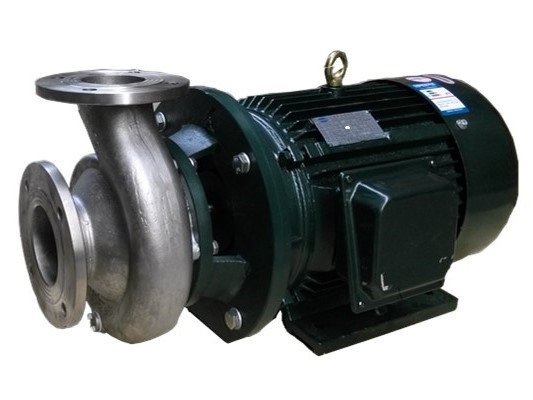
The stainless centrifugal-pump page contains named JYF/JYFT rows, impeller information, motor and shaft-power columns, connections and installation instructions. Its combined designation rows below share the listed values. The three examples use the middle flow/head point in each row; they are catalogue selection examples, not a guarantee at another speed or liquid condition.
The page instructs users to fill the pump casing before starting, keep suction joints airtight, support pipework separately and provide motor overload and short-circuit protection. For suction-lift service it specifies a foot valve. Request the exact curve, rotation direction, wetted-material and seal schedule, liquid properties and inlet conditions. A general reference to stainless steel or hygiene applications does not identify a material grade or food-contact approval.
| Catalogue row | Paired flow / head | Motor / speed | Inlet / outlet |
|---|---|---|---|
| 50JYF-18 / 50JYFT-18 | 13 m³/h / 18 m | 1.5 kW / 2,850 r/min | 50 / 40 mm |
| 50JYF-22 / 50JYFT-22 | 19 m³/h / 22 m | 2.2 kW / 2,850 r/min | 50 / 40 mm |
| 50JYF-25 / 50JYFT-25 | 23 m³/h / 25 m | 3 kW / 2,950 r/min | 50 / 40 mm |
Open the existing JYF / JYFT catalogue record →
GDF, ZW or WQ/WQP: different maintenance and inlet conditions
GDF is presented as a vertical stainless inline pump with equal-size connections on one axis. Its top-opening arrangement is described as allowing access to the seal and impeller without removing the inlet and outlet pipework. The page states 100°C maximum working temperature and 1.6 MPa maximum working pressure; agree the exact liquid, materials and combined operating conditions for the selected version.
ZW is the above-ground self-priming sewage route; WQ/WQP is the submersible sewage route. The ZW page discusses suction-pipe length and suction height, while the WQ instructions define immersion relative to the impeller centre. Choose the layout before comparing ratings: lifting access, intake geometry, solids and cable routing affect the practical choice.
| Route | Documented installation distinction | Enquiry inputs |
|---|---|---|
| GDF | Vertical inline; top access for seal/impeller | Pipe loads, removal clearance, liquid chemistry and actual pressure/temperature |
| ZW | Self-priming above-ground sewage pump | Suction layout, priming procedure, solids/fibres and liquid density |
| WQ / WQP | Submersible sewage arrangement | Wet-well levels, installation/removal method, power, cable and material schedule |
Order tanks and control cabinets with an explicit equipment schedule
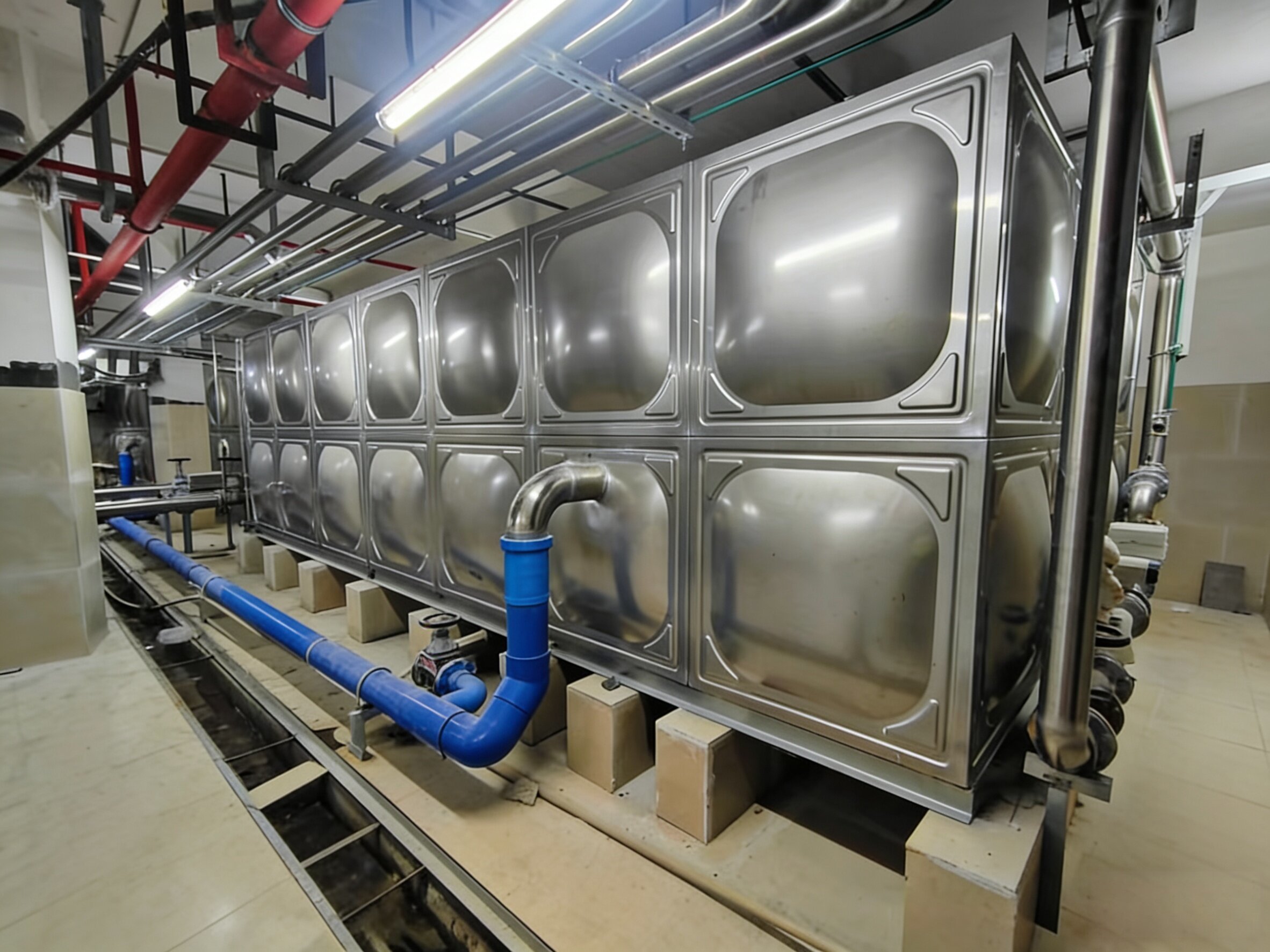
Yibeng lists stainless water tanks and variable-frequency cabinets alongside its pumps. A tank enquiry should specify usable storage volume, inlet/outlet and overflow positions, access for cleaning, foundation loading and the required material and inspection documents. Its water-tank photograph illustrates a panel-built arrangement; it does not verify every pressure or quality claim on the sales page.
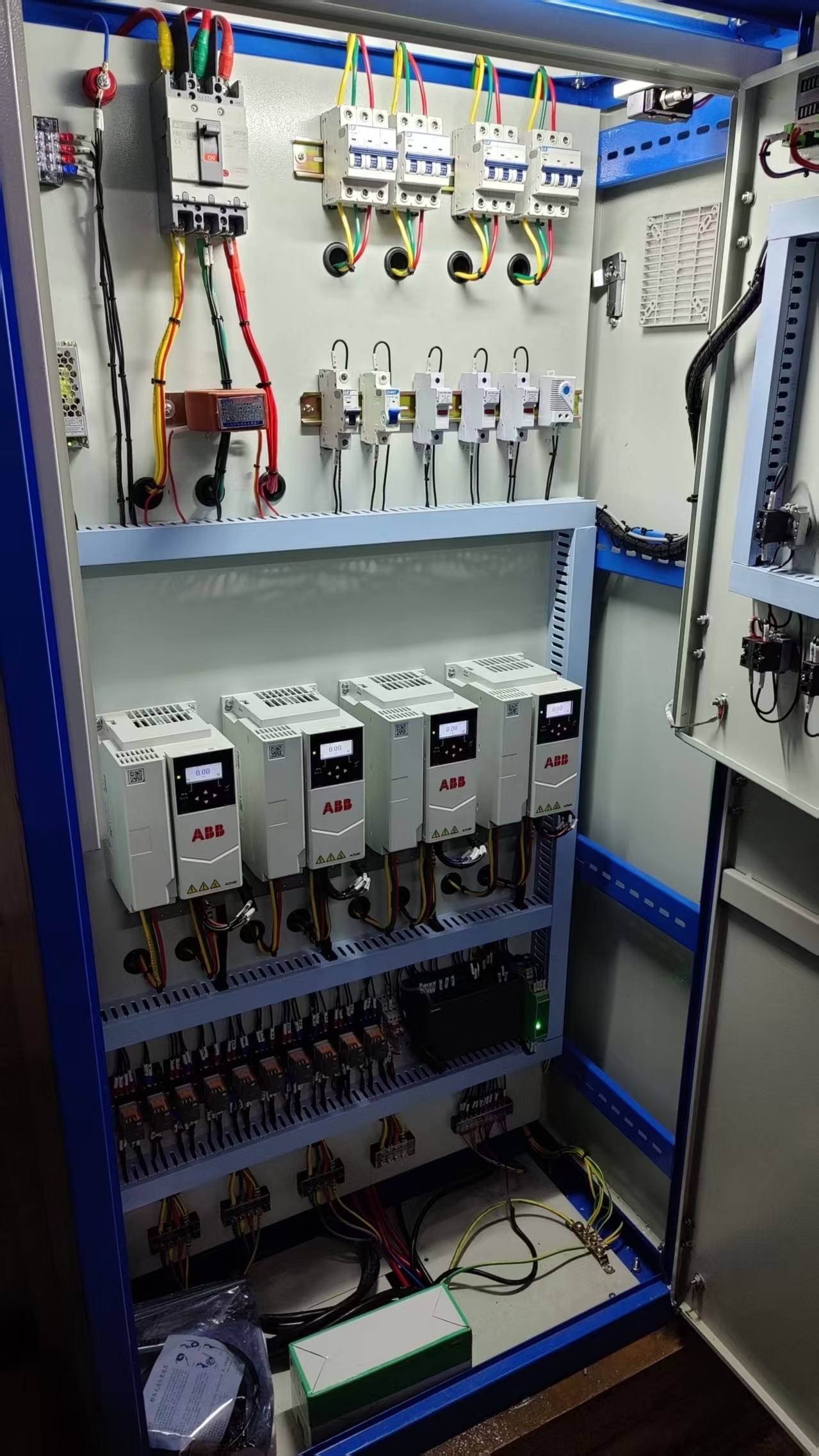
The cabinet photograph shows inverter and protection components, while the sales description offers different electrical component configurations. Name the accepted component series, motor schedule, power supply, enclosure requirements, I/O list and communication interfaces in the order. Agree local/manual operation, automatic staging and the response to sensor, pump or supply faults. Remote monitoring needs an agreed access and support arrangement, not an assumed subscription or security certification.
Match a report to the model and supplied configuration
The company’s document gallery includes commissioned inspection-report covers identifying 32GDLF4-48 and 40GDLF8-54, the company and a Hunan hydraulic-machinery inspection body. These named reports are useful prompts for a multistage-pump enquiry: request the complete report, test results, date and correspondence with the supplied version. A cover for a GDLF model does not verify a JYF, a control cabinet or an entire installation.
For acceptance, distinguish the pump curve and test result from control functional checks, installed-system performance and any drinking-water or fire-service requirements. Ask for the selected drawings, manuals, spare-parts identifiers and commissioning records. Current certificates should be checked for issuer, subject, scope and validity before being relied on in a procurement decision.
Send the duty, drawings and work boundary together
For an existing installation, include current nameplates, pump-room dimensions, pipe sizes, supply-pressure measurements and the problem to be corrected. For new equipment, provide the design flow/head or pressure duty, demand variation, liquid and site interfaces. The groups below keep a pump replacement, a supply package and an electrical retrofit distinct. Submit through KanBeng with Yibeng named in the enquiry.
Prepare a structured pump-system RFQ →
Hydraulic and application brief
- Required paired flow/head or outlet pressure and minimum demand
- Measured incoming pressure/flow, interruptions and connection requirements
- Liquid temperature, chemistry, solids and the intended domestic/production/fire application
Equipment and installation scope
- Exact pump series/curve, tank/vessel schedule, drawings and removal access
- Motor supply, cabinet component schedule, I/O and agreed control sequence
- Flange boundaries, external pipework, cable lengths, concrete foundation and commissioning responsibility
Acceptance and handover
- Model-specific complete test reports and applicable approval requirements
- Pump duty test, pressure/control functional checks and fault/recovery responses
- Manuals, spare parts, maintenance access, training and site-support scope
Submit through KanBeng’s enquiry form with this factory named in your request.